Murphy J W, Hidore M R, Wong S C
Department of Microbiology and Immunology, University of Oklahoma Health Sciences Center, Oklahoma City 73190.
J Clin Invest. 1993 Apr;91(4):1553-66. doi: 10.1172/JCI116361.
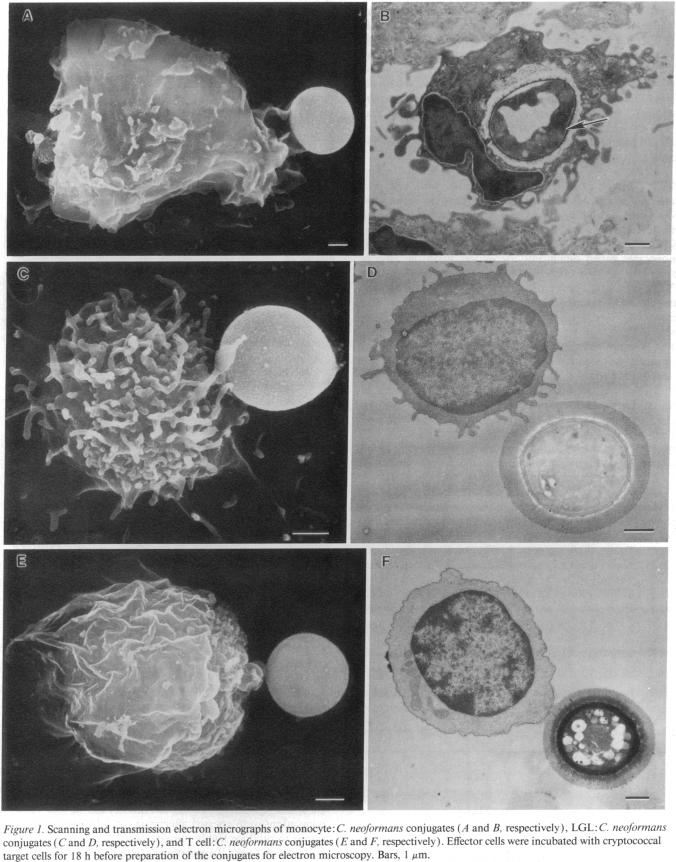
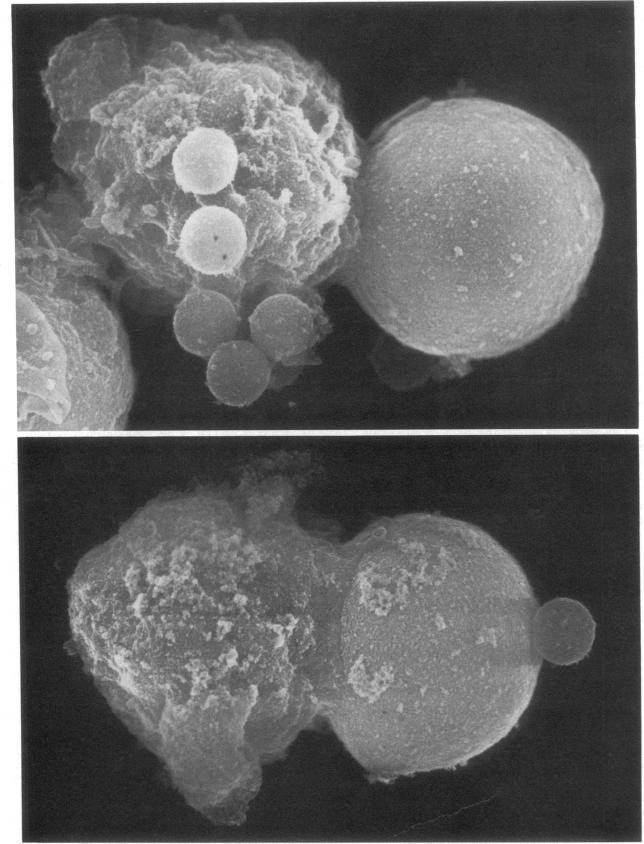
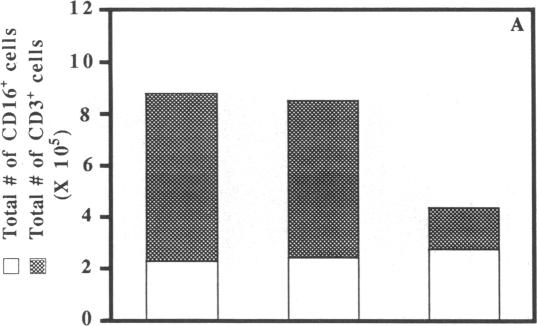
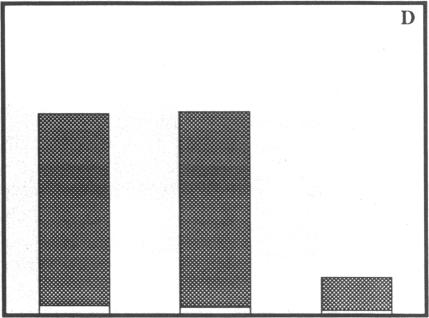
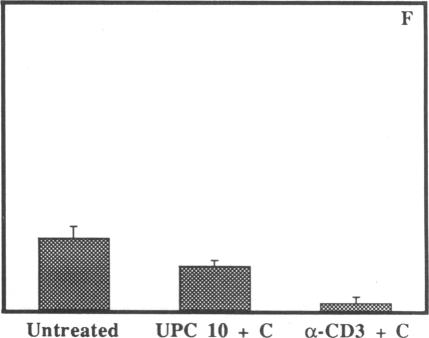
Lymphocytes, especially CD4+ T cells, are essential for clearance of the yeast-like organism Cryptococcus neoformans from the infected host. The mechanism(s) by which the lymphocytes facilitate elimination of cryptococci has not been elucidated. It is generally thought, however, that lymphocytes reactive with C. neoformans indirectly function by production of lymphokines to enhance clearance of the organism by natural effector cells such as macrophages. In the present study, we assessed the ability of freshly isolated human lymphocytes to interact directly with C. neoformans and to limit the growth of the organism in vitro. We found that large granular lymphocytes (LGL) as well as T cells bound to cryptococcal cells when the lymphocytes were mixed with the cryptococcal cells at a 2:1 ratio. The physical binding interactions of the two lymphocyte populations were different. LGL attached to the cryptococcal cells by many microvilli; T lymphocytes associated with the yeast through broad areas of membrane attached to the cryptococcal cell surface. The two types of lymphocyte interactions did not result in phagocytosis but resulted in direct inhibition of cryptococcal growth, making these lymphocyte interactions with cryptococci distinctly different from interactions of monocytes with cryptococci. With the human natural killer (NK) cell line, NK 3.3, we confirmed that NK cells that were present in the LGL population were capable of limiting the growth of C. neoformans. Through immunoelectron microscopy, human CD3+ lymphocytes were seen attached to cryptococcal cells and by mass cytolysis, human CD3+ lymphocytes were shown to be responsible for inhibition of C. neoformans growth. The direct inhibitory interactions of NK cells and T lymphocytes with cryptococcal cells may be important means of host defense against this ubiquitous organism that frequently causes life-threatening disease in AIDS patients.
淋巴细胞,尤其是CD4 + T细胞,对于从受感染宿主中清除酵母样生物体新型隐球菌至关重要。淋巴细胞促进隐球菌清除的机制尚未阐明。然而,一般认为,与新型隐球菌反应的淋巴细胞通过产生淋巴因子间接发挥作用,以增强天然效应细胞(如巨噬细胞)对该生物体的清除。在本研究中,我们评估了新鲜分离的人淋巴细胞直接与新型隐球菌相互作用并在体外限制该生物体生长的能力。我们发现,当淋巴细胞与新型隐球菌细胞以2:1的比例混合时,大颗粒淋巴细胞(LGL)以及T细胞会与隐球菌细胞结合。这两种淋巴细胞群体的物理结合相互作用有所不同。LGL通过许多微绒毛附着于隐球菌细胞;T淋巴细胞通过附着于隐球菌细胞表面的广泛膜区域与酵母相关联。这两种类型的淋巴细胞相互作用不会导致吞噬作用,但会直接抑制隐球菌的生长,使得这些淋巴细胞与隐球菌的相互作用明显不同于单核细胞与隐球菌的相互作用。利用人类自然杀伤(NK)细胞系NK 3.3,我们证实LGL群体中存在的NK细胞能够限制新型隐球菌的生长。通过免疫电子显微镜观察到人类CD3 +淋巴细胞附着于隐球菌细胞,并且通过大量细胞溶解实验表明,人类CD3 +淋巴细胞负责抑制新型隐球菌的生长。NK细胞和T淋巴细胞与隐球菌细胞的直接抑制性相互作用可能是宿主抵御这种在艾滋病患者中经常导致危及生命疾病的普遍存在生物体的重要防御手段。