Blasco R, Sisler J R, Moss B
Laboratory of Viral Diseases, National Institute of Allergy and Infectious Diseases, Bethesda, Maryland 20892.
J Virol. 1993 Jun;67(6):3319-25. doi: 10.1128/JVI.67.6.3319-3325.1993.
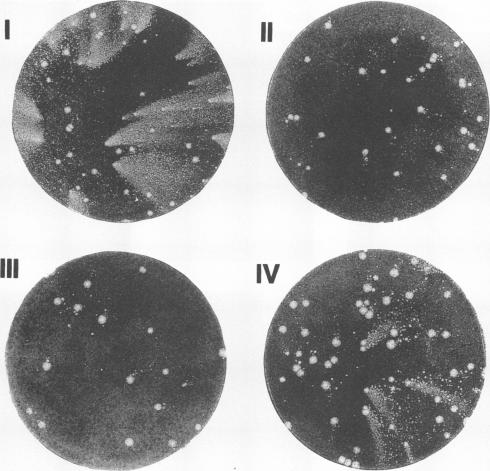
Vaccinia virus strains vary considerably in the amounts of extracellular enveloped virus (EEV) that they release from infected cells. The IHD-J strain produces up to 40 times more EEV than does the related WR strain and consequently generates elongated comet-shaped virus plaques instead of sharply defined round ones in susceptible monolayer cells under liquid medium. The difference in EEV formation is due to the retention of enveloped WR virions on the cell surface (R. Blasco and B. Moss, J. Virol. 66:4170-4179, 1992). By using WR and IHD-J DNA fragments for marker transfer and analyzing the progeny virus by the comet formation assay, we determined that gene A34R and at least one other gene regulate the release of cell-associated virions. Replacement of the A34R gene of WR with the corresponding gene from IHD-J increased the amount of EEV produced by 10-fold and conferred the ability to form distinctive comet-shaped plaques. Gene A34R encodes an EEV-specific glycoprotein with homology to C-type animal lectins (S.A. Duncan and G.L. Smith, J. Virol. 66:1610-1621, 1992). The nucleotide sequences of the A34R genes of WR and IHD-J strains differed in six positions, of which four were silent. One of the codon mutations (Lys-151-->Glu), which is located in the putative carbohydrate recognition domain, was sufficient to transfer a comet-forming phenotype to WR virus. These data indicate that the A34R-encoded glycoprotein is involved, through its lectin homology domain, in the retention of progeny virus on the surface of parental cells and raise the possibility that the protein also has a role in virus attachment to uninfected cells.
痘苗病毒株从感染细胞中释放的细胞外被膜病毒(EEV)数量差异很大。IHD-J株产生的EEV比相关的WR株多40倍,因此在液体培养基下的易感单层细胞中会形成细长的彗星状病毒蚀斑,而不是轮廓清晰的圆形蚀斑。EEV形成的差异是由于被膜包裹的WR病毒粒子保留在细胞表面(R. 布拉斯科和B. 莫斯,《病毒学杂志》66:4170 - 4179,1992年)。通过使用WR和IHD-J DNA片段进行标记转移,并通过彗星形成试验分析子代病毒,我们确定基因A34R和至少一个其他基因调控细胞相关病毒粒子的释放。用IHD-J的相应基因替换WR的A34R基因,使产生的EEV量增加了10倍,并赋予了形成独特彗星状蚀斑的能力。基因A34R编码一种与C型动物凝集素具有同源性的EEV特异性糖蛋白(S.A. 邓肯和G.L. 史密斯,《病毒学杂志》66:1610 - 1621,1992年)。WR和IHD-J株的A34R基因的核苷酸序列在六个位置存在差异,其中四个是沉默突变。位于假定的碳水化合物识别结构域的一个密码子突变(赖氨酸-151→谷氨酸)足以将彗星形成表型转移到WR病毒。这些数据表明,A34R编码的糖蛋白通过其凝集素同源结构域参与子代病毒在亲代细胞表面的保留,并增加了该蛋白在病毒与未感染细胞附着中也起作用的可能性。