Ginsberg H N, Ngai C, Wang X J, Ramakrishnan R
Department of Medicine, Columbia University College of Physicians and Surgeons, New York 10032.
Arterioscler Thromb. 1993 Jun;13(6):842-51. doi: 10.1161/01.atv.13.6.842.
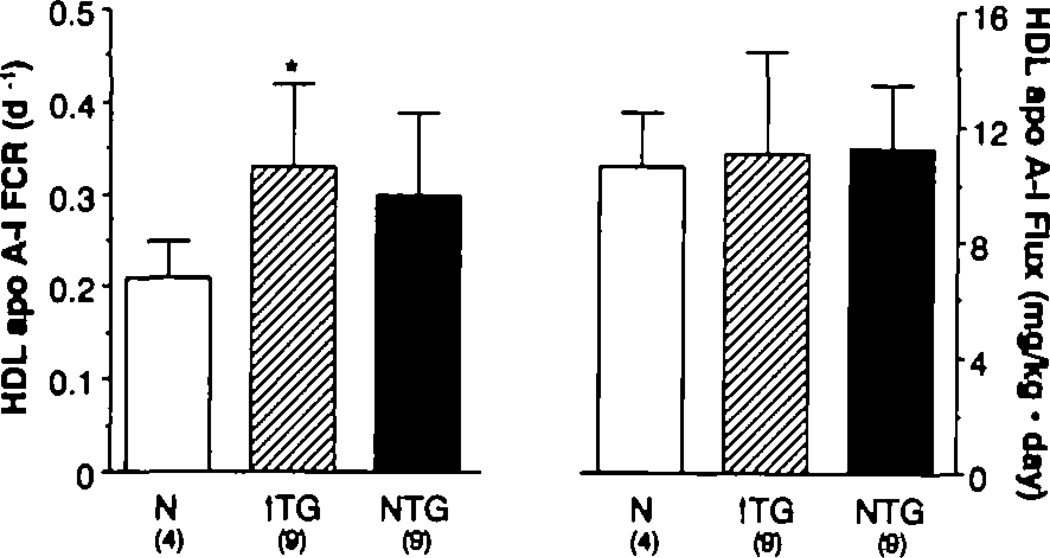
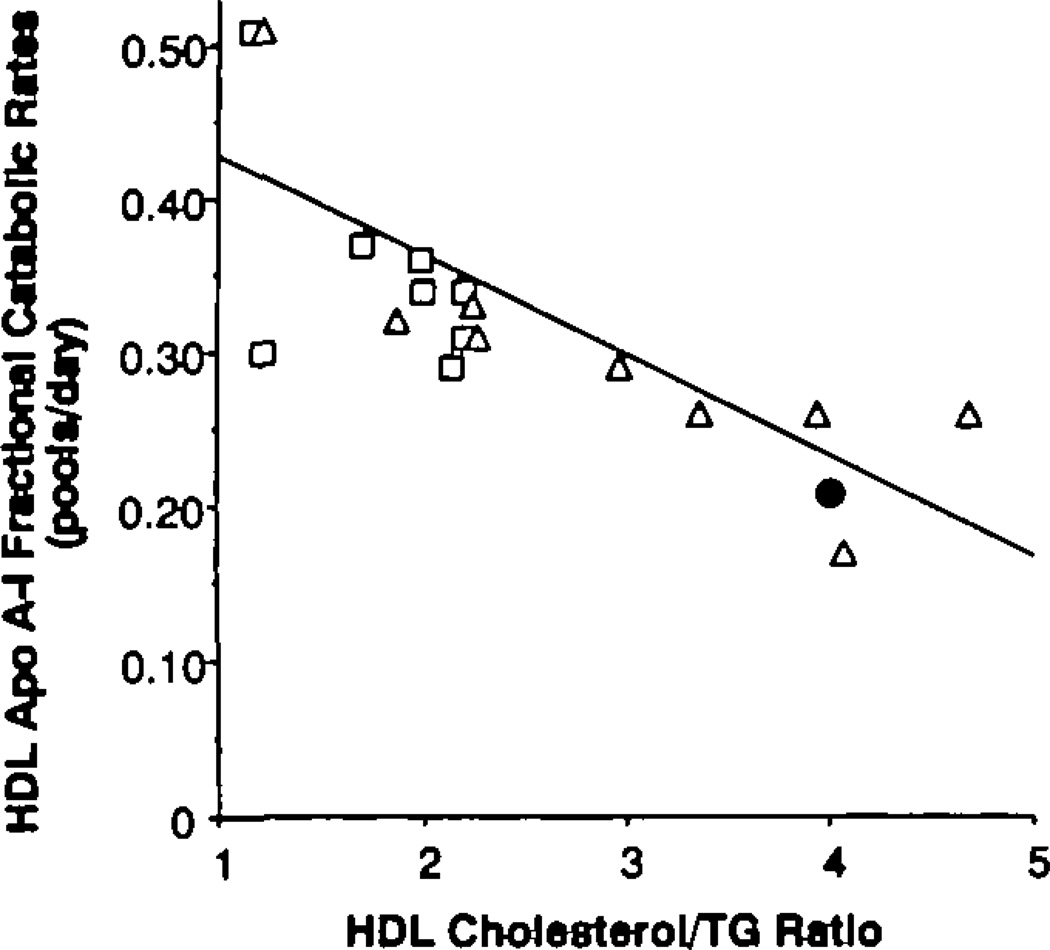
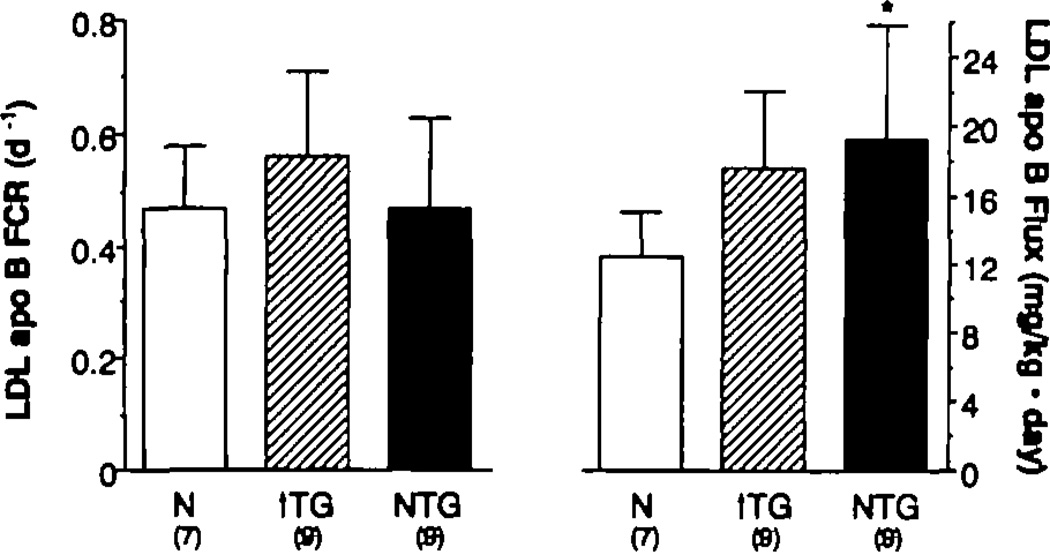
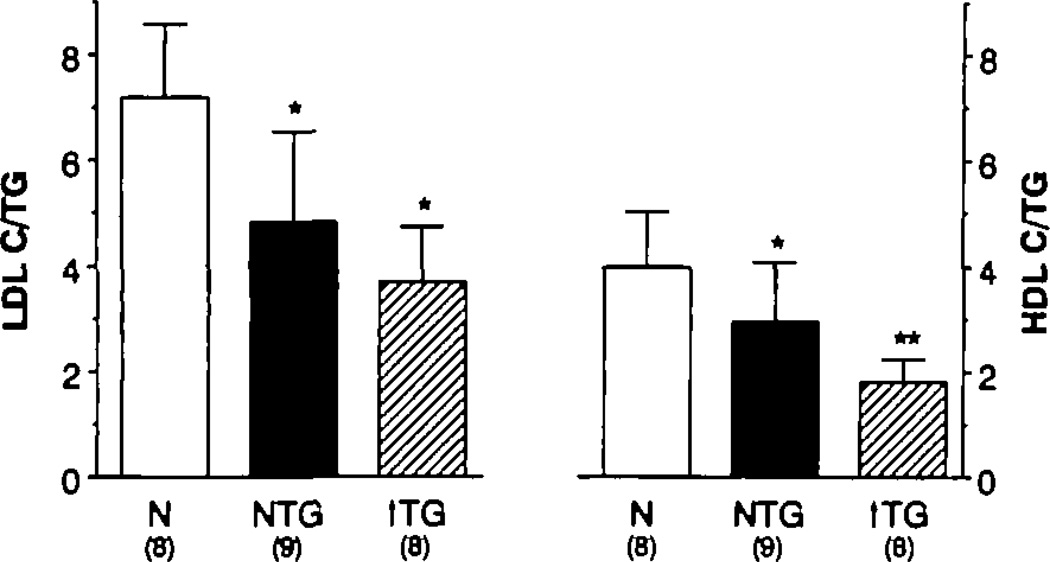
Reduced plasma levels of high density lipoprotein (HDL) cholesterol are associated with increased risk for coronary heart disease. Although plasma HDL levels are, in general, inversely related to plasma triglyceride (TG) concentrations, a small proportion of individuals with low HDL cholesterol concentrations have normal plasma TG levels. We wished to determine whether subjects with low plasma levels of HDL cholesterol could be characterized by common abnormalities of lipoprotein metabolism independent of plasma TGs. Therefore, we studied the metabolism of low density lipoprotein (LDL) apolipoprotein B (apo B) and HDL apolipoprotein A-I (apo A-I) in subjects with low plasma HDL cholesterol concentrations with or without hypertriglyceridemia. Nine subjects with low plasma HDL cholesterol levels and normal levels of plasma TGs and LDL cholesterol were studied. Autologous 131I-LDL and 125I-HDL were injected intravenously, and blood samples were collected for 2 weeks. LDL apo B and HDL apo A-I levels were measured by specific radioimmunoassays. Fractional catabolic rates (FCRs, pools per day) and production rates (PRs, milligrams/kilogram.day) for each apolipoprotein were determined. The results were compared with those obtained previously in nine subjects with low plasma HDL cholesterol levels and hypertriglyceridemia and in seven normal subjects. The normal subjects had an HDL apo A-I FCR (mean +/- SD) of 0.21 +/- 0.04. Despite large differences in plasma TG levels, the HDL apo A-I FCRs were similar in the low-HDL, normal-TG group (0.30 +/- 0.09) and the low-HDL, high-TG group (0.33 +/- 0.10), although only the latter value was significantly increased versus control subjects (p < 0.03). Increased apo A-I FCRs were associated with reduced HDL apo A-I levels in both groups of patients. Apo A-I PRs were similar in all groups. In contrast, LDL apo B PR was increased approximately 50% in the low-HDL, normal-TG group (19.3 +/- 6.6; p < 0.01) compared with normal subjects (12.5 +/- 2.6). There was a strong trend toward a greater LDL apo B PR in the low-HDL, high-TG group (17.6 +/- 4.5; p = 0.06 versus normal subjects) as well. LDL apo B FCRs were similar in all three groups. LDL apo B concentrations were also increased in the group with low HDL cholesterol and normal TG levels. Both groups with low HDL cholesterol levels had cholesterol-depleted LDL and HDL particles.(ABSTRACT TRUNCATED AT 400 WORDS)
血浆高密度脂蛋白(HDL)胆固醇水平降低与冠心病风险增加相关。尽管一般而言,血浆HDL水平与血浆甘油三酯(TG)浓度呈负相关,但一小部分HDL胆固醇浓度低的个体血浆TG水平正常。我们希望确定血浆HDL胆固醇水平低的受试者是否可由脂蛋白代谢的常见异常来表征,而与血浆TG无关。因此,我们研究了血浆HDL胆固醇浓度低且伴有或不伴有高甘油三酯血症的受试者中低密度脂蛋白(LDL)载脂蛋白B(apo B)和HDL载脂蛋白A-I(apo A-I)的代谢。研究了9名血浆HDL胆固醇水平低、血浆TG和LDL胆固醇水平正常的受试者。静脉注射自体131I-LDL和125I-HDL,并采集血样2周。通过特异性放射免疫测定法测量LDL apo B和HDL apo A-I水平。确定每种载脂蛋白的分解代谢率(FCR,每天的池数)和生成率(PR,毫克/千克·天)。将结果与之前在9名血浆HDL胆固醇水平低且患有高甘油三酯血症的受试者以及7名正常受试者中获得的结果进行比较。正常受试者的HDL apo A-I FCR(平均值±标准差)为0.21±0.04。尽管血浆TG水平存在很大差异,但HDL apo A-I FCR在低HDL、正常TG组(0.30±0.09)和低HDL、高TG组(0.33±0.10)中相似,尽管只有后者的值与对照组相比显著增加(p<0.03)。两组患者中apo A-I FCR增加均与HDL apo A-I水平降低相关。所有组中的apo A-I PR相似。相比之下,与正常受试者(12.5±2.6)相比,低HDL、正常TG组中的LDL apo B PR增加了约50%(19.3±6.6;p<0.01)。低HDL、高TG组中LDL apo B PR也有升高的强烈趋势(17.6±4.5;与正常受试者相比p=0.06)。三组中的LDL apo B FCR相似。HDL胆固醇低且TG水平正常的组中LDL apo B浓度也升高。两组HDL胆固醇水平低的患者都有胆固醇缺乏的LDL和HDL颗粒。(摘要截短至400字)