Wüst J, Lucchini G M, Lüthy-Hottenstein J, Brun F, Altwegg M
Department of Medical Microbiology, University of Zürich, Switzerland.
J Clin Microbiol. 1993 May;31(5):1127-35. doi: 10.1128/jcm.31.5.1127-1135.1993.
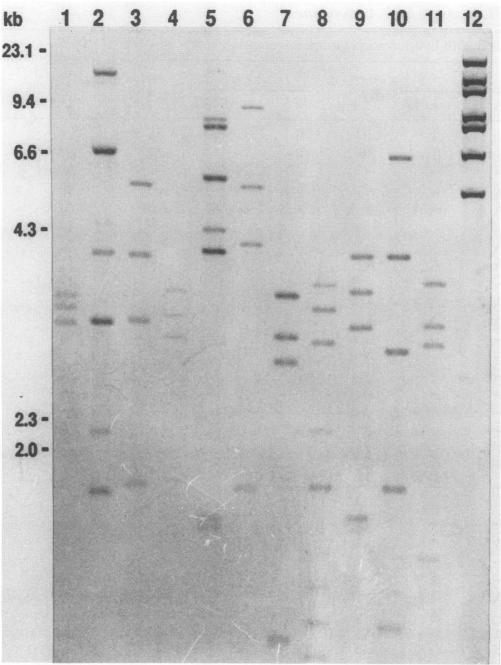
Beginning in 1990, gram-positive rods resembling Actinomyces pyogenes were found with increasing frequency in mixed cultures from various infectious processes, most of them from patients with otitis, empyema, pilonidal cysts, perianal abscesses, and decubitus ulcers. Ribotyping and hybridization showed that these gram-positive rods could be divided into five groups not related to known Actinomyces species. Biochemical markers for reliable differentiation into these groups, however, could not be found. Therefore, naming new species is not warranted unless parameters are discovered that allow identification without DNA hybridization. These gram-positive rods have been isolated only in mixed cultures with anaerobes, Staphylococcus aureus, Streptococcus "milleri," enterococci, and gram-negative rods. Their exact role in these possibly synergistic infections needs further investigation.
从1990年开始,在各种感染性疾病的混合培养物中,越来越频繁地发现了类似化脓放线菌的革兰氏阳性杆菌,其中大多数来自患有中耳炎、脓胸、藏毛窦囊肿、肛周脓肿和褥疮溃疡的患者。核糖体分型和杂交显示,这些革兰氏阳性杆菌可分为五组,与已知的放线菌物种无关。然而,未能找到可靠区分这些组别的生化标志物。因此,除非发现无需DNA杂交即可进行鉴定的参数,否则没有必要命名新物种。这些革兰氏阳性杆菌仅在与厌氧菌、金黄色葡萄球菌、“米勒链球菌”、肠球菌和革兰氏阴性杆菌的混合培养物中分离得到。它们在这些可能的协同感染中的确切作用需要进一步研究。