Powell J J, Ainley C C, Harvey R S, Mason I M, Kendall M D, Sankey E A, Dhillon A P, Thompson R P
Gastrointestinal Laboratory, Rayne Institute, St Thomas' Hospital, London.
Gut. 1996 Mar;38(3):390-5. doi: 10.1136/gut.38.3.390.
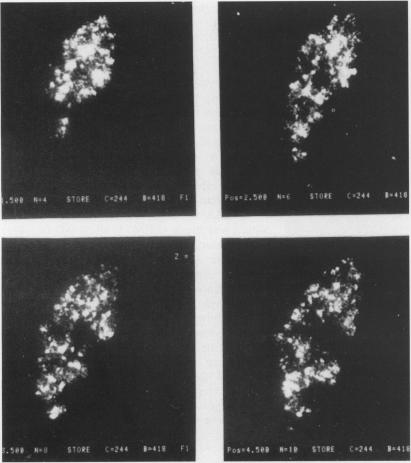
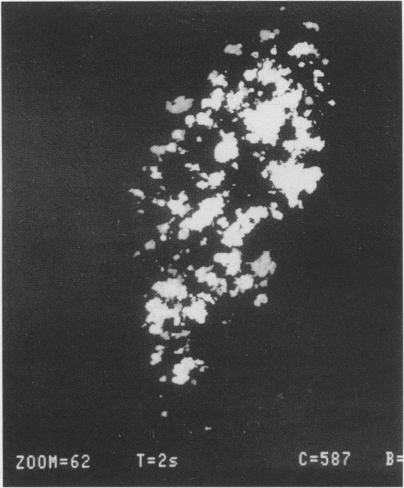
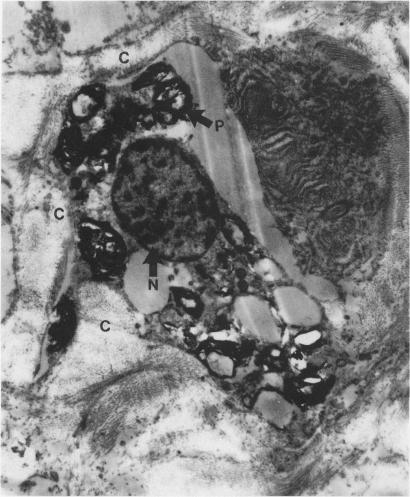
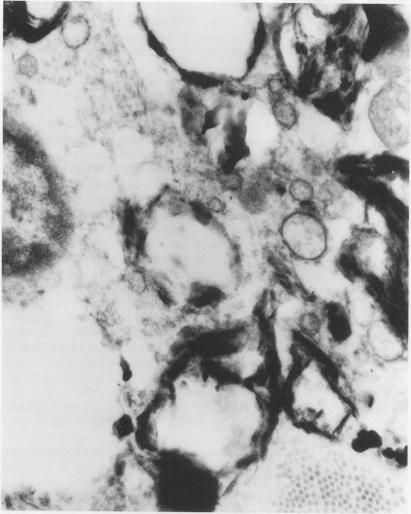
Macrophages at the base of human gut associated lymphoid tissue (GALT), become loaded early in life with dark granular pigment that is rich in aluminium, silicon, and titanium. The molecular characteristics, intracellular distribution, and source of this pigment is described. Laser scanning and electron microscopy showed that pigmented macrophages were often closely related to collagen fibres and plasma cells in GALT of both small and large intestine and contained numerous phagolysosomes, previously described as granules, that are rich in electron dense submicron sized particles. Morphological assessment, x ray microanalysis, and image electron energy loss spectroscopy showed three distinct types of microparticle: type I - spheres of titanium dioxide, 100-200 nm diameter, characterised as the synthetic food-additive polymorph anatase; type II - aluminosilicates, < 100-400 nm in length, generally of flaky appearance, often with adsorbed surface iron, and mostly characteristic of the natural clay mineral kaolinite; and type III - mixed environmental silicates without aluminium, 100-700 nm in length and of variable morphology. Thus, this cellular pigment that is partly derived from food additives and partly from the environment is composed of inert inorganic microparticles and loaded into phagolysosomes of macrophages within the GALT of all human subjects. These observations suggest that the pathogenicity of this pigment should be further investigated since, in susceptible individuals, the same intracellular distribution of these three types of submicron particle causes chronic latent granulomatous inflammation.
人类肠道相关淋巴组织(GALT)底部的巨噬细胞在生命早期就会充满深色颗粒状色素,这种色素富含铝、硅和钛。本文描述了这种色素的分子特征、细胞内分布及其来源。激光扫描和电子显微镜显示,色素沉着的巨噬细胞通常与小肠和大肠GALT中的胶原纤维和浆细胞密切相关,并含有大量吞噬溶酶体,以前被描述为颗粒,富含电子致密的亚微米大小颗粒。形态学评估、X射线微分析和图像电子能量损失谱显示出三种不同类型的微粒:I型——二氧化钛球体,直径100 - 200纳米,特征为合成食品添加剂多晶型锐钛矿;II型——铝硅酸盐,长度小于100 - 400纳米,通常呈片状外观,表面常吸附有铁,主要为天然粘土矿物高岭石的特征;III型——不含铝的混合环境硅酸盐,长度100 - 700纳米,形态各异。因此,这种部分源自食品添加剂、部分源自环境的细胞色素由惰性无机微粒组成,并被载入所有人类受试者GALT内巨噬细胞的吞噬溶酶体中。这些观察结果表明,这种色素的致病性应进一步研究,因为在易感个体中,这三种亚微米颗粒的相同细胞内分布会导致慢性潜伏性肉芽肿性炎症。