Ferre T, Pujol A, Riu E, Bosch F, Valera A
Department of Biochemistry and Molecular Biology, School of Veterinary Medicine, Autonomous University of Barcelona, Spain.
Proc Natl Acad Sci U S A. 1996 Jul 9;93(14):7225-30. doi: 10.1073/pnas.93.14.7225.
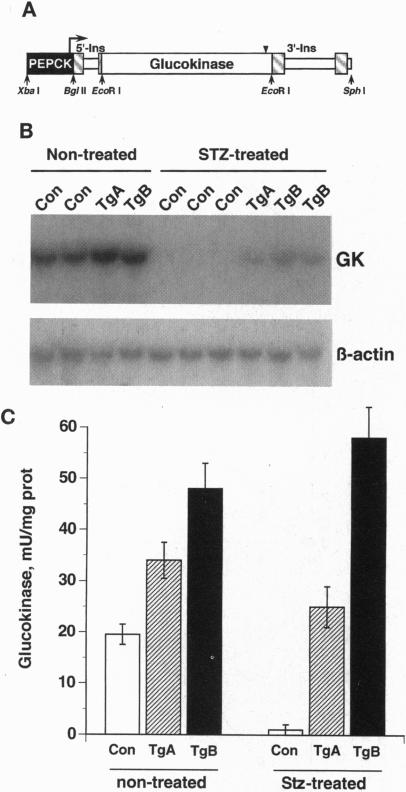
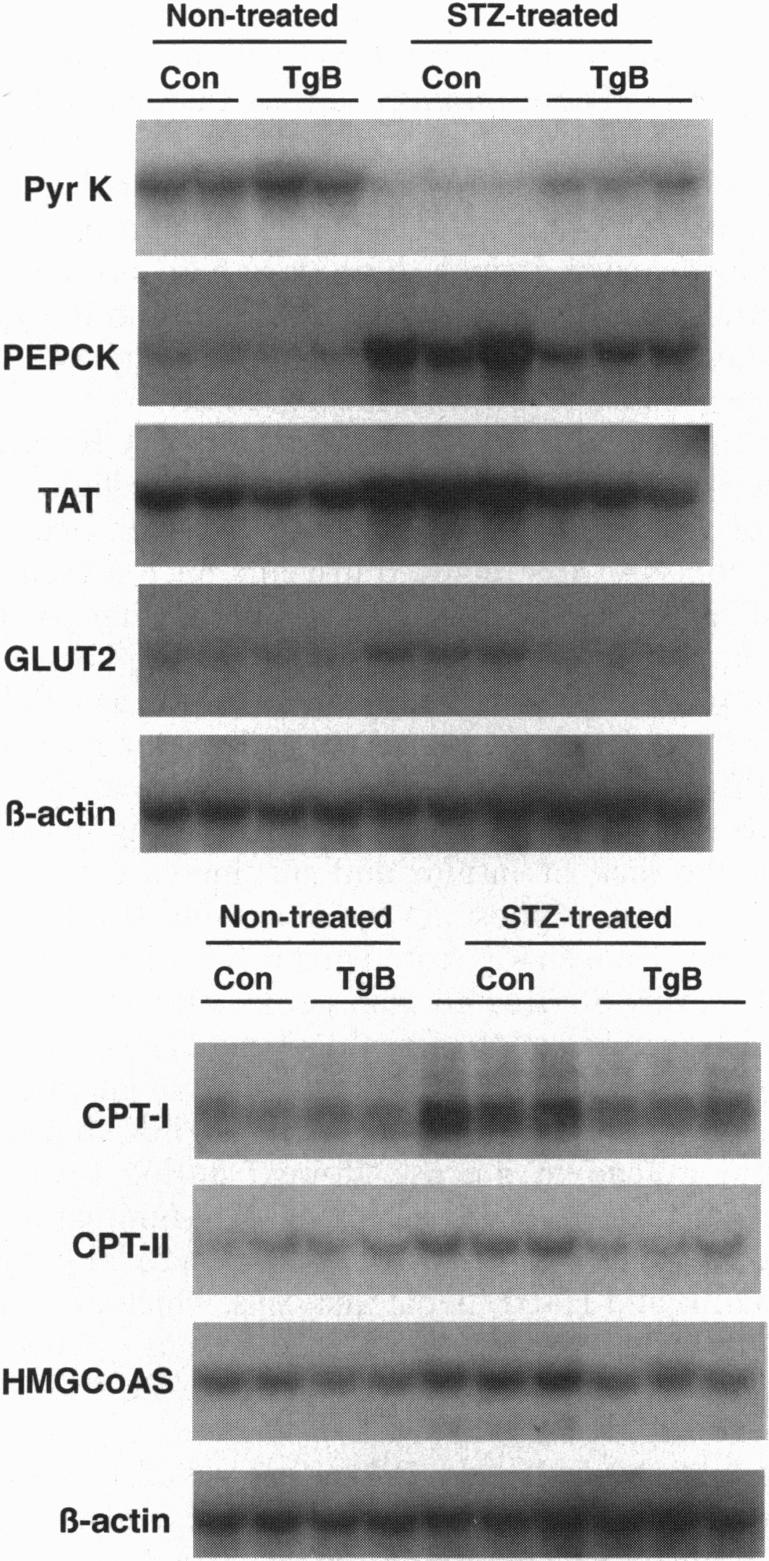
Hyperglycemia is a common feature of diabetes mellitus. It results from a decrease in glucose utilization by the liver and peripheral tissues and an increase in hepatic glucose production. Glucose phosphorylation by glucokinase is an initial event in glucose metabolism by the liver. However, glucokinase gene expression is very low in diabetic animals. Transgenic mice expressing the P-enolpyruvate carboxykinase/glucokinase chimeric gene were generated to study whether the return of the expression of glucokinase in the liver of diabetic mice might prevent metabolic alterations. In contrast to nontransgenic mice treated with streptozotocin, mice with the transgene previously treated with streptozotocin showed high levels of both glucokinase mRNA and its enzyme activity in the liver, which were associated with an increase in intracellular levels of glucose 6-phosphate and glycogen. The liver of these mice also showed an increase in pyruvate kinase activity and lactate production. Furthermore, normalization of both the expression of genes involved in gluconeogenesis and ketogenesis in the liver and the production of glucose and ketone body by hepatocytes in primary culture were observed in streptozotocin-treated transgenic mice. Thus, glycolysis was induced while gluconeogenesis and ketogenesis were blocked in the liver of diabetic mice expressing glucokinase. This was associated with normalization of blood glucose, ketone bodies, triglycerides, and free fatty acids even in the absence of insulin. These results suggest that the expression of glucokinase during diabetes might be a new approach to the normalization of hyperglycemia.
高血糖是糖尿病的一个常见特征。它是由肝脏和外周组织对葡萄糖利用的减少以及肝脏葡萄糖生成的增加所致。葡萄糖激酶介导的葡萄糖磷酸化是肝脏葡萄糖代谢的起始事件。然而,在糖尿病动物中葡萄糖激酶基因的表达非常低。为了研究糖尿病小鼠肝脏中葡萄糖激酶表达的恢复是否可能预防代谢改变,制备了表达磷酸烯醇式丙酮酸羧激酶/葡萄糖激酶嵌合基因的转基因小鼠。与用链脲佐菌素处理的非转基因小鼠相比,先前用链脲佐菌素处理的转基因小鼠肝脏中葡萄糖激酶mRNA及其酶活性水平均较高,这与细胞内6-磷酸葡萄糖和糖原水平的增加相关。这些小鼠的肝脏中丙酮酸激酶活性和乳酸生成也有所增加。此外,在链脲佐菌素处理的转基因小鼠中,观察到肝脏中参与糖异生和酮体生成的基因表达以及原代培养的肝细胞中葡萄糖和酮体生成均恢复正常。因此,在表达葡萄糖激酶的糖尿病小鼠肝脏中,糖酵解被诱导,而糖异生和酮体生成被阻断。即使在没有胰岛素的情况下,这也与血糖、酮体、甘油三酯和游离脂肪酸的正常化相关。这些结果表明,糖尿病期间葡萄糖激酶的表达可能是使高血糖正常化的一种新方法。