Drucker D J, Erlich P, Asa S L, Brubaker P L
Department of Medicine, The Toronto Hospital and Mount Sinai Hospital, University of Toronto, Ontario, Canada.
Proc Natl Acad Sci U S A. 1996 Jul 23;93(15):7911-6. doi: 10.1073/pnas.93.15.7911.
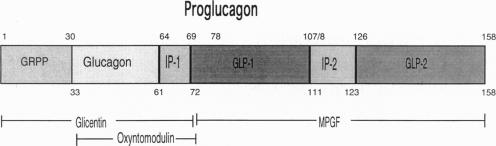
Injury, inflammation, or resection of the small intestine results in severe compromise of intestinal function. Nevertheless, therapeutic strategies for enhancing growth and repair of the intestinal mucosal epithelium are currently not available. We demonstrate that nude mice bearing subcutaneous proglucagon-producing tumors exhibit marked proliferation of the small intestinal epithelium. The factor responsible for inducing intestinal proliferation was identified as glucagon-like peptide 2 (GLP-2), a 33-aa peptide with no previously ascribed biological function. GLP-2 stimulated crypt cell proliferation and consistently induced a marked increase in bowel weight and villus growth of the jejunum and ileum that was evident within 4 days after initiation of GLP-2 administration. These observations define a novel biological role for GLP-2 as an intestinal-derived peptide stimulator of small bowel epithelial proliferation.
小肠的损伤、炎症或切除会导致肠道功能严重受损。然而,目前尚无增强肠黏膜上皮生长和修复的治疗策略。我们证明,携带皮下产胰高血糖素肿瘤的裸鼠小肠上皮出现明显增殖。诱导肠道增殖的因子被鉴定为胰高血糖素样肽2(GLP-2),这是一种33个氨基酸的肽,以前没有赋予其生物学功能。GLP-2刺激隐窝细胞增殖,并持续诱导空肠和回肠肠重量显著增加以及绒毛生长,在开始给予GLP-2后4天内即可明显观察到。这些观察结果确定了GLP-2作为一种肠源性小肠上皮增殖刺激肽的新生物学作用。