Hopenhayn-Rich C, Biggs M L, Smith A H, Kalman D A, Moore L E
School of Public Health, University of California-Berkeley 94720, USA.
Environ Health Perspect. 1996 Jun;104(6):620-8. doi: 10.1289/ehp.96104620.
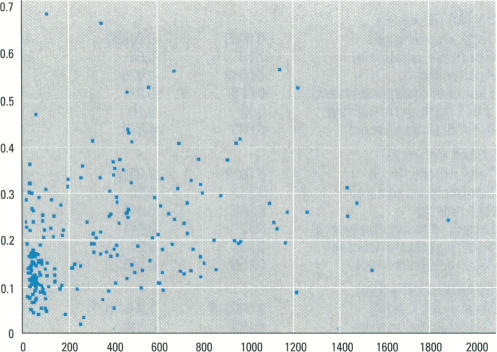
Methylation is considered the detoxification pathway for inorganic arsenic (InAs), an established human carcinogen. Urinary speciation analysis is used to assess the distribution of metabolites [monomethylarsonate (MMA), dimethylarsinate (DMA), and unmethylated arsenic (InAs)], as indicators of methylation capacity. We conducted a large biomarker study in northern Chile of a population chronically exposed to high levels of arsenic in drinking water. We report the results of the methylation study, which focused on the effects of exposure and other variables on the percent InAs, MMA, DMA, and the ratio of MMA to DMA in urine. The study consisted of 122 people in a town with arsenic water levels around 600 micrograms/l and 98 participants in a neighboring town with arsenic levels in water of about 15 micrograms/l. The corresponding mean urinary arsenic levels were 580 micrograms/l and 60 micrograms/l, of which 18.4% and 14.9% were InAs, respectively. The main differences were found for MMA:DMA; exposure, smoking, and being male were associated with higher MMA:DMA, while longer residence, Atacameño ethnicity, and being female were associated with lower MMA:DMA. Together, these variables explained about 30% of the variability in MMA:DMA. Overall, there was no evidence of a threshold for methylation capacity, even at very high exposures, and the interindividual differences were within a much wider range than those attributed to the variables investigated. The differences in percent InAs were small and within the ranges of other studies of background exposure levels. The biological significance of MMA:DMA, which was more than 1.5 times greater in the exposed group, and its relationship to sex, length of exposure, and ethnicity need further investigation because its relevance to health risk is not clear.
甲基化被认为是无机砷(InAs,一种已确定的人类致癌物)的解毒途径。尿液形态分析用于评估代谢产物[一甲基砷酸(MMA)、二甲基砷酸(DMA)和未甲基化砷(InAs)]的分布,作为甲基化能力的指标。我们在智利北部对长期暴露于饮用水中高浓度砷的人群进行了一项大型生物标志物研究。我们报告了甲基化研究的结果,该研究重点关注暴露和其他变量对尿液中InAs、MMA、DMA百分比以及MMA与DMA比值的影响。该研究包括一个砷水平约为600微克/升的城镇中的122人,以及邻近一个砷水平约为15微克/升的城镇中的98名参与者。相应的尿砷平均水平分别为580微克/升和60微克/升,其中InAs分别占18.4%和14.9%。主要差异在于MMA:DMA;暴露、吸烟和男性与较高的MMA:DMA相关,而居住时间较长、阿塔卡马族裔和女性与较低的MMA:DMA相关。这些变量共同解释了MMA:DMA约30%的变异性。总体而言,即使在非常高的暴露水平下,也没有证据表明甲基化能力存在阈值,个体间差异的范围比归因于所研究变量的范围要宽得多。InAs百分比的差异很小,且在其他背景暴露水平研究的范围内。暴露组中MMA:DMA比大于1.5倍,其生物学意义及其与性别、暴露时间和种族的关系需要进一步研究,因为其与健康风险的相关性尚不清楚。