Roberts C M, Bell J, Wedzicha J A
Department of Thoracic Medicine, London Chest Hospital, UK.
Thorax. 1996 Aug;51(8):831-4. doi: 10.1136/thx.51.8.831.
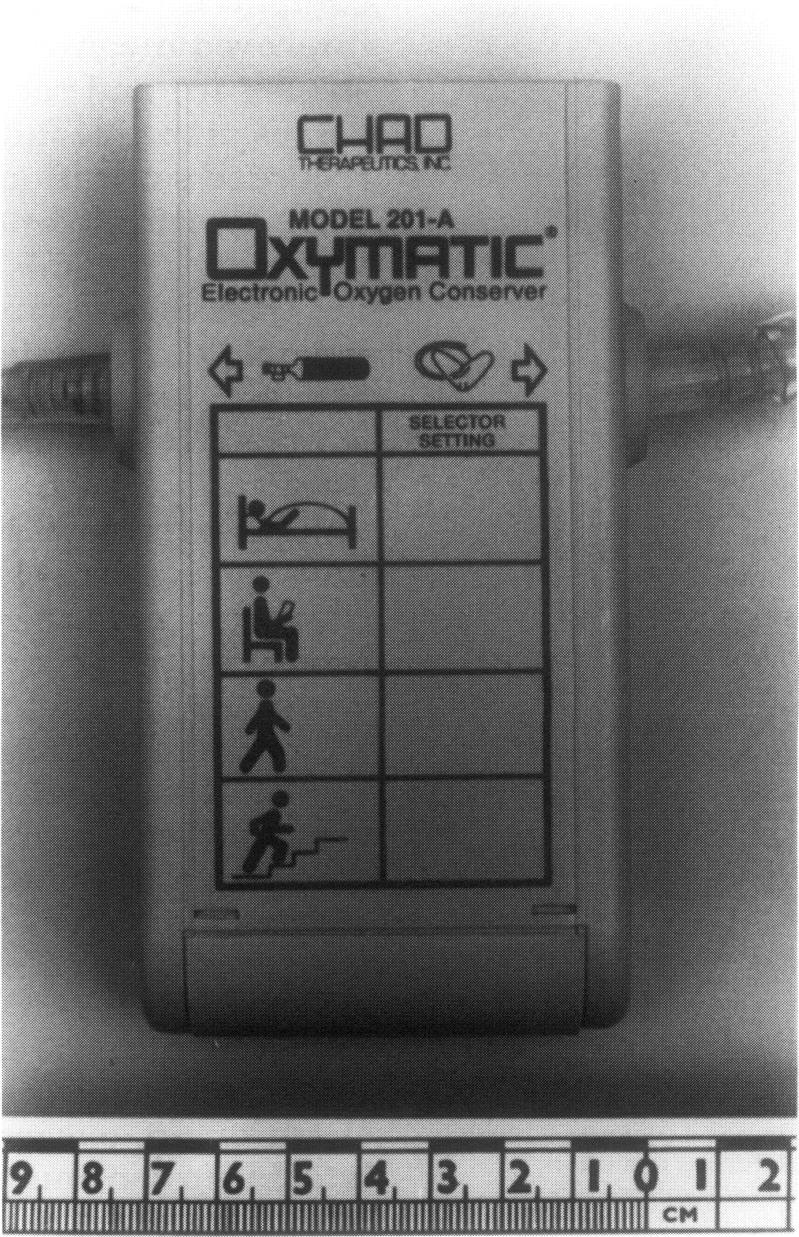
Provision of ambulatory oxygen using an intermittent pulsed flow regulated by a demand oxygen delivery system (DODS) greatly increases the limited supply time of standard portable gaseous cylinders. The efficacy of such a system has not previously been studied during submaximal exercise in subjects with severe chronic obstructive pulmonary disease (COPD) in whom desaturation is likely to be great and where usage is often most appropriate.
Fifteen subjects with severe COPD and oxygen desaturation underwent six minute walk tests performed in random order to compare the efficacy of a demand oxygen delivery system (DODS) with continuous flow oxygen. Walk distance, breathlessness, oxygen saturation, resting time, and recovery time (objective and subjective) were recorded and compared for each walk.
Breathing continuous oxygen compared with baseline air breathing improved mean walk distance (295 m versus 271 m) and recovery time (47 seconds versus 112 seconds), whilst the lowest recorded saturation (81% versus 74%) and time desaturated below 90% (201 seconds versus 299 seconds) were reduced. When the DODS was compared with air breathing only the walk distance changed (283 m versus 271 m). A comparison of the DODS with continuous oxygen breathing showed the DODS to be less effective at oxygenating subjects with inferior lowest saturation (78% versus 81%), time spent below 90% (284 seconds versus 201 seconds), time to objective recovery (83 seconds versus 47 seconds), and walk distance (283 m versus 295 m).
Neither of the delivery systems was able to prevent desaturation in these subjects. The use of continuous flow oxygen, however, was accompanied by improvements in oxygenation, walk distance, and recovery time compared with air breathing. The DODS produced only a small increase in walk distance without elevation of oxygen saturation, but was inferior to continuous flow oxygen in most of the measured variables when compared directly.
使用需求氧输送系统(DODS)调节的间歇性脉冲流提供门诊氧气,可大大延长标准便携式气瓶有限的供应时间。此前尚未在重度慢性阻塞性肺疾病(COPD)患者的次最大运动期间研究过这种系统的疗效,这类患者可能会出现严重的血氧饱和度下降,且使用该系统通常最为合适。
15名患有重度COPD和氧饱和度下降的受试者按随机顺序进行6分钟步行测试,以比较需求氧输送系统(DODS)与持续流氧的疗效。记录并比较每次步行的步行距离、呼吸困难程度、血氧饱和度、休息时间和恢复时间(客观和主观)。
与基线空气呼吸相比,持续吸氧可改善平均步行距离(295米对271米)和恢复时间(47秒对112秒),同时记录到的最低饱和度(81%对74%)和低于90%的血氧饱和度下降时间(201秒对299秒)有所减少。当将DODS与仅空气呼吸进行比较时,只有步行距离发生了变化(283米对271米)。将DODS与持续吸氧进行比较显示,DODS在为最低饱和度较低(78%对81%)、低于90%的时间(284秒对201秒)、客观恢复时间(83秒对47秒)和步行距离(283米对295米)的受试者进行氧合方面效果较差。
两种输送系统均无法防止这些受试者出现血氧饱和度下降。然而,与空气呼吸相比,持续流氧的使用伴随着氧合、步行距离和恢复时间的改善。DODS仅使步行距离略有增加,而未提高血氧饱和度,但直接比较时,在大多数测量变量方面不如持续流氧。