Falk I, Biro J, Kohler H, Eichmann K
Max-Planck-Institut für Immunbiologie, Freiburg, Germany.
J Exp Med. 1996 Dec 1;184(6):2327-39. doi: 10.1084/jem.184.6.2327.
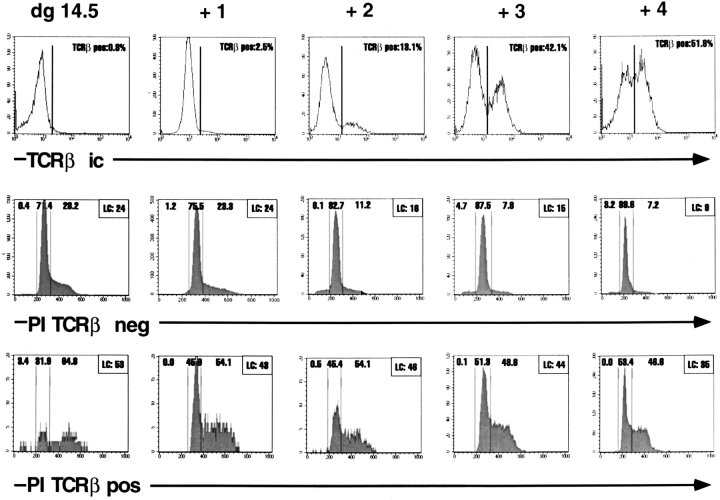
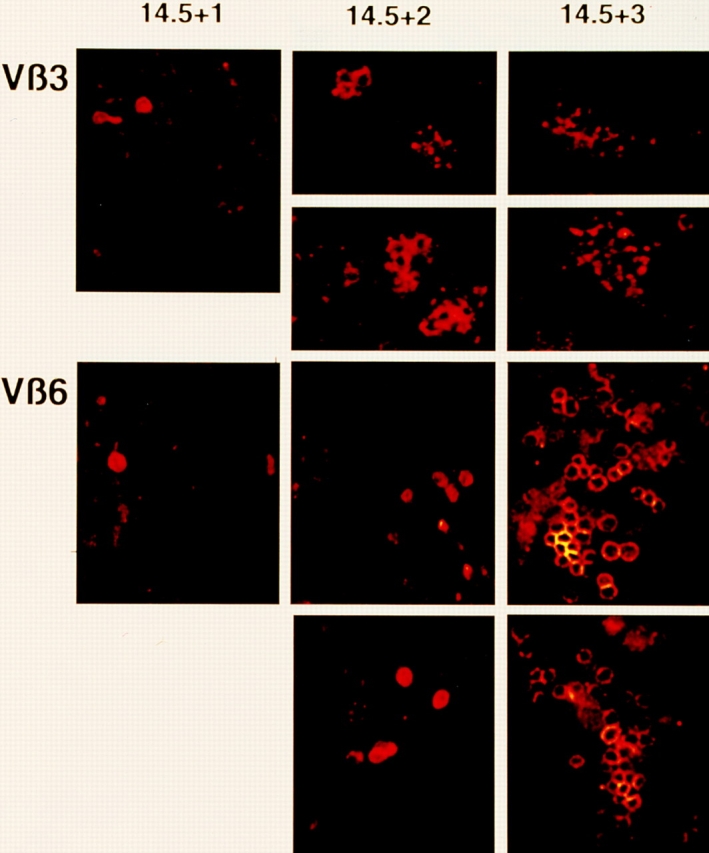
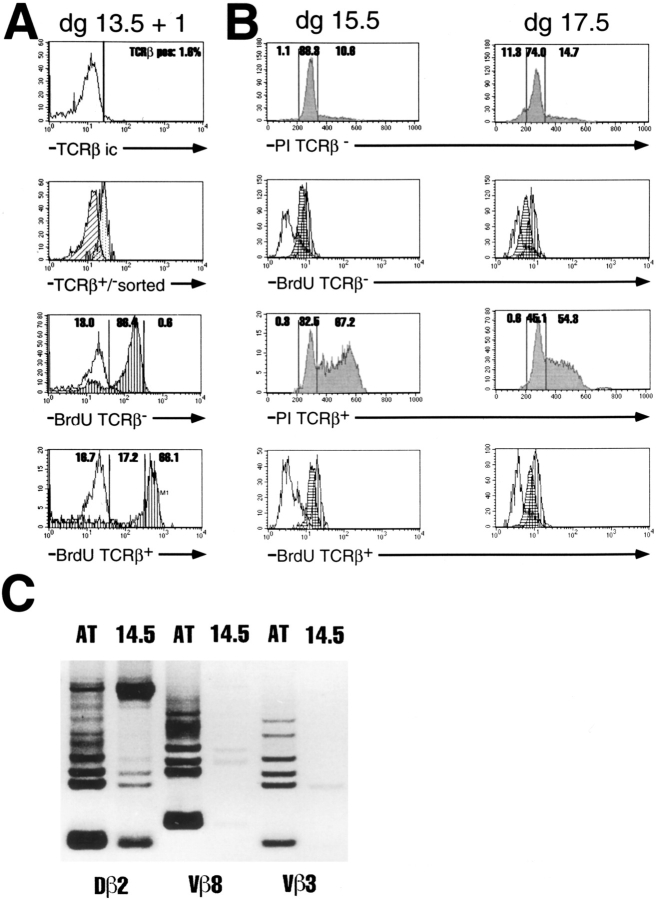
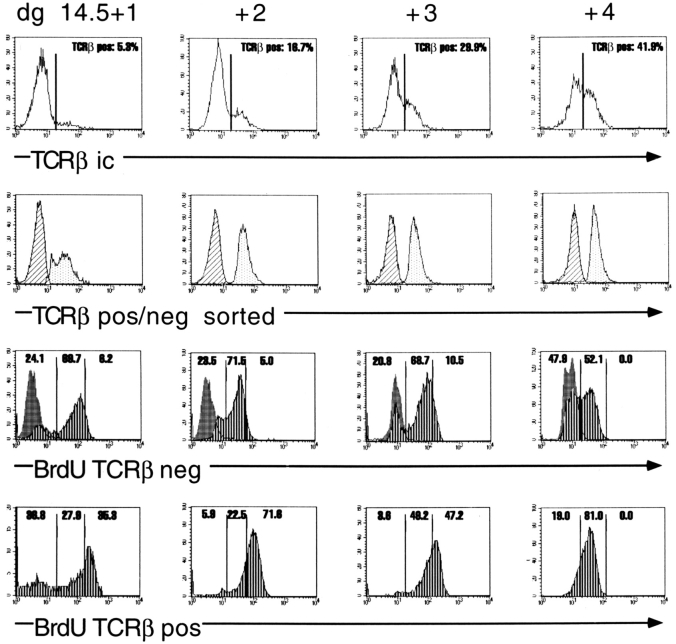
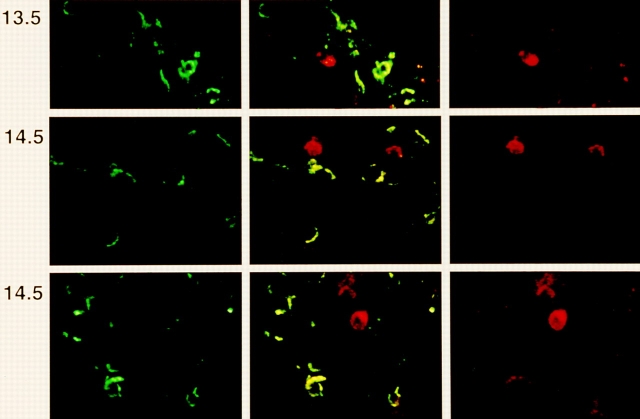
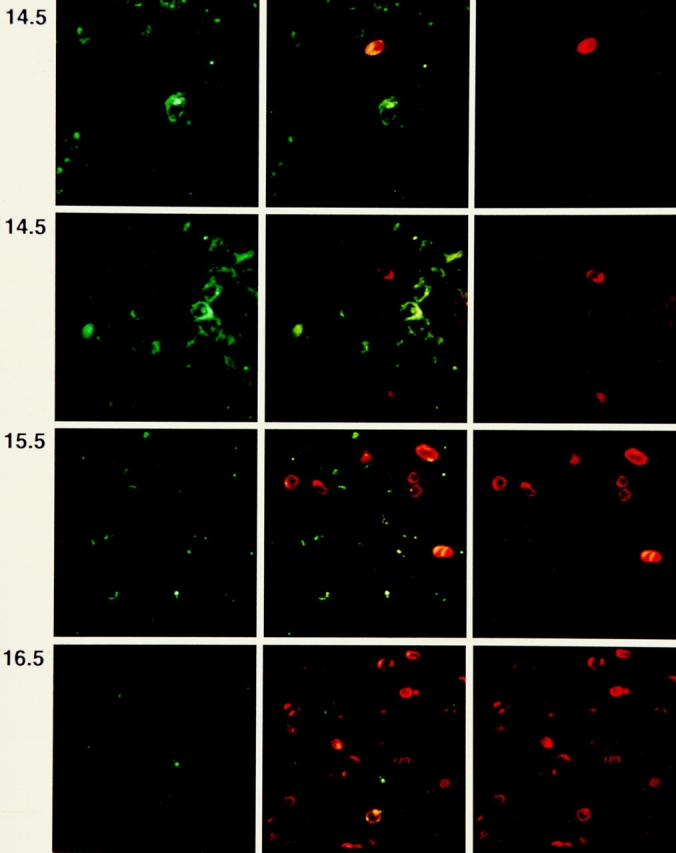
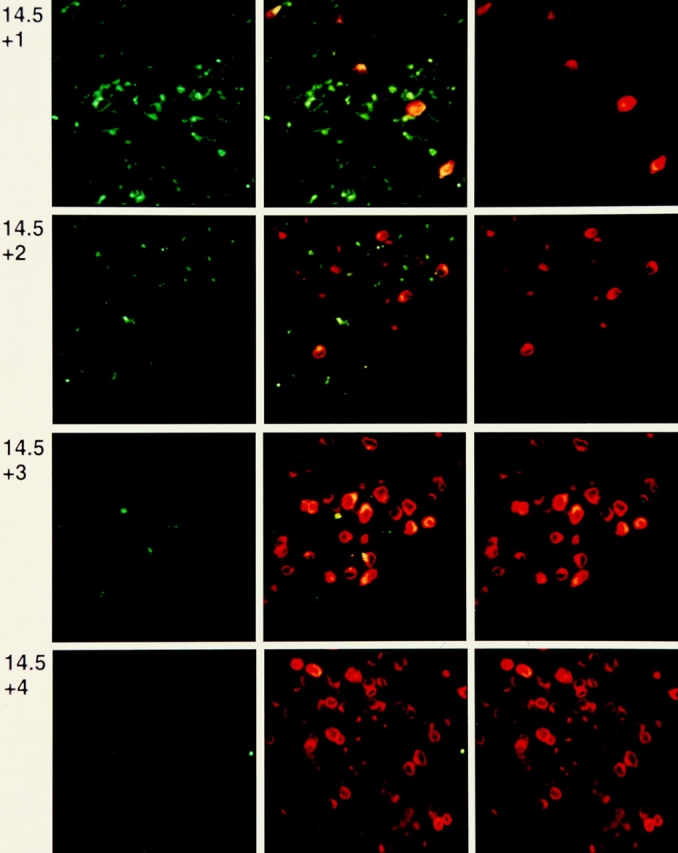
After productive rearrangement of a TCR beta chain gene, CD4-8- double negative (DN) thymocytes express TCR beta polypeptide chains on the cell surface together with pre-T alpha and the CD3 complex forming the pre-TCR. Signals transmitted through the pre-TCR select TCR beta + DN thymocytes for further maturation to the CD4+8+ double positive stage, whereas DN cells that fail to generate a productive TCR beta gene rearrangement do not continue in development. This process is termed TCR beta chain selection. Although it is likely that differences between proliferation dynamics of TCR beta + and TCR beta-cells may play a role, the exact mechanisms of TCR beta chain selection have not been elucidated. We therefore studied the proliferation dynamics of TCR beta + and TCR beta-thymocytes during fetal development, i.e., when TCR beta chain selection takes place for the first time. We analyzed in situ accumulation of TCR beta + thymocytes by confocal microscopy, and determined cell cycle and division parameters of TCR beta + and TCR beta-populations by flow cytometry. About 600 TCR beta + cells/thymic lobe are generated by independent induction events between days of gestation (dg) 13.5, and 15.5. As of dg 14.5, most TCR beta + cells have entered S/G2 phase of cell cycle, followed by seven to eight rapid cell divisions in fetal thymic organ culture, suggesting a corresponding burst of nine cell divisions within 4 d in vivo. By dg 18.5, the division rate of TCR beta + cells has slowed down to less than 1/d. About three quarters of TCR beta-cells divide at a slow rate of 1/d on dg 14.5, the proportion of nondividing cells increasing to 50% within the following four d. From dg 16.5 onwards, TCR beta-cells, but not TCR beta + cells, contain a significant proportion of apoptotic cells. The results suggest that failure to become selected results in shutdown of proliferation and eventual programmed cell death of fetal TCR beta-cells. Positive selection of fetal TCR beta + cells is achieved by an increased rate of cell divisions lasting for approximately 4 d.
在TCRβ链基因发生有效重排后,CD4-8-双阴性(DN)胸腺细胞在细胞表面表达TCRβ多肽链,同时表达前Tα和形成前TCR的CD3复合物。通过前TCR传递的信号选择TCRβ+DN胸腺细胞进一步成熟至CD4+8+双阳性阶段,而未能产生有效TCRβ基因重排的DN细胞则不能继续发育。这个过程被称为TCRβ链选择。尽管TCRβ+和TCRβ-细胞增殖动力学的差异可能起作用,但TCRβ链选择的确切机制尚未阐明。因此,我们研究了胎儿发育期间TCRβ+和TCRβ-胸腺细胞的增殖动力学,即TCRβ链选择首次发生时。我们通过共聚焦显微镜分析TCRβ+胸腺细胞的原位积累,并通过流式细胞术确定TCRβ+和TCRβ-群体的细胞周期和分裂参数。在妊娠(dg)13.5天至15.5天之间,通过独立诱导事件,每个胸腺叶大约产生600个TCRβ+细胞。从dg 14.5开始,大多数TCRβ+细胞进入细胞周期的S/G2期,随后在胎儿胸腺器官培养中进行七到八次快速细胞分裂,这表明在体内4天内相应地有九次细胞分裂爆发。到dg 18.5时,TCRβ+细胞的分裂速率已减慢至每天少于1次。在dg 14.5时,约四分之三的TCRβ-细胞以每天1次的缓慢速率分裂,在接下来的四天内,不分裂细胞的比例增加到50%。从dg 16.5开始,TCRβ-细胞(而非TCRβ+细胞)含有相当比例的凋亡细胞。结果表明,未能被选择会导致胎儿TCRβ-细胞增殖停止并最终发生程序性细胞死亡。胎儿TCRβ+细胞的阳性选择是通过持续约4天的细胞分裂速率增加来实现的。