Caron J M
Department of Physiology, University of Connecticut Health Center, Farmington 06030, USA.
Mol Biol Cell. 1997 Apr;8(4):621-36. doi: 10.1091/mbc.8.4.621.
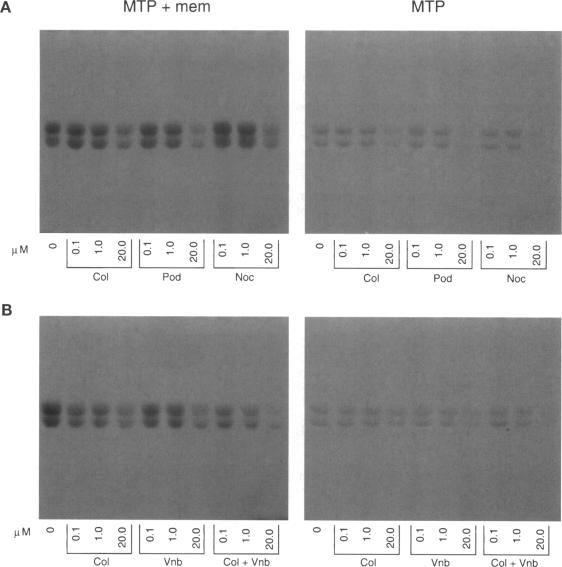
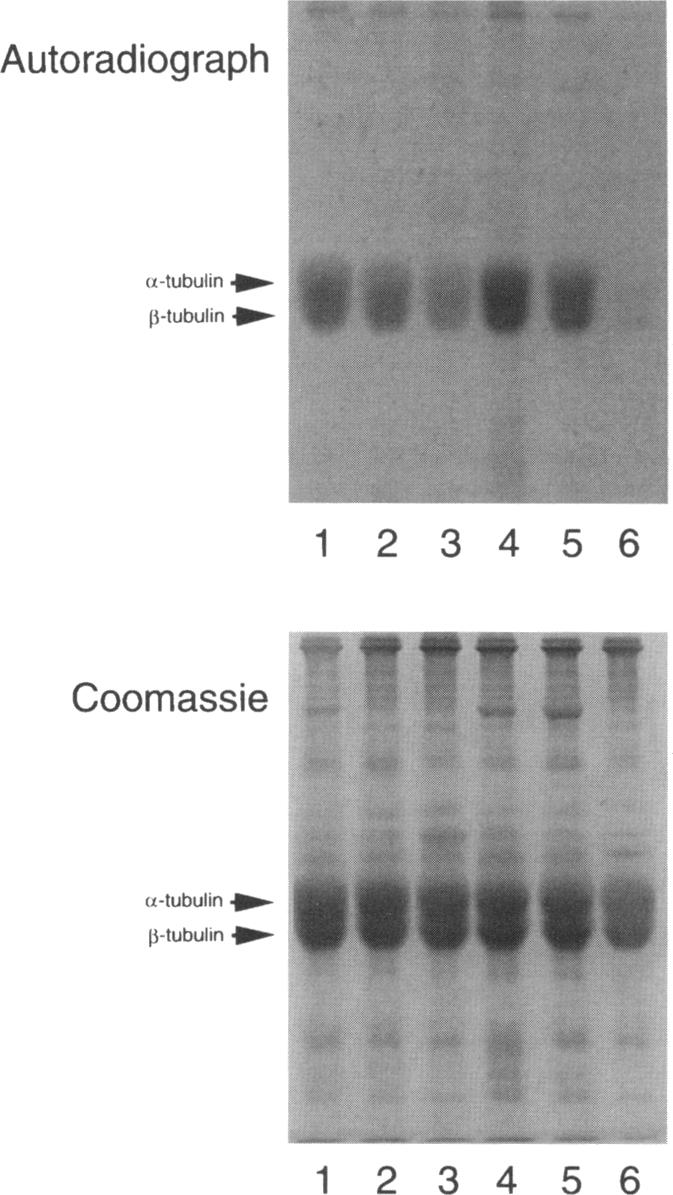
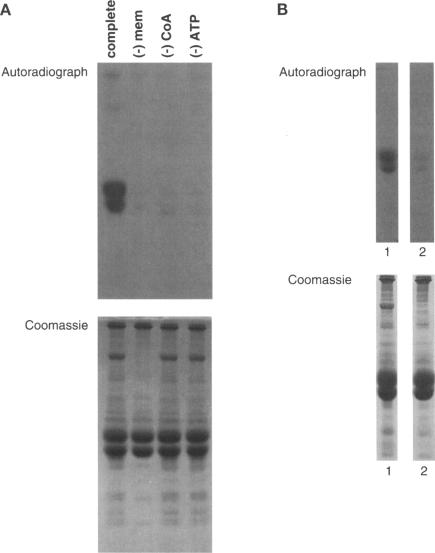
It is well established that microtubules interact with intracellular membranes of eukaryotic cells. There is also evidence that tubulin, the major subunit of microtubules, associates directly with membranes. In many cases, this association between tubulin and membranes involves hydrophobic interactions. However, neither primary sequence nor known posttranslational modifications of tubulin can account for such an interaction. The goal of this study was to determine the molecular nature of hydrophobic interactions between tubulin and membranes. Specifically, I sought to identify a posttranslational modification of tubulin that is found in membrane proteins but not in cytoplasmic proteins. One such modification is the covalent attachment of the long chain fatty acid palmitate. The possibility that tubulin is a substrate for palmitoylation was investigated. First, I found that tubulin was palmitoylated in resting platelets and that the level of palmitoylation of tubulin decreased upon activation of platelets with thrombin. Second, to obtain quantities of palmitoylated tubulin required for protein structure analysis, a cell-free system for palmitoylation of tubulin was developed and characterized. The substrates for palmitoylation were nonpolymerized tubulin and tubulin in microtubules assembled with the slowly hydrolyzable GTP analogue guanylyl-(alpha, beta)-methylene-diphosphonate. However, tubulin in Taxol-assembled microtubules was not a substrate for palmitoylation. Likewise, palmitoylation of tubulin in the cell-free system was specifically inhibited by the antimicrotubule drugs Colcemid, podophyllotoxin, nocodazole, and vinblastine. These experiments identify a previously unknown posttranslational modification of tubulin that can account for at least one type of hydrophobic interaction with intracellular membranes.
微管与真核细胞的细胞内膜相互作用,这一点已得到充分证实。也有证据表明,微管的主要亚基微管蛋白可直接与膜结合。在许多情况下,微管蛋白与膜之间的这种结合涉及疏水相互作用。然而,微管蛋白的一级序列和已知的翻译后修饰都无法解释这种相互作用。本研究的目的是确定微管蛋白与膜之间疏水相互作用的分子本质。具体而言,我试图鉴定一种在膜蛋白中存在但在细胞质蛋白中不存在的微管蛋白翻译后修饰。一种这样的修饰是长链脂肪酸棕榈酸酯的共价连接。研究了微管蛋白是否是棕榈酰化的底物。首先,我发现静止血小板中的微管蛋白被棕榈酰化,并且在用凝血酶激活血小板后,微管蛋白的棕榈酰化水平降低。其次,为了获得蛋白质结构分析所需的棕榈酰化微管蛋白量,开发并表征了一种用于微管蛋白棕榈酰化的无细胞系统。棕榈酰化的底物是非聚合的微管蛋白以及与缓慢水解的GTP类似物鸟苷酰 -(α,β)-亚甲基二磷酸组装的微管中的微管蛋白。然而,紫杉醇组装的微管中的微管蛋白不是棕榈酰化的底物。同样,无细胞系统中微管蛋白的棕榈酰化被抗微管药物秋水仙酰胺、鬼臼毒素、诺考达唑和长春碱特异性抑制。这些实验鉴定了一种以前未知的微管蛋白翻译后修饰,它可以解释与细胞内膜的至少一种疏水相互作用类型。