Baumeister A, Arber S, Caroni P
Friedrich Miescher Institute, P.O. Box 2543, CH-4002 Basel, Switzerland.
J Cell Biol. 1997 Dec 1;139(5):1231-42. doi: 10.1083/jcb.139.5.1231.
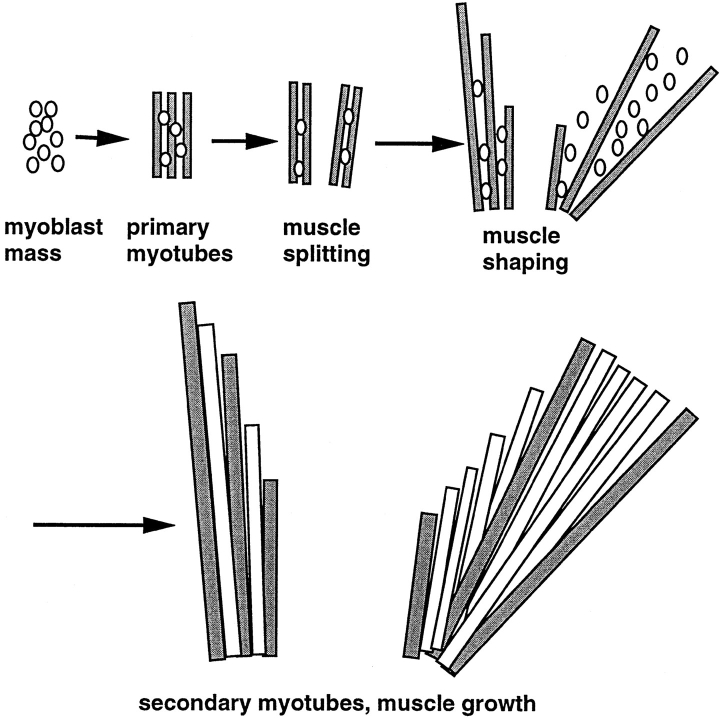
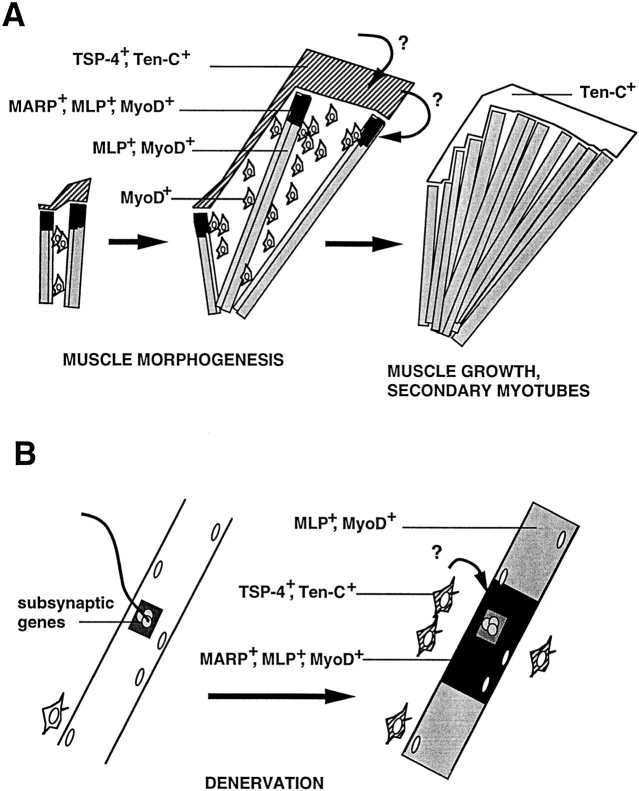
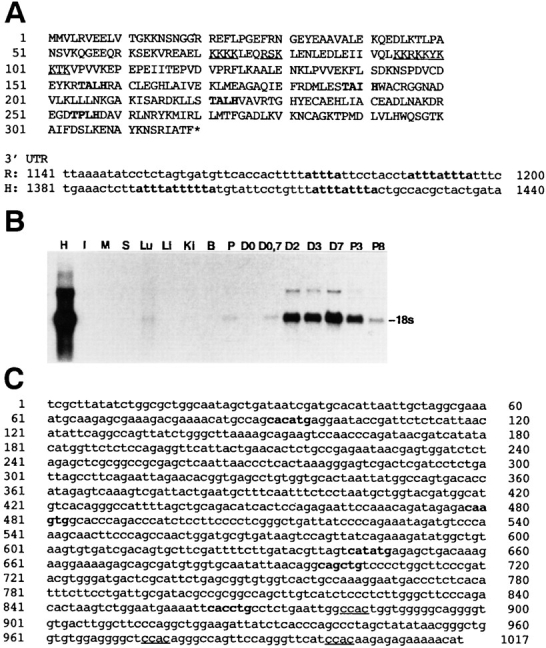
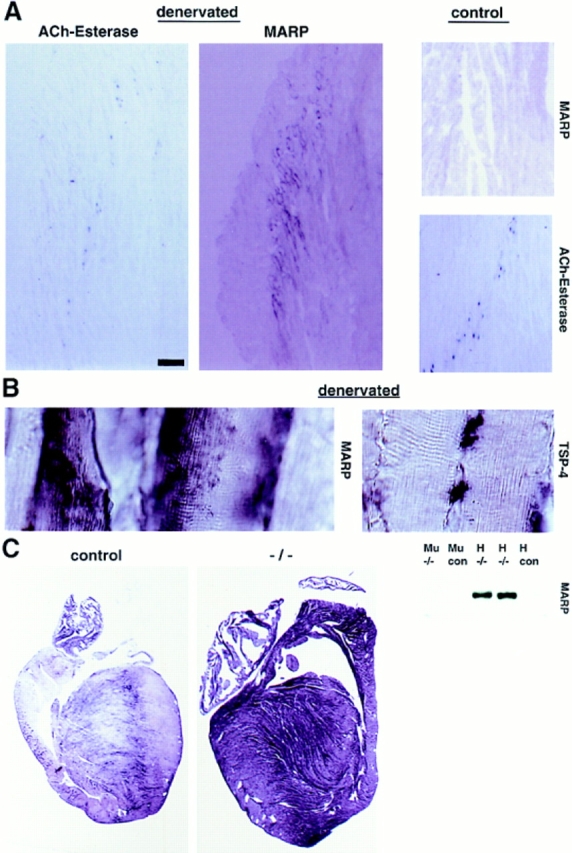
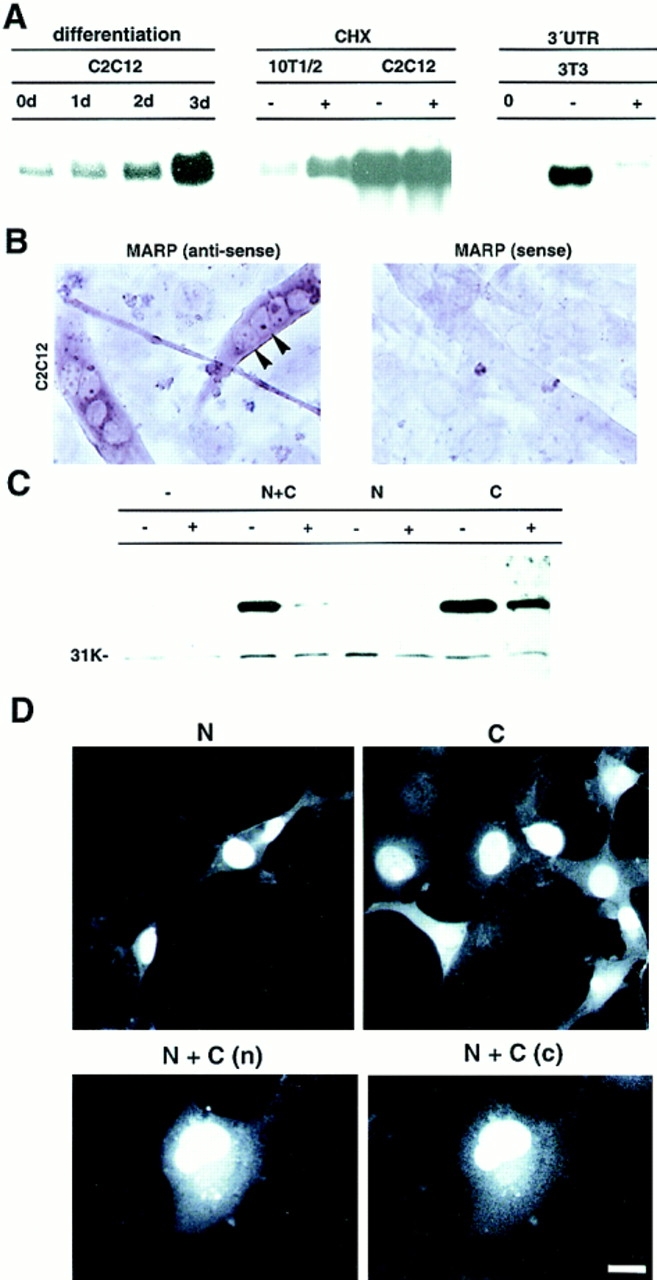
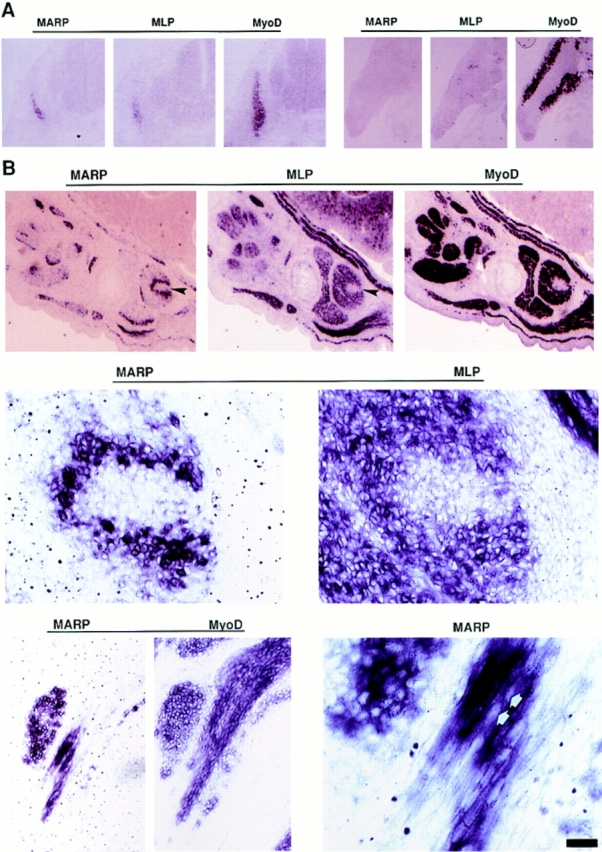
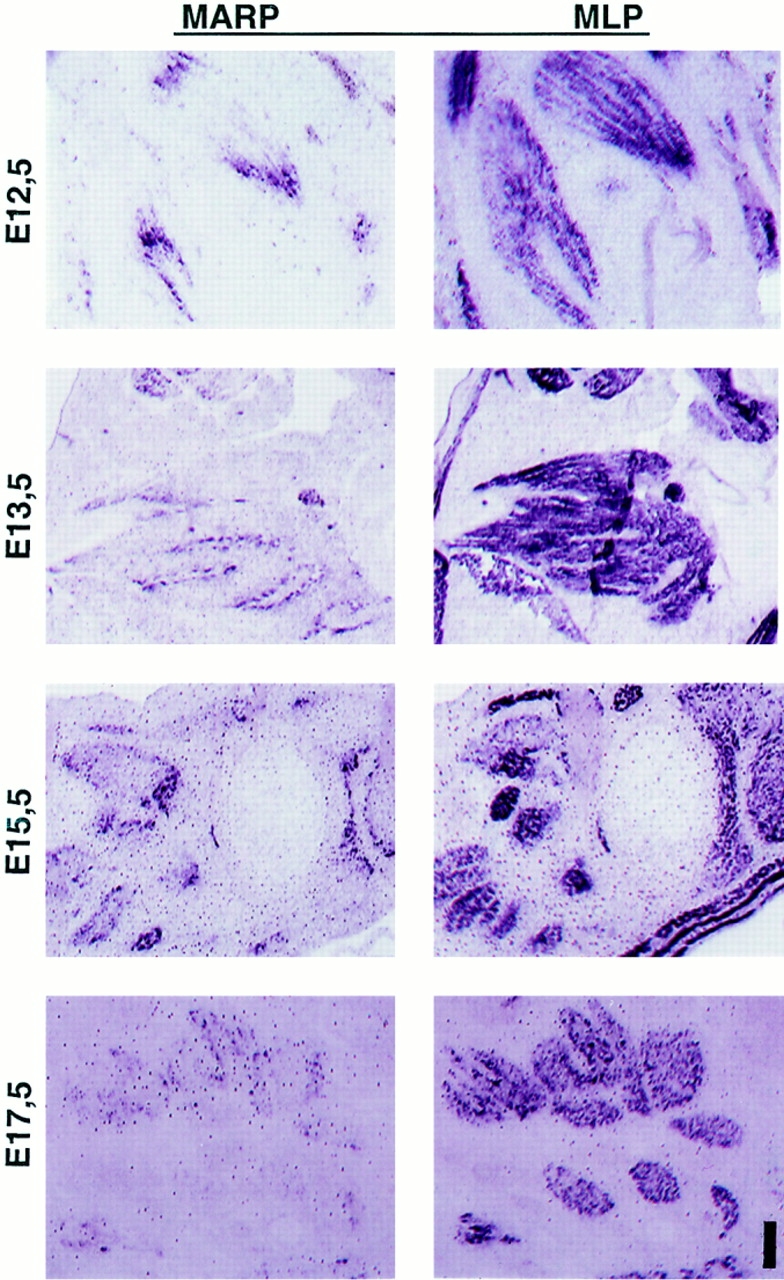
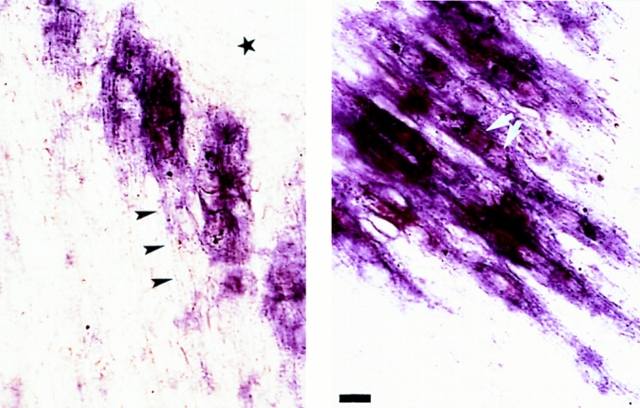
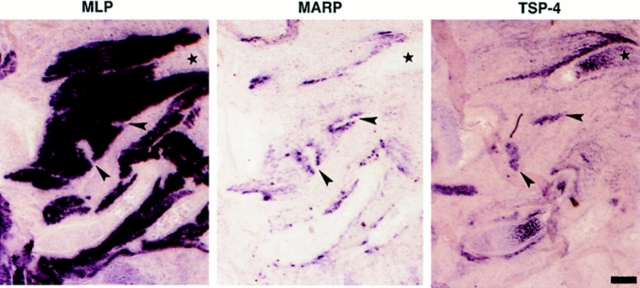
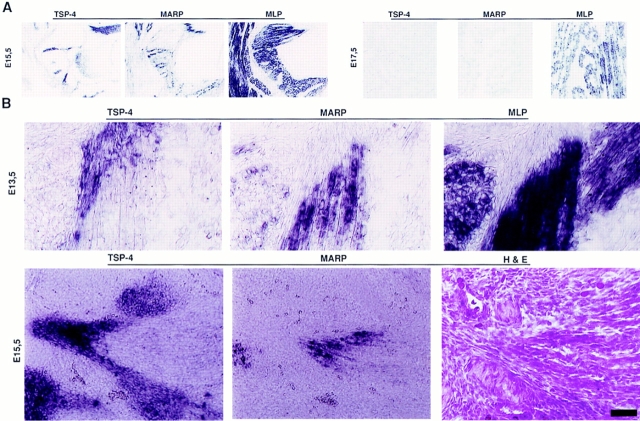
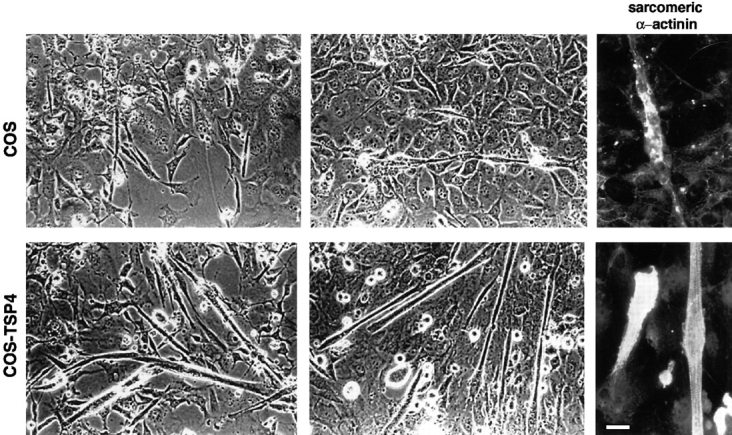
The characteristic shapes and positions of each individual body muscle are established during the process of muscle morphogenesis in response to patterning information from the surrounding mesenchyme. Throughout muscle morphogenesis, primary myotubes are arranged in small parallel bundles, each myotube spanning the forming muscles from end to end. This unique arrangement potentially assigns a crucial role to primary myotube end regions for muscle morphogenesis. We have cloned muscle ankyrin repeat protein (MARP) as a gene induced in adult rat skeletal muscle by denervation. MARP is the rodent homologue of human C-193 (Chu, W., D.K. Burns, R.A. Swerick, and D.H. Presky. 1995. J. Biol. Chem. 270:10236-10245) and is identical to rat cardiac ankyrin repeat protein. (Zou, Y., S. Evans, J. Chen, H.-C. Kuo, R.P. Harvey, and K.R. Chien. 1997. Development. 124:793-804). In denervated muscle fibers, MARP transcript accumulated in a unique perisynaptic pattern. MARP was also expressed in large blood vessels and in cardiac muscle, where it was further induced by cardiac hypertrophy. During embryonic development, MARP was expressed in forming skeletal muscle. In situ hybridization analysis in mouse embryos revealed that MARP transcript exclusively accumulates at the end regions of primary myotubes during muscle morphogenesis. This closely coincided with the expression of thrombospondin-4 in adjacent prospective tendon mesenchyme, suggesting that these two compartments may constitute a functional unit involved in muscle morphogenesis. Transfection experiments established that MARP protein accumulates in the nucleus and that the levels of both MARP mRNA and protein are controlled by rapid degradation mechanisms characteristic of regulatory early response genes. The results establish the existence of novel regulatory muscle fiber subcompartments associated with muscle morphogenesis and denervation and suggest that MARP may be a crucial nuclear cofactor in local signaling pathways from prospective tendon mesenchyme to forming muscle and from activated muscle interstitial cells to denervated muscle fibers.
在肌肉形态发生过程中,每个个体身体肌肉的特征形状和位置是根据来自周围间充质的模式信息而确立的。在整个肌肉形态发生过程中,初级肌管排列成小的平行束,每个肌管从头到尾跨越正在形成的肌肉。这种独特的排列可能赋予初级肌管末端区域在肌肉形态发生中至关重要的作用。我们已经克隆了肌肉锚蛋白重复蛋白(MARP),它是一种在成年大鼠骨骼肌中因去神经支配而诱导表达的基因。MARP是人类C - 193(Chu, W., D.K. Burns, R.A. Swerick, and D.H. Presky. 1995. J. Biol. Chem. 270:10236 - 10245)的啮齿动物同源物,并且与大鼠心脏锚蛋白重复蛋白相同。(Zou, Y., S. Evans, J. Chen, H.-C. Kuo, R.P. Harvey, and K.R. Chien. 1997. Development. 124:793 - 804)。在去神经支配的肌纤维中,MARP转录本以独特的突触周围模式积累。MARP也在大血管和心肌中表达,在心肌中它会因心肌肥大而进一步诱导表达。在胚胎发育过程中,MARP在正在形成的骨骼肌中表达。对小鼠胚胎的原位杂交分析表明,在肌肉形态发生过程中,MARP转录本仅在初级肌管的末端区域积累。这与血小板反应蛋白 - 4在相邻的预期肌腱间充质中的表达密切相关,表明这两个区域可能构成参与肌肉形态发生的功能单元。转染实验证实,MARP蛋白在细胞核中积累,并且MARP mRNA和蛋白的水平受调节早期反应基因特有的快速降解机制控制。这些结果证实了与肌肉形态发生和去神经支配相关的新型调节性肌纤维亚区域的存在,并表明MARP可能是从前瞻性肌腱间充质到正在形成的肌肉以及从活化的肌肉间质细胞到去神经支配的肌纤维的局部信号通路中的关键核辅因子。