Su Y, Shi Y, Stolow M A, Shi Y B
Laboratory of Molecular Embryology, National Institute of Child Health and Human Development, Bethesda, Maryland 20892-5431, USA.
J Cell Biol. 1997 Dec 15;139(6):1533-43. doi: 10.1083/jcb.139.6.1533.
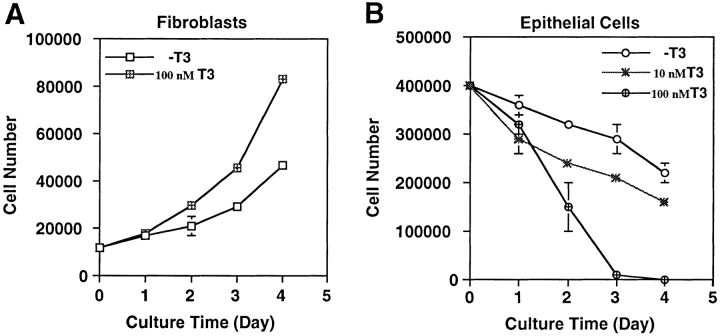
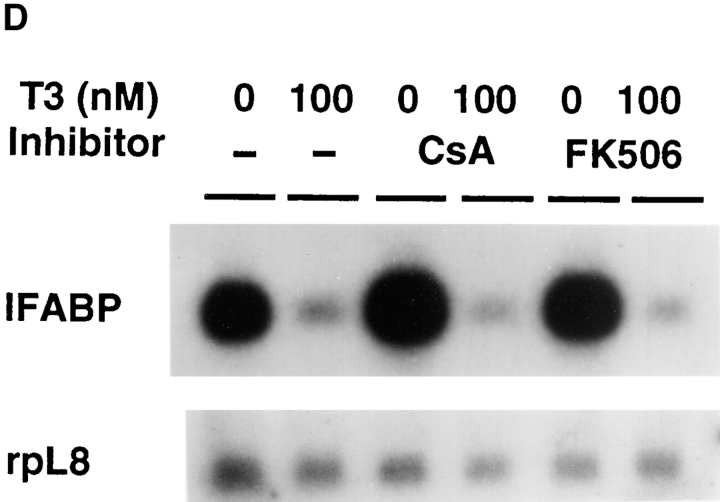
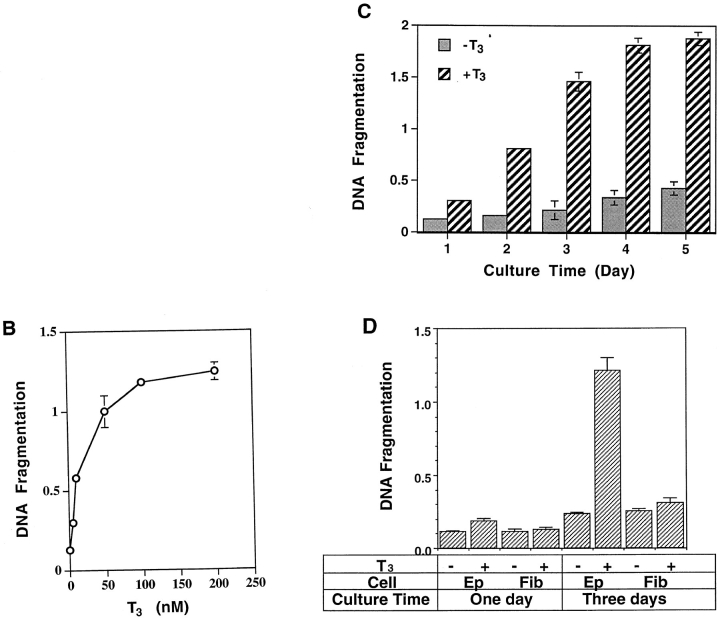
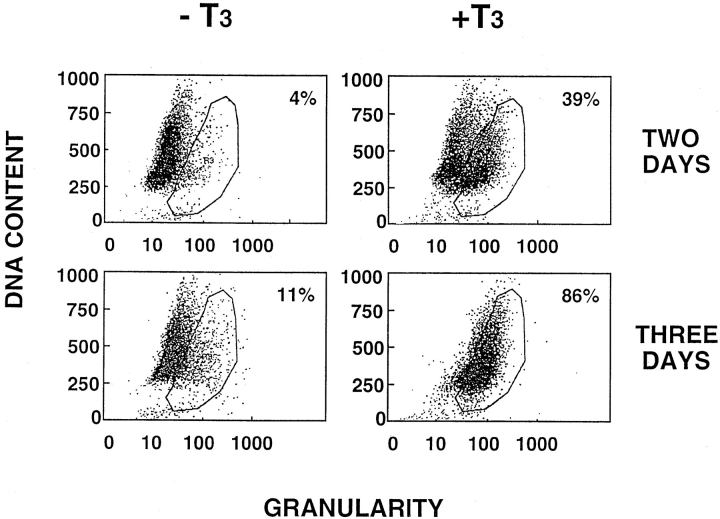
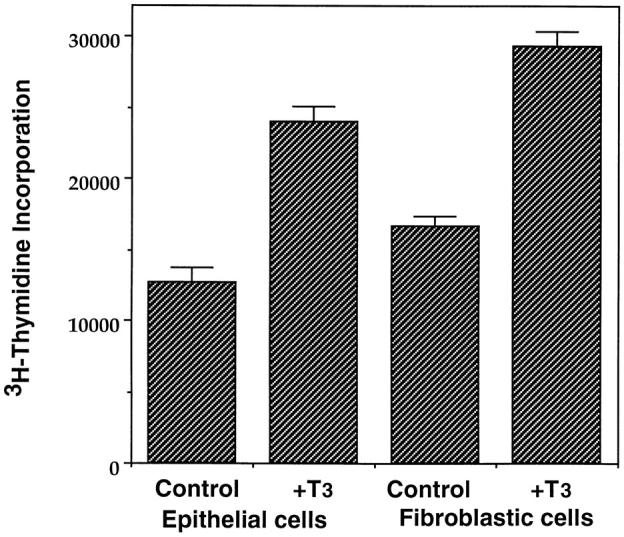
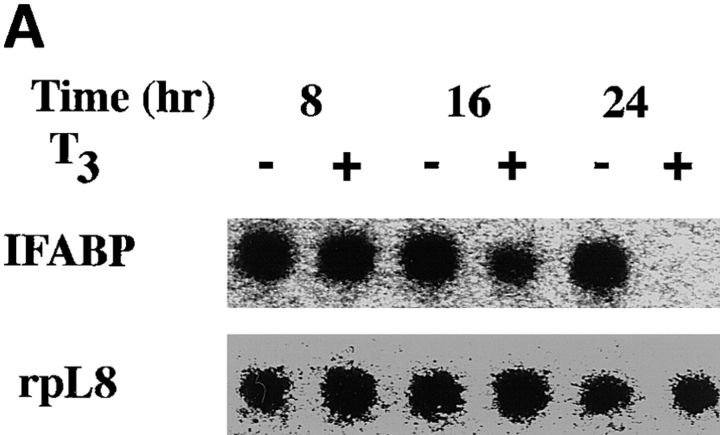
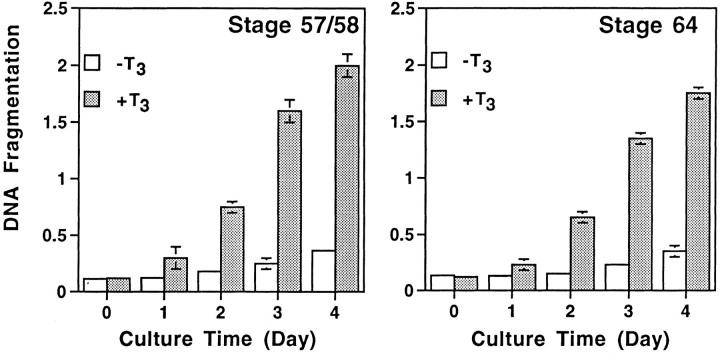
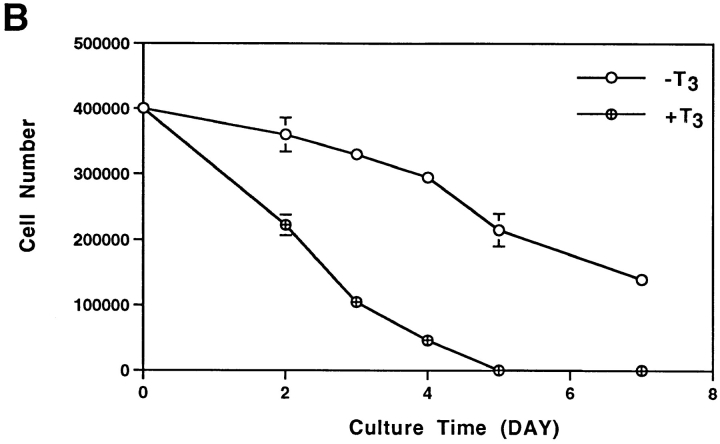
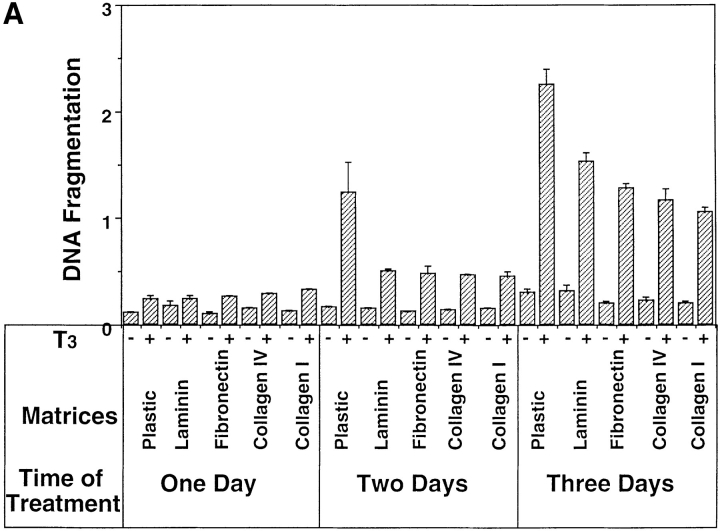
Thyroid hormone (T3 or 3,5,3'-triiodothyronine) plays a causative role during amphibian metamorphosis. To investigate how T3 induces some cells to die and others to proliferate and differentiate during this process, we have chosen the model system of intestinal remodeling, which involves apoptotic degeneration of larval epithelial cells and proliferation and differentiation of other cells, such as the fibroblasts and adult epithelial cells, to form the adult intestine. We have established in vitro culture conditions for intestinal epithelial cells and fibroblasts. With this system, we show that T3 can enhance the proliferation of both cell types. However, T3 also concurrently induces larval epithelial apoptosis, which can be inhibited by the extracellular matrix (ECM). Our studies with known inhibitors of mammalian cell death reveal both similarities and differences between amphibian and mammalian cell death. These, together with gene expression analysis, reveal that T3 appears to simultaneously induce different pathways that lead to specific gene regulation, proliferation, and apoptotic degeneration of the epithelial cells. Thus, our data provide an important molecular and cellular basis for the differential responses of different cell types to the endogenous T3 during metamorphosis and support a role of ECM during frog metamorphosis.
甲状腺激素(T3 或 3,5,3'-三碘甲状腺原氨酸)在两栖动物变态过程中起关键作用。为了研究 T3 在这一过程中如何诱导一些细胞死亡而另一些细胞增殖和分化,我们选择了肠道重塑的模型系统,该过程涉及幼虫上皮细胞的凋亡性退化以及其他细胞(如成纤维细胞和成年上皮细胞)的增殖和分化,以形成成年肠道。我们已经建立了肠道上皮细胞和成纤维细胞的体外培养条件。利用这个系统,我们发现 T3 可以增强这两种细胞类型的增殖。然而,T3 同时也诱导幼虫上皮细胞凋亡,而细胞外基质(ECM)可以抑制这种凋亡。我们对已知的哺乳动物细胞死亡抑制剂的研究揭示了两栖动物和哺乳动物细胞死亡之间的异同。这些研究结果与基因表达分析一起表明,T3 似乎同时诱导不同的信号通路,导致上皮细胞的特定基因调控、增殖和凋亡性退化。因此,我们的数据为变态过程中不同细胞类型对内源性 T3 的不同反应提供了重要的分子和细胞基础,并支持了 ECM 在青蛙变态过程中的作用。