Ryan K R, Evavold B D
Department of Microbiology and Immunology, Emory University, Atlanta, Georgia 30322, USA.
J Exp Med. 1998 Jan 5;187(1):89-96. doi: 10.1084/jem.187.1.89.
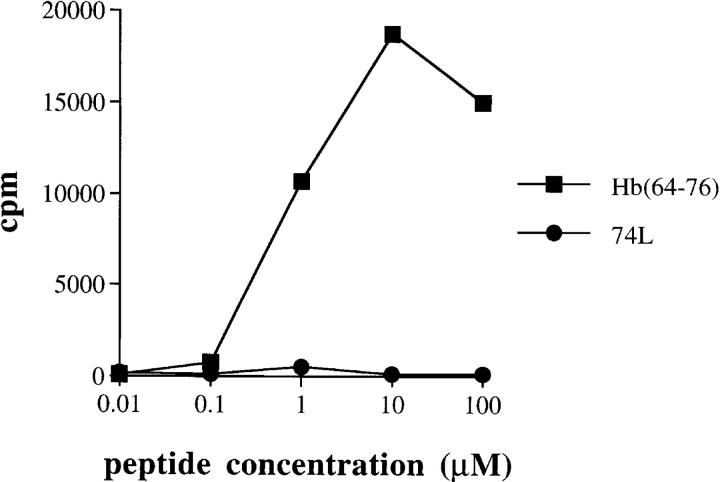
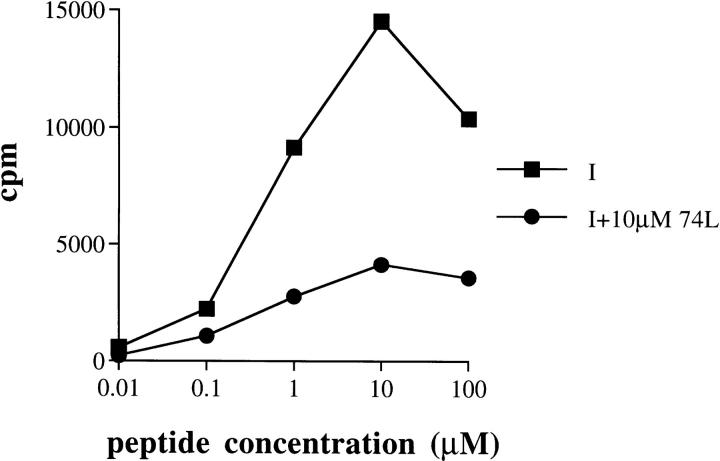
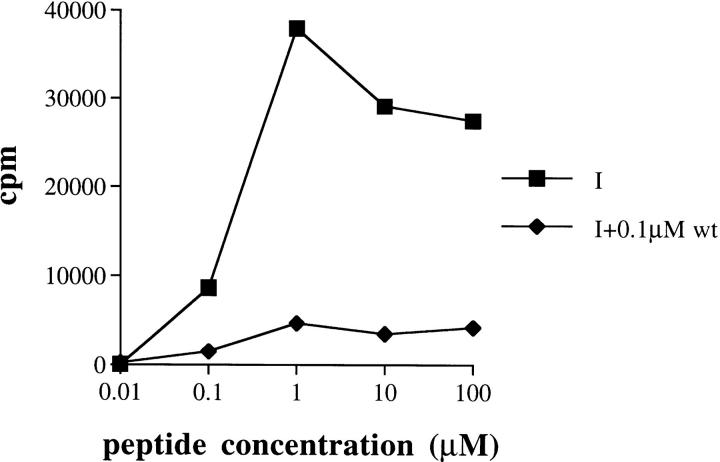
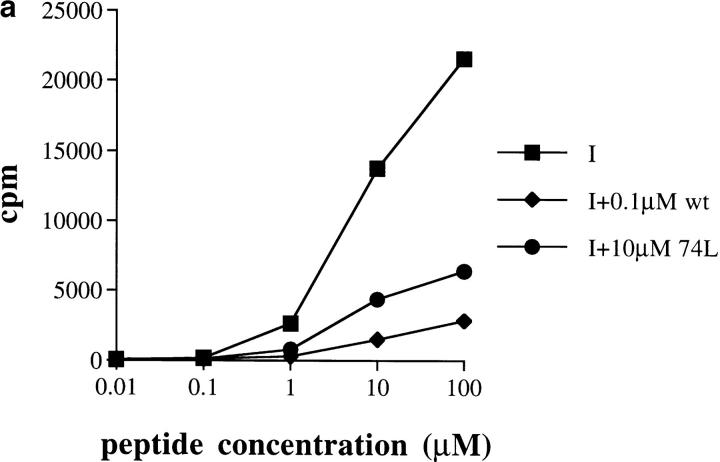
Clonal T cell unresponsiveness, or anergy, has been proposed as a mechanism of peripheral tolerance in vivo, and as a potential means of curbing unwanted T cell responses. In this study, anergy was induced in a T helper cell (Th) clone reactive to hemoglobin (Hb) peptide 64-76 by coculture of the T cells with live antigen-presenting cells (APCs) and 74L, a peptide analog of Hb(64-76) that contains a single amino acid substitution of leucine for glycine at position 74, or with a low concentration of the agonist ligand. The anergic state was characterized by blunted proliferation and interleukin (IL) 2 production upon restimulation with Hb(64-76), and was not the result of impaired TCR/CD3 downmodulation. The addition of exogenous IL-12 transiently restored proliferation of the anergic lines, but removal of IL-12 from culture returned the T cells to their nonproliferative state. Interestingly, persistence of the anergic phenotype was observed despite biweekly restimulation with antigen, APCs, and IL-2. Thus, T cell unresponsiveness induced by a peptide produced a stable, persistent anergic state in a Th0 clone that was not reversible by stimulation with IL-2 or -12.
克隆性T细胞无反应性,即无能,已被提出作为体内外周耐受的一种机制,以及抑制不必要的T细胞反应的一种潜在手段。在本研究中,通过将T细胞与活的抗原呈递细胞(APC)以及74L(一种血红蛋白(Hb)肽64 - 76的肽类似物,在第74位氨基酸处亮氨酸取代了甘氨酸)或低浓度的激动剂配体共培养,在对Hb肽64 - 76有反应的辅助性T细胞(Th)克隆中诱导出无能状态。无能状态的特征是在用Hb(64 - 76)再次刺激时增殖减弱和白细胞介素(IL)-2产生减少,且不是TCR/CD3下调受损的结果。添加外源性IL-12可短暂恢复无能细胞系的增殖,但从培养物中去除IL-12会使T细胞恢复到非增殖状态。有趣的是,尽管每两周用抗原、APC和IL-2进行再次刺激,仍观察到无能表型的持续存在。因此,由一种肽诱导的T细胞无反应性在一个Th0克隆中产生了一种稳定、持久的无能状态,这种状态不能通过IL-2或IL-12刺激而逆转。