Watanabe M, Ueno Y, Yajima T, Okamoto S, Hayashi T, Yamazaki M, Iwao Y, Ishii H, Habu S, Uehira M, Nishimoto H, Ishikawa H, Hata J, Hibi T
Keio Cancer Center, School of Medicine, Keio University, Tokyo 160, Japan.
J Exp Med. 1998 Feb 2;187(3):389-402. doi: 10.1084/jem.187.3.389.
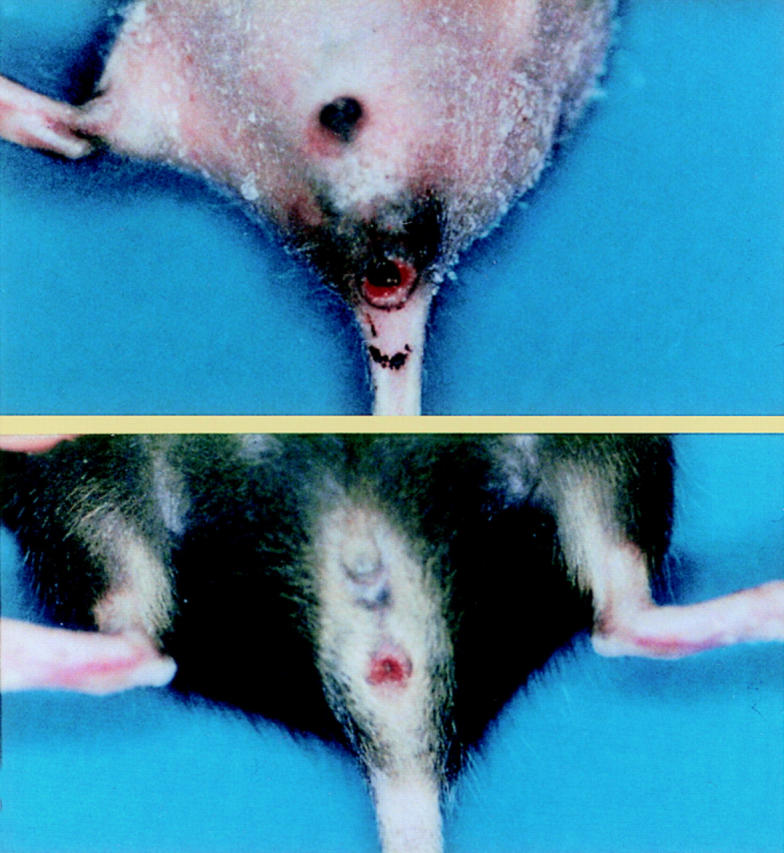
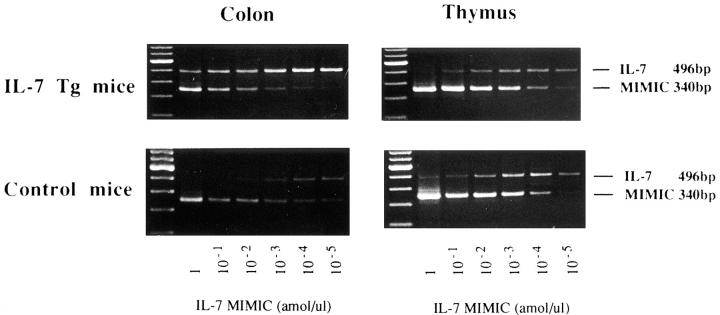
We have demonstrated that intestinal epithelial cells produce interleukin 7 (IL-7), and IL-7 serves as a potent regulatory factor for proliferation of intestinal mucosal lymphocytes expressing functional IL-7 receptor. To clarify the mechanism by which locally produced IL-7 regulates the mucosal lymphocytes, we investigated IL-7 transgenic mice. Here we report that transgenic mice expressing murine IL-7 cDNA driver by the SRalpha promoter developed chronic colitis in concert with the expression of SRalpha/IL-7 transgene in the colonic mucosa. IL-7 transgenic but not littermate mice developed chronic colitis at 4-12 wk of age, with histopathological similarity to ulcerative colitis in humans. Southern blot hybridization and competitive PCR demonstrated that the expression of IL-7 messenger RNA was increased in the colonic mucosal lymphocytes but not in the colonic epithelial cells. IL-7 protein accumulation was decreased in the goblet cell-depleted colonic epithelium in the transgenic mice. Immunohistochemical and cytokine production analysis showed that lymphoid infiltrates in the lamina propria were dominated by T helper cell type 1 CD4+ T cells. Flow cytometric analysis demonstrated that CD4+ intraepithelial T cells were increased, but T cell receptor gamma/delta T cells and CD8alpha/alpha cells were not increased in the area of chronic inflammation. Increased IL-7 receptor expression in mucosal lymphocytes was demonstrated in the transgenic mice. These findings suggest that chronic inflammation in the colonic mucosa may be mediated by dysregulation of colonic epithelial cell-derived IL-7, and this murine model of chronic colitis may contribute to the understanding of the pathogenesis of human inflammatory bowel disease.
我们已经证明,肠道上皮细胞可产生白细胞介素7(IL-7),并且IL-7作为一种有效的调节因子,可促进表达功能性IL-7受体的肠道黏膜淋巴细胞的增殖。为了阐明局部产生的IL-7调节黏膜淋巴细胞的机制,我们对IL-7转基因小鼠进行了研究。在此我们报告,由SRα启动子驱动表达鼠IL-7 cDNA的转基因小鼠,随着结肠黏膜中SRα/IL-7转基因的表达而发生慢性结肠炎。IL-7转基因小鼠而非同窝小鼠在4至12周龄时发生慢性结肠炎,其组织病理学与人类溃疡性结肠炎相似。Southern印迹杂交和竞争性PCR显示,结肠黏膜淋巴细胞中IL-7信使RNA的表达增加,但结肠上皮细胞中未增加。转基因小鼠中杯状细胞缺失的结肠上皮中IL-7蛋白积累减少。免疫组织化学和细胞因子产生分析表明,固有层中的淋巴细胞浸润以1型辅助性T细胞CD4+ T细胞为主。流式细胞术分析表明,在慢性炎症区域,CD4+上皮内T细胞增加,但T细胞受体γ/δ T细胞和CD8α/α细胞未增加。转基因小鼠中黏膜淋巴细胞中IL-7受体表达增加。这些发现表明,结肠黏膜中的慢性炎症可能由结肠上皮细胞来源的IL-7失调介导,并且这种慢性结肠炎小鼠模型可能有助于理解人类炎症性肠病的发病机制。