Ahmad A, Hanby A, Dublin E, Poulsom R, Smith P, Barnes D, Rubens R, Anglard P, Hart I
Richard Dimbleby Department of Cancer Research/ICRF, The Rayne Institute, St. Thomas' Hospital, London, United Kingdom.
Am J Pathol. 1998 Mar;152(3):721-8.
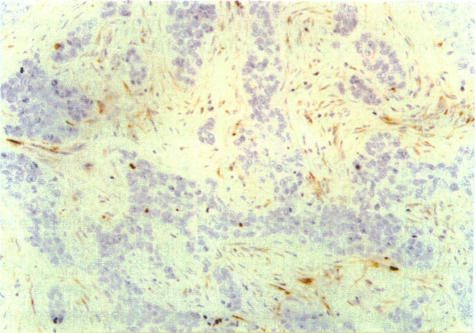
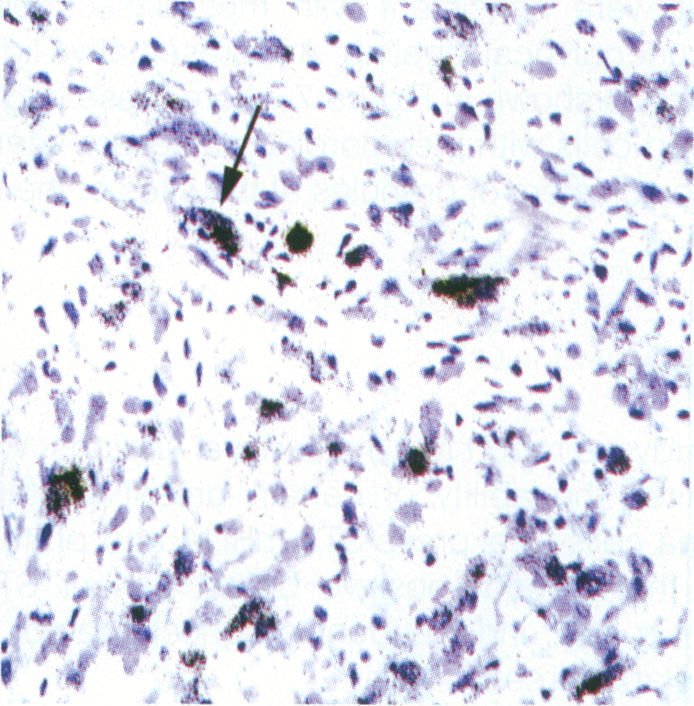
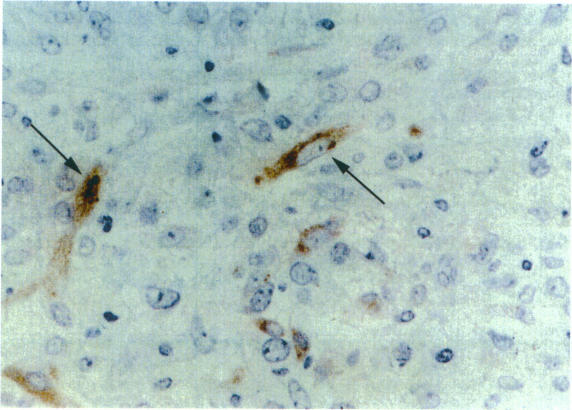
Stromelysin 3 (ST3) is a matrix metalloproteinase implicated in mammary carcinoma progression. To date, localization of ST3 expression in breast cancer by in situ hybridization and immunocytochemistry has shown that the expression of the enzyme is limited to only the stromal fibroblasts surrounding the cancer cells. We have immunostained a large group of ductal carcinoma in situ and invasive breast carcinomas using a monoclonal antibody (5ST-4A9) raised against the hemopexin-like domain of human ST3. We show that invasive lobular carcinomas express significantly less ST3 than invasive ductal carcinomas (IDCs) (P = 0.002). We also show, for the first time, that certain breast carcinoma cells that have undergone a degree of epithelial-to-mesenchymal transition, the so-called metaplastic carcinomas, can express ST3 mRNA and protein, which may in part explain the increased metastatic propensity seen in a number of these tumors. In addition, patients with IDC who had moderate to strong ST3 levels had significantly shorter disease-free survival than those with negative or weak ST3 levels (P = 0.02). Furthermore, in node-positive IDC patients, multivariate analysis revealed that ST3 level was a strong, independent prognostic parameter for disease-free survival (P = 0.005).
基质溶解素3(ST3)是一种与乳腺癌进展相关的基质金属蛋白酶。迄今为止,通过原位杂交和免疫细胞化学对乳腺癌中ST3表达的定位显示,该酶的表达仅限于癌细胞周围的基质成纤维细胞。我们使用针对人ST3血色素结合蛋白样结构域产生的单克隆抗体(5ST - 4A9)对一大组原位导管癌和浸润性乳腺癌进行了免疫染色。我们发现,浸润性小叶癌表达的ST3明显少于浸润性导管癌(IDC)(P = 0.002)。我们还首次表明,某些经历了一定程度上皮 - 间充质转化的乳腺癌细胞,即所谓的化生癌,能够表达ST3 mRNA和蛋白,这可能部分解释了其中一些肿瘤转移倾向增加的原因。此外,ST3水平为中度至强阳性的IDC患者的无病生存期明显短于ST3水平为阴性或弱阳性的患者(P = 0.02)。此外,在淋巴结阳性的IDC患者中,多变量分析显示ST3水平是无病生存期的一个强有力的独立预后参数(P = 0.005)。