
不同解剖部位表达的不同趋化因子对未成熟和成熟树突状细胞的选择性募集。
Selective recruitment of immature and mature dendritic cells by distinct chemokines expressed in different anatomic sites.
作者信息
Dieu M C, Vanbervliet B, Vicari A, Bridon J M, Oldham E, Aït-Yahia S, Brière F, Zlotnik A, Lebecque S, Caux C
机构信息
Schering-Plough, Laboratory for Immunological Research, 69571, Dardilly, France.
出版信息
J Exp Med. 1998 Jul 20;188(2):373-86. doi: 10.1084/jem.188.2.373.
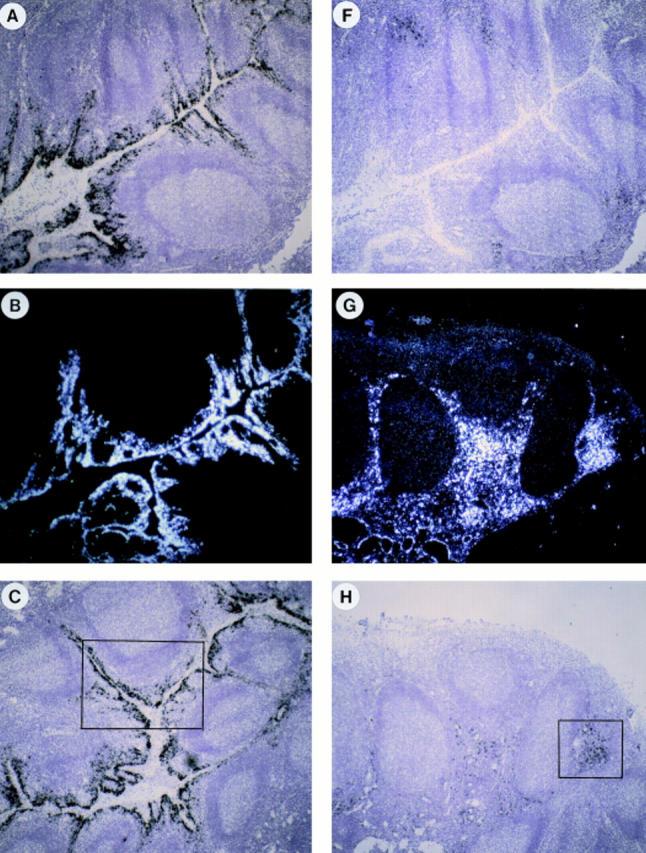
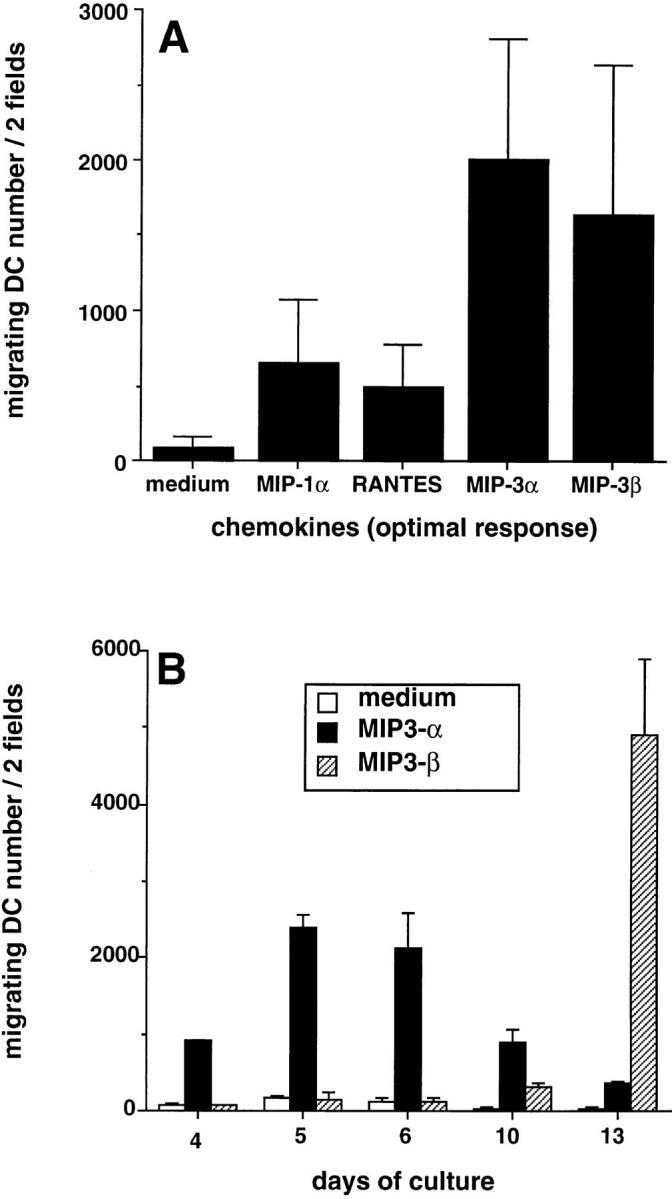
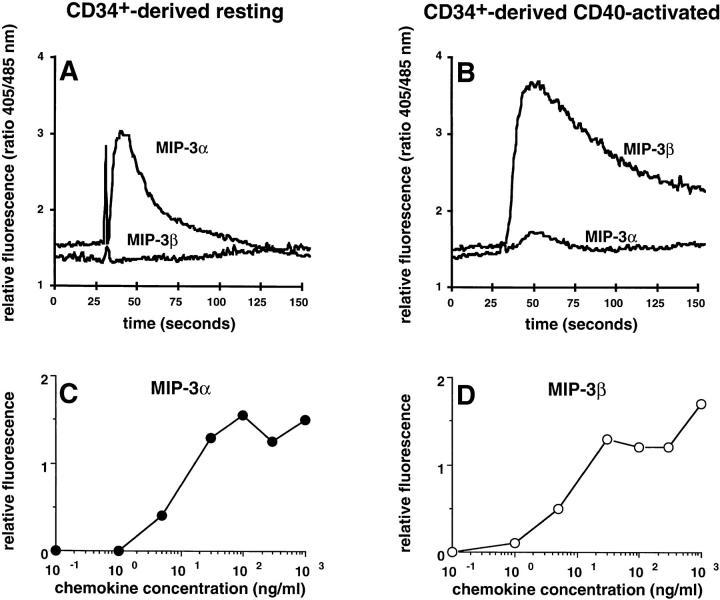
DCs (dendritic cells) function as sentinels of the immune system. They traffic from the blood to the tissues where, while immature, they capture antigens. They then leave the tissues and move to the draining lymphoid organs where, converted into mature DC, they prime naive T cells. This suggestive link between DC traffic pattern and functions led us to investigate the chemokine responsiveness of DCs during their development and maturation. DCs were differentiated either from CD34(+) hematopoietic progenitor cells (HPCs) cultured with granulocyte/macrophage colony-stimulating factor (GM-CSF) plus tumor necrosis factor (TNF)-alpha or from monocytes cultured with GM-CSF plus interleukin 4. Immature DCs derived from CD34(+) HPCs migrate most vigorously in response to macrophage inflammatory protein (MIP)-3alpha, but also to MIP-1alpha and RANTES (regulated on activation, normal T cell expressed and secreted). Upon maturation, induced by either TNF-alpha, lipopolysaccharide, or CD40L, DCs lose their response to these three chemokines when they acquire a sustained responsiveness to a single other chemokine, MIP-3beta. CC chemokine receptor (CCR)6 and CCR7 are the only known receptors for MIP-3alpha and MIP-3beta, respectively. The observation that CCR6 mRNA expression decreases progressively as DCs mature, whereas CCR7 mRNA expression is sharply upregulated, provides a likely explanation for the changes in chemokine responsiveness. Similarly, MIP-3beta responsiveness and CCR7 expression are induced upon maturation of monocyte- derived DCs. Furthermore, the chemotactic response to MIP-3beta is also acquired by CD11c+ DCs isolated from blood after spontaneous maturation. Finally, detection by in situ hybridization of MIP-3alpha mRNA only within inflamed epithelial crypts of tonsils, and of MIP-3beta mRNA specifically in T cell-rich areas, suggests a role for MIP-3alpha/CCR6 in recruitment of immature DCs at site of injury and for MIP-3beta/CCR7 in accumulation of antigen-loaded mature DCs in T cell-rich areas.
树突状细胞(DCs)作为免疫系统的哨兵发挥作用。它们从血液迁移至组织,在未成熟时捕获抗原。然后离开组织,迁移至引流淋巴器官,在那里转化为成熟的DC,启动初始T细胞。DC迁移模式与功能之间的这种暗示性联系促使我们研究DC在发育和成熟过程中的趋化因子反应性。DC可由用粒细胞/巨噬细胞集落刺激因子(GM-CSF)加肿瘤坏死因子(TNF)-α培养的CD34(+)造血祖细胞(HPCs)分化而来,也可由用GM-CSF加白细胞介素4培养的单核细胞分化而来。源自CD34(+) HPCs的未成熟DC对巨噬细胞炎性蛋白(MIP)-3α反应最为强烈,但对MIP-1α和调节激活正常T细胞表达和分泌因子(RANTES)也有反应。在由TNF-α、脂多糖或CD40L诱导成熟后,DC在获得对单一其他趋化因子MIP-3β的持续反应性时,失去了对这三种趋化因子的反应。CC趋化因子受体(CCR)6和CCR7分别是已知的MIP-3α和MIP-3β的唯一受体。随着DC成熟,CCR6 mRNA表达逐渐降低,而CCR7 mRNA表达急剧上调,这一观察结果为趋化因子反应性的变化提供了可能的解释。同样,单核细胞衍生的DC成熟时会诱导MIP-3β反应性和CCR7表达。此外,自发成熟后从血液中分离出的CD11c+ DC也获得了对MIP-3β的趋化反应。最后,原位杂交检测显示,MIP-3α mRNA仅在扁桃体炎症上皮隐窝内,而MIP-3β mRNA特异性地在富含T细胞的区域,这表明MIP-3α/CCR6在损伤部位募集未成熟DC以及MIP-3β/CCR7在富含T细胞区域聚集负载抗原的成熟DC中发挥作用。




 Zotero 插件