Lu Z, Ding L
Department of Physiology, University of Pennsylvania, Philadelphia, Pennsylvania 19104,
J Gen Physiol. 1999 Jan;113(1):35-43. doi: 10.1085/jgp.113.1.35.
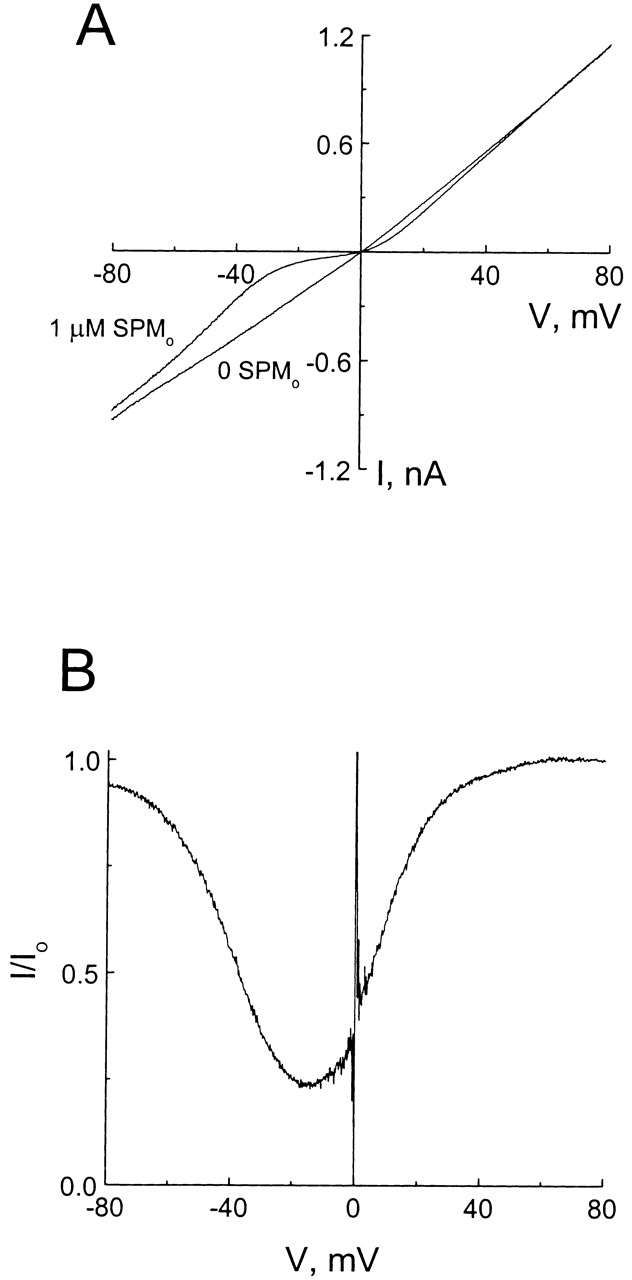
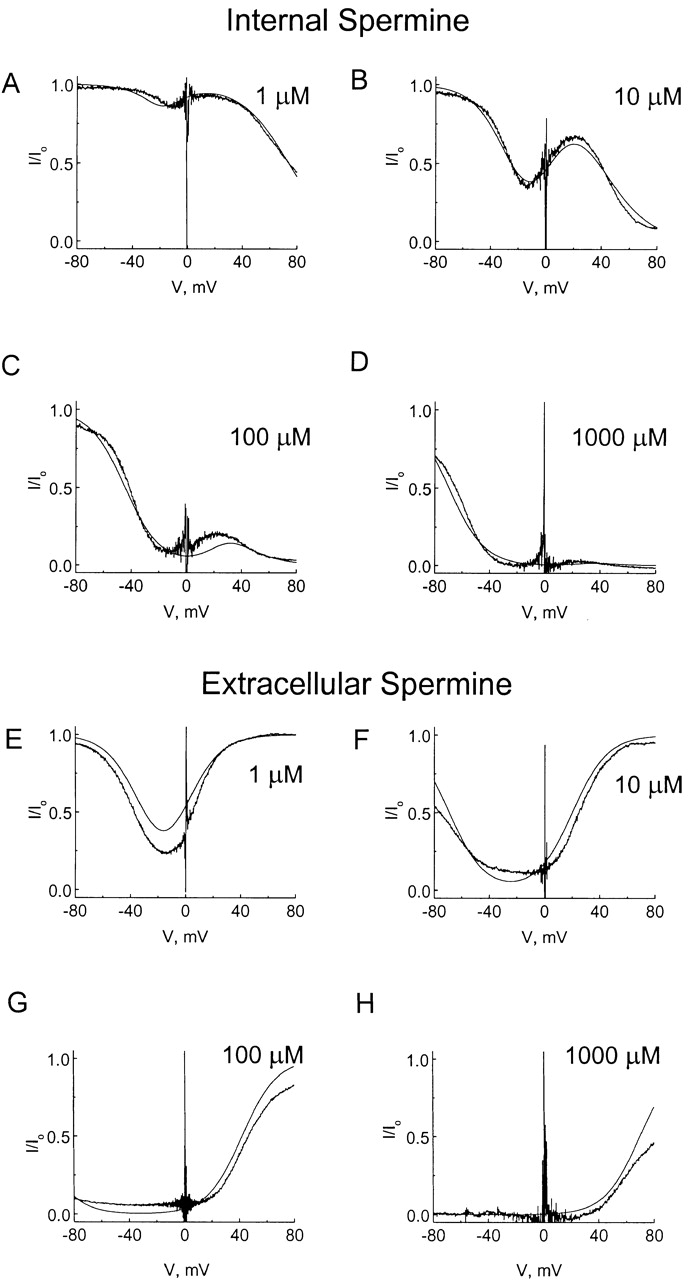
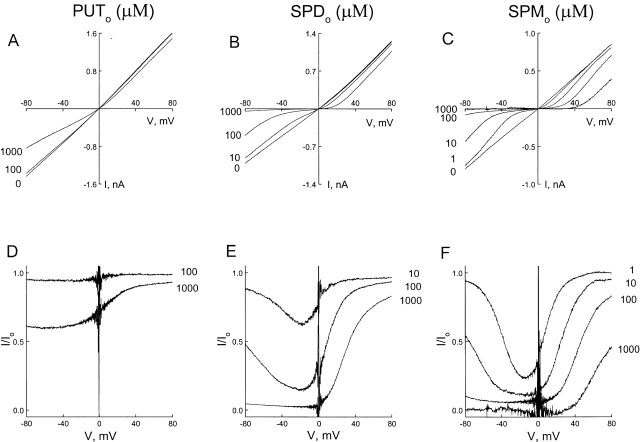
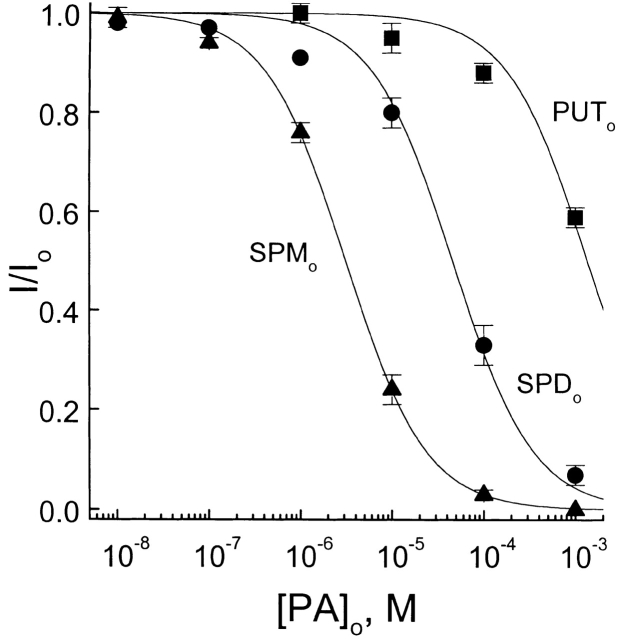
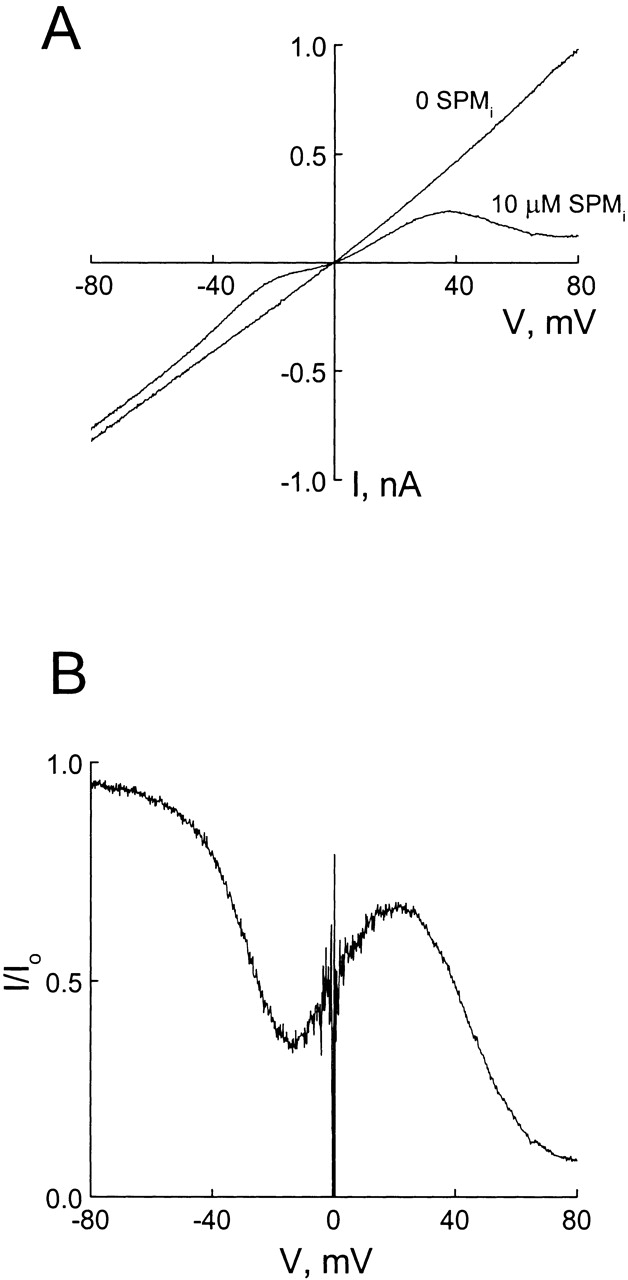
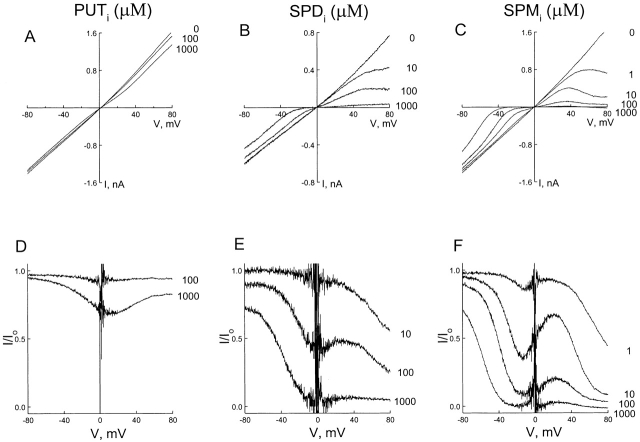
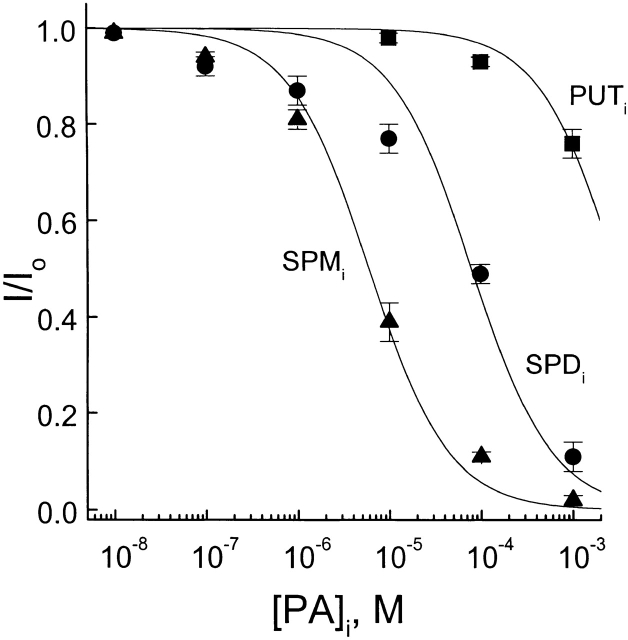
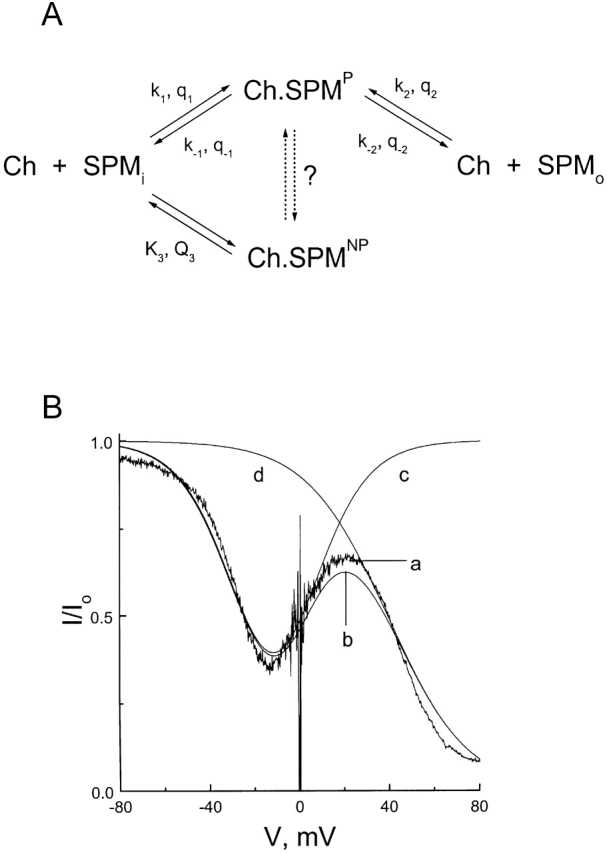
The cyclic nucleotide-gated (CNG) channel in retinal rods converts the light-regulated intracellular cGMP concentration to various levels of membrane potential. Blockade of the channel by cations such as Ca2+ and Mg2+ lowers its effective conductance. Consequently, the membrane potential has very low noise, which enables rods to detect light with extremely high sensitivity. Here, we report that three polyamines (putrescine, spermidine, and spermine), which exist in both the intracellular and extracellular media, also effectively block the CNG channel from both sides of the membrane. Among them, spermine has the greatest potency. Extracellular spermine blocks the channel as a permeant blocker, whereas intracellular spermine appears to block the channel in two conformations-one permeant, and the other non- (or much less) permeant. The membrane potential in rods is typically depolarized to approximately -40 mV in the dark. At this voltage, K1/2 of the CNG channel for extracellular spermine is 3 microM, which is 100-1,000-fold higher affinity than that of the NMDA receptor-channel for extracellular spermine. Blockade of the CNG channel by polyamines may play an important role in suppressing noise in the signal transduction system in rods.
视网膜视杆细胞中的环核苷酸门控(CNG)通道将光调节的细胞内cGMP浓度转化为不同水平的膜电位。Ca2+和Mg2+等阳离子对该通道的阻断会降低其有效电导。因此,膜电位具有非常低的噪声,这使得视杆细胞能够以极高的灵敏度检测光。在此,我们报告细胞内和细胞外介质中都存在的三种多胺(腐胺、亚精胺和精胺)也能从膜的两侧有效阻断CNG通道。其中,精胺的效力最大。细胞外精胺作为一种通透阻滞剂阻断通道,而细胞内精胺似乎以两种构象阻断通道——一种是通透的,另一种是非(或低得多)通透的。在黑暗中,视杆细胞中的膜电位通常去极化至约-40 mV。在此电压下,细胞外精胺对CNG通道的K1/2为3 microM,这比对细胞外精胺的NMDA受体通道的亲和力高100-1000倍。多胺对CNG通道的阻断可能在抑制视杆细胞信号转导系统中的噪声方面发挥重要作用。