Gibbs D A, Sangl J A, Burrus B
Research Triangle Institute, Research Triangle Park, NC 27709, USA.
Health Care Financ Rev. 1996 Fall;18(1):55-73.
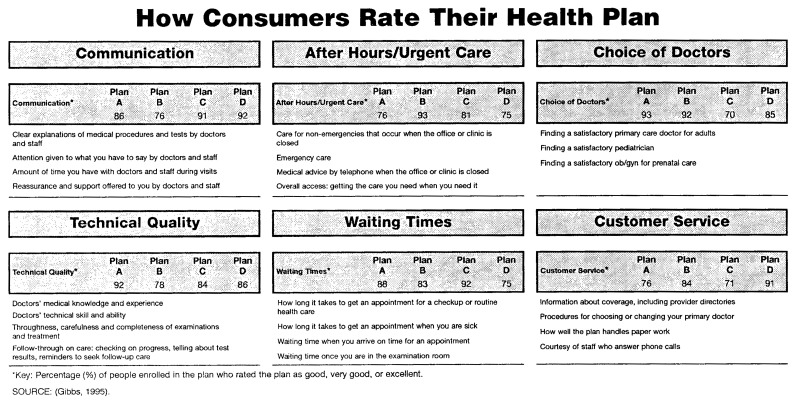
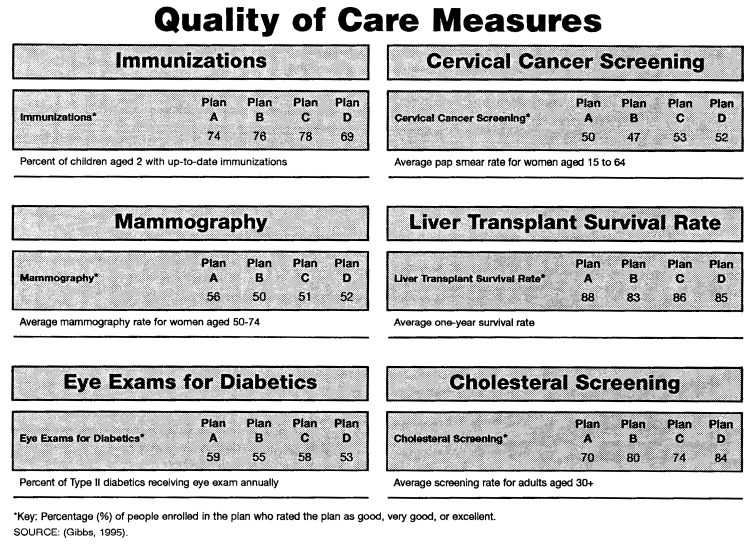
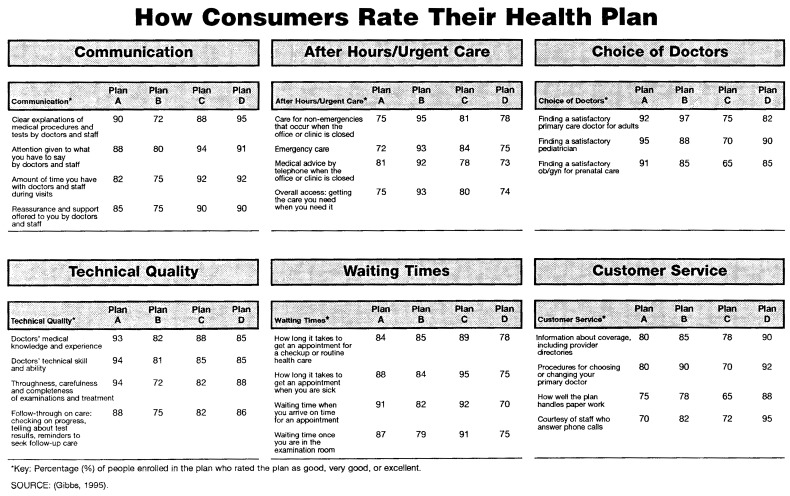
The premise that competition will improve health care assumes that consumers will choose plans that best fit their needs and resources. However, many consumers are frustrated with currently available plan comparison information. We describe results from 22 focus groups in which Medicare beneficiaries, Medicaid enrollees, and privately insured consumers assessed the usefulness of indicators based on consumer survey data and Health Employer Data Information Set (HEDIS)-type measures of quality of care. Considerable education would be required before consumers could interpret report card data to inform plan choices. Policy implications for design and provision of plan information for Medicare beneficiaries and Medicaid enrollees are discussed.
竞争将改善医疗保健这一前提假定消费者会选择最符合其需求和资源的计划。然而,许多消费者对当前可用的计划比较信息感到沮丧。我们描述了22个焦点小组的结果,在这些小组中,医疗保险受益人、医疗补助参保者和私人保险消费者评估了基于消费者调查数据和医疗保健雇主数据信息集(HEDIS)类型的医疗质量衡量指标的有用性。在消费者能够解读成绩单数据以指导计划选择之前,需要进行大量的教育。本文讨论了为医疗保险受益人和医疗补助参保者设计和提供计划信息的政策含义。