Schapiro F, Sparkowski J, Adduci A, Suprynowicz F, Schlegel R, Grinstein S
Division of Cell Biology, Research Institute, Hospital for Sick Children, Toronto, Ontario, M5G 1X8 Canada.
J Cell Biol. 2000 Jan 24;148(2):305-15. doi: 10.1083/jcb.148.2.305.
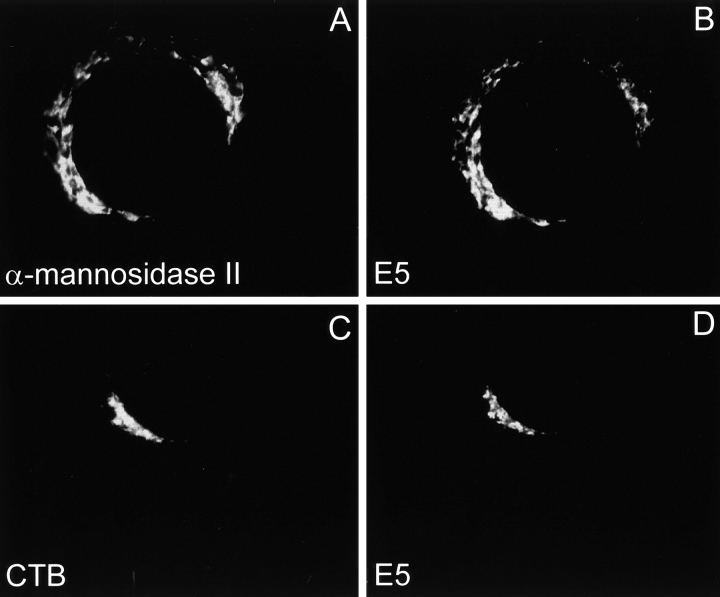
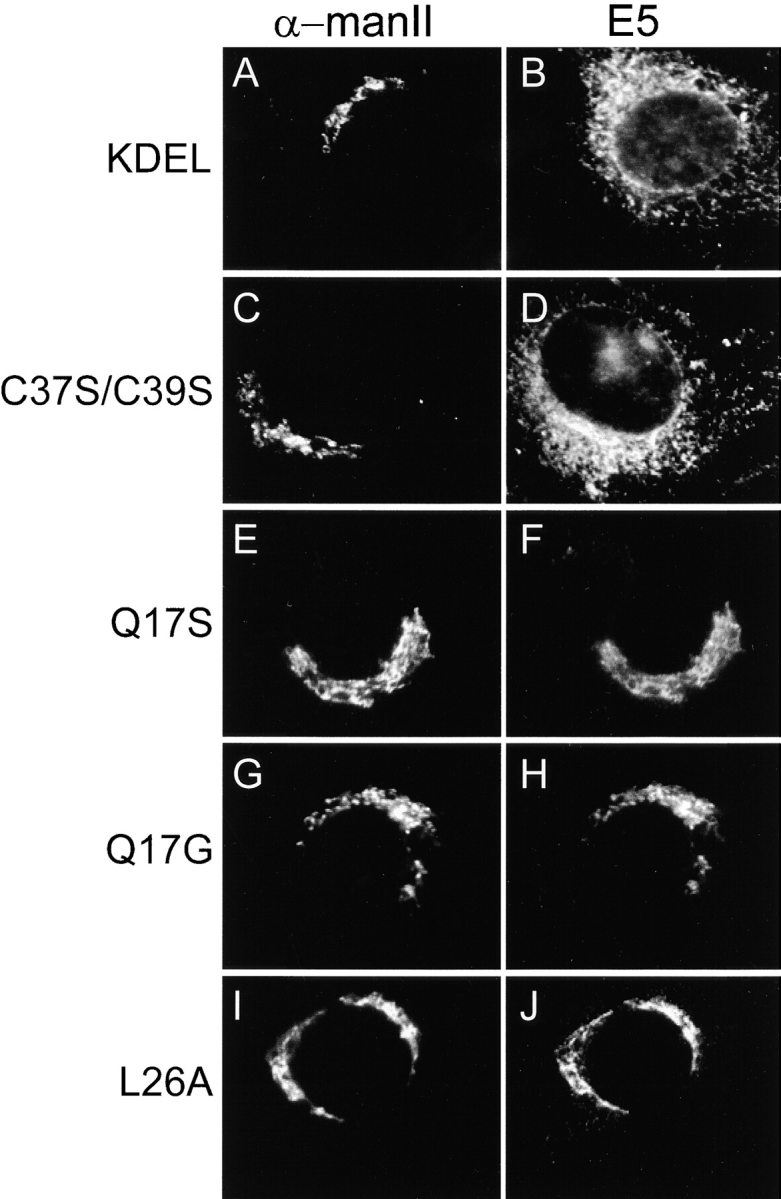
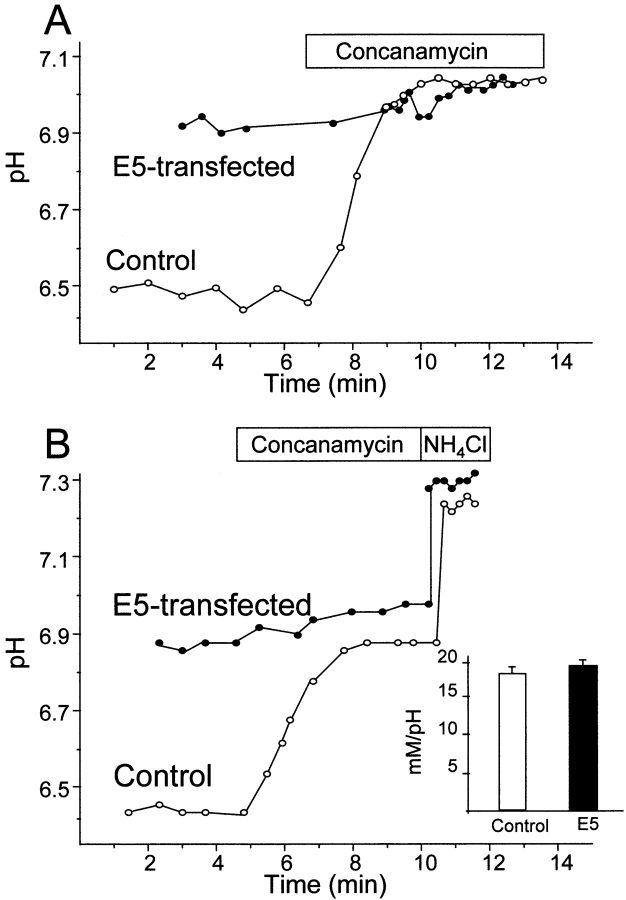
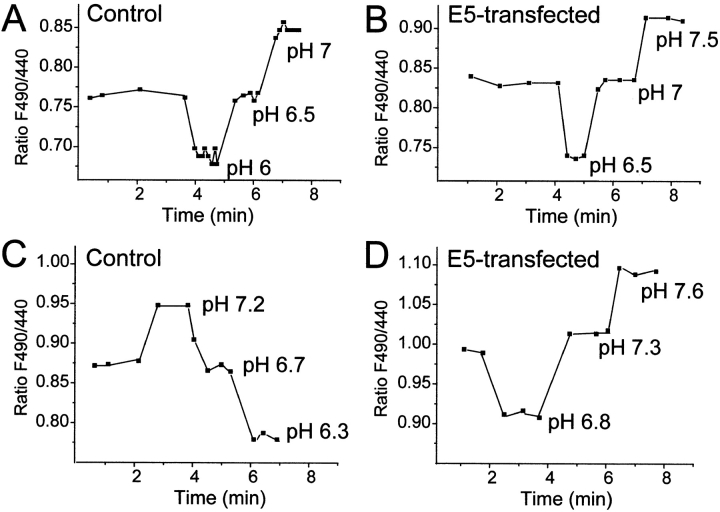
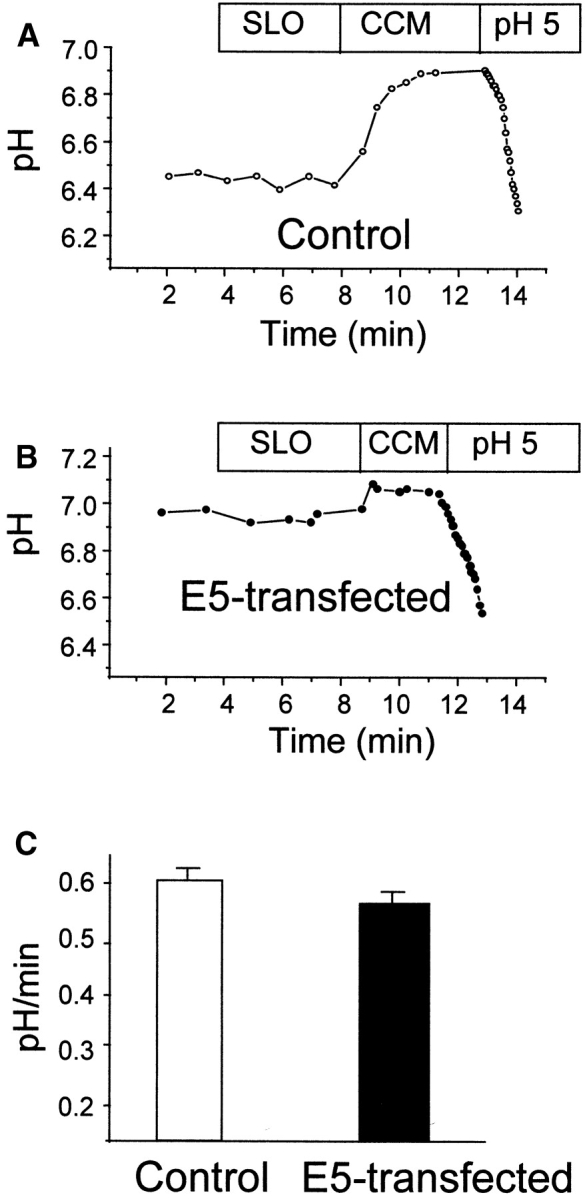
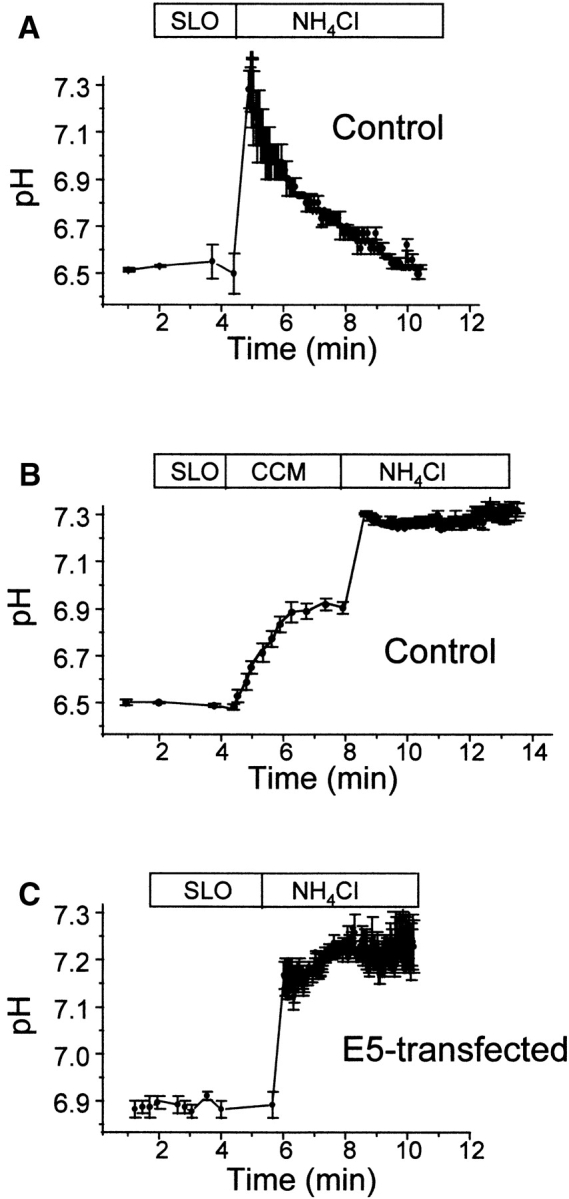
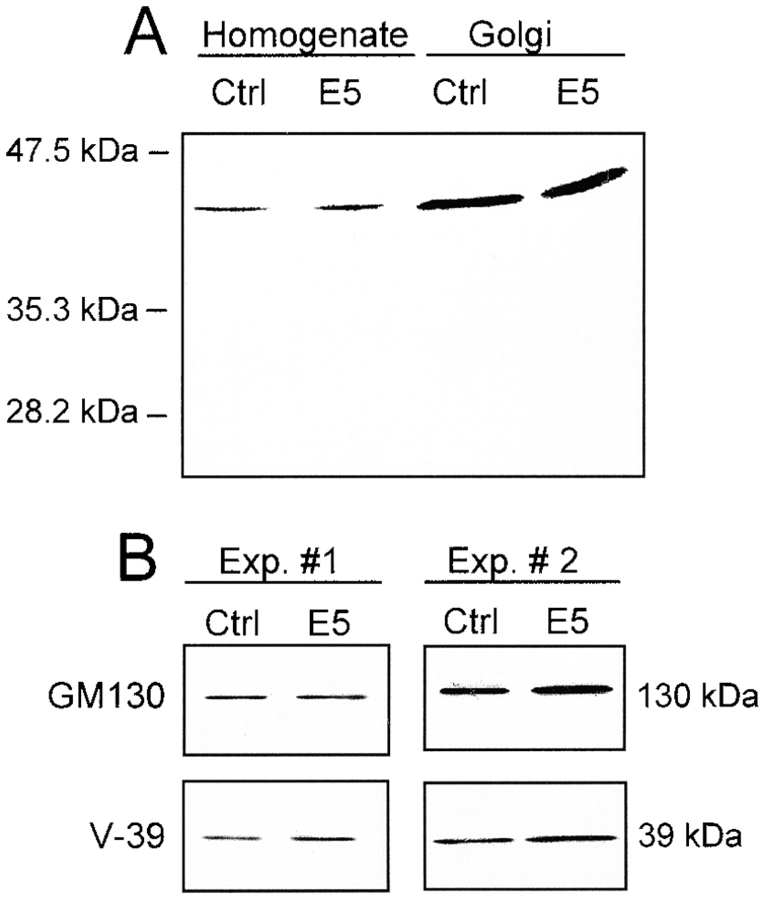
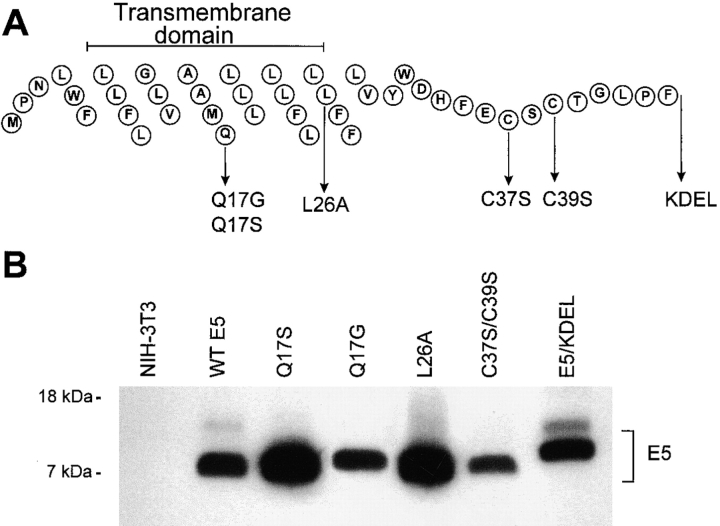
The E5 oncoprotein of bovine papillomavirus type I is a small, hydrophobic polypeptide localized predominantly in the Golgi complex. E5-mediated transformation is often associated with activation of the PDGF receptor (PDGF-R). However, some E5 mutants fail to induce PDGF-R phosphorylation yet retain transforming activity, suggesting an additional mechanism of action. Since E5 also interacts with the 16-kD pore-forming subunit of the vacuolar H(+)-ATPase (V-ATPase), the oncoprotein could conceivably interfere with the pH homeostasis of the Golgi complex. A pH-sensitive, fluorescent bacterial toxin was used to label this organelle and Golgi pH (pH(G)) was measured by ratio imaging. Whereas pH(G) of untreated cells was acidic (6.5), no acidification was detected in E5-transfected cells (pH approximately 7.0). The Golgi buffering power and the rate of H(+) leakage were found to be comparable in control and transfected cells. Instead, the E5-induced pH differential was attributed to impairment of V-ATPase activity, even though the amount of ATPase present in the Golgi complex was unaltered. Mutations that abolished binding of E5 to the 16-kD subunit or that targeted the oncoprotein to the endoplasmic reticulum abrogated Golgi alkalinization and cellular transformation. Moreover, transformation-competent E5 mutants that were defective for PDGF-R activation alkalinized the Golgi lumen. Neither transformation by sis nor src, two oncoproteins in the PDGF-R signaling pathway, affected pH(G). We conclude that alkalinization of the Golgi complex represents a new biological activity of the E5 oncoprotein that correlates with cellular transformation.
I型牛乳头瘤病毒的E5癌蛋白是一种小的疏水性多肽,主要定位于高尔基体复合体。E5介导的转化通常与血小板衍生生长因子受体(PDGF-R)的激活有关。然而,一些E5突变体未能诱导PDGF-R磷酸化,但仍保留转化活性,这表明存在另一种作用机制。由于E5还与液泡H(+) -ATP酶(V-ATPase)的16-kD孔形成亚基相互作用,可以想象该癌蛋白可能会干扰高尔基体复合体的pH稳态。使用一种pH敏感的荧光细菌毒素标记该细胞器,并通过比率成像测量高尔基体pH(pH(G))。未处理细胞的pH(G)呈酸性(6.5),而在E5转染的细胞中未检测到酸化(pH约为7.0)。发现对照细胞和转染细胞中的高尔基体缓冲能力和H(+)泄漏速率相当。相反,E5诱导的pH差异归因于V-ATPase活性受损,尽管高尔基体复合体中存在的ATP酶量未改变。消除E5与16-kD亚基结合的突变或使该癌蛋白靶向内质网的突变消除了高尔基体碱化和细胞转化。此外,对PDGF-R激活有缺陷的具有转化能力的E5突变体使高尔基体腔碱化。PDGF-R信号通路中的两种癌蛋白sis和src介导的转化均未影响pH(G)。我们得出结论,高尔基体复合体的碱化代表了E5癌蛋白的一种新的生物学活性,与细胞转化相关。