Tager A M, Dufour J H, Goodarzi K, Bercury S D, von Andrian U H, Luster A D
Center for Immunology and Inflammatory Diseases, Division of Rheumatology, Allergy and Immunology, Massachusetts General Hospital, Harvard Medical School, Boston, Massachusetts 02114, USA.
J Exp Med. 2000 Aug 7;192(3):439-46. doi: 10.1084/jem.192.3.439.
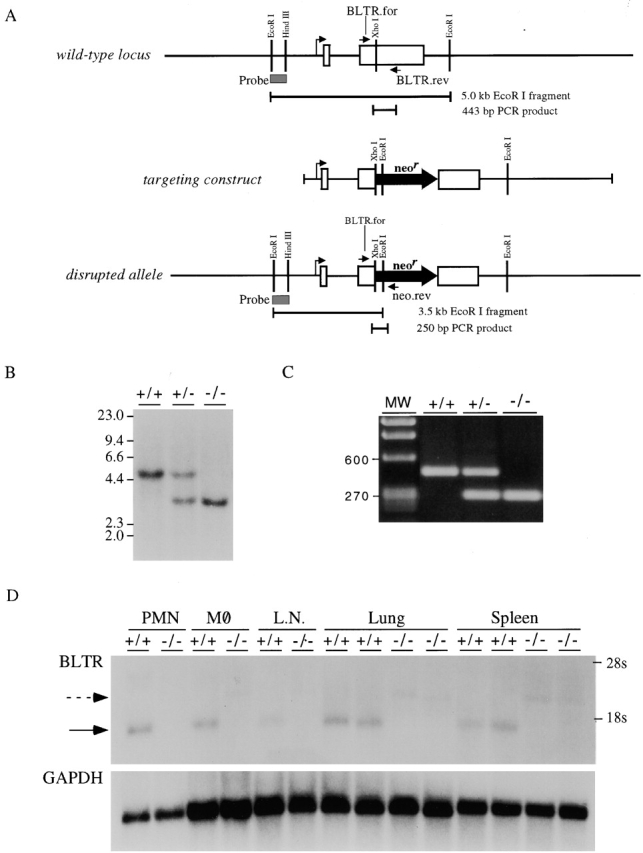
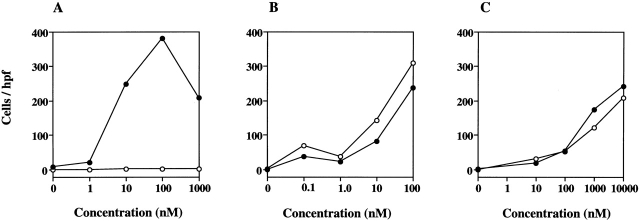
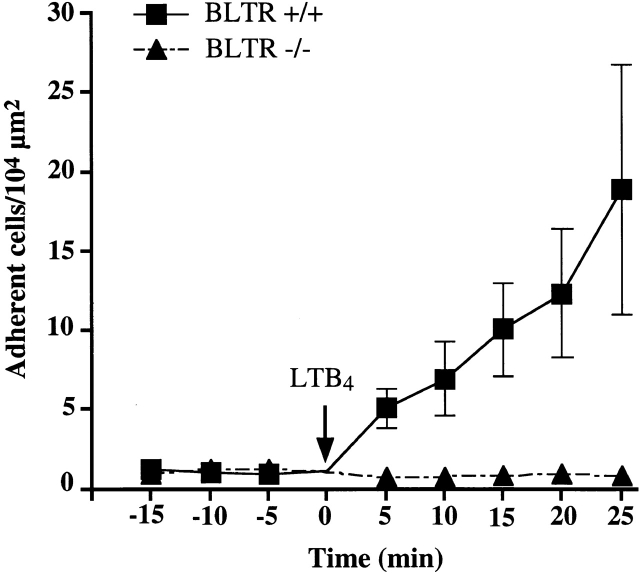
Leukotriene B(4) (LTB(4)) is a potent chemoattractant active on multiple leukocytes, including neutrophils, macrophages, and eosinophils, and is implicated in the pathogenesis of a variety of inflammatory processes. A seven transmembrane-spanning, G protein-coupled receptor, called BLTR (LTB(4) receptor), has recently been identified as an LTB(4) receptor. To determine if BLTR is the sole receptor mediating LTB(4)-induced leukocyte activation and to determine the role of LTB(4) and BLTR in regulating leukocyte function in inflammation in vivo, we generated a BLTR-deficient mouse by targeted gene disruption. This mouse reveals that BLTR alone is responsible for LTB(4)-mediated leukocyte calcium flux, chemotaxis, and firm adhesion to endothelium in vivo. Furthermore, despite the apparent functional redundancy with other chemoattractant-receptor pairs in vitro, LTB(4) and BLTR play an important role in the recruitment and/or retention of leukocytes, particularly eosinophils, to the inflamed peritoneum in vivo. These studies demonstrate that BLTR is the key receptor that mediates LTB(4)-induced leukocyte activation and establishes a model to decipher the functional roles of BLTR and LTB(4) in vivo.
白三烯B(4)(LTB(4))是一种对多种白细胞(包括中性粒细胞、巨噬细胞和嗜酸性粒细胞)具有活性的强效趋化因子,并且与多种炎症过程的发病机制有关。一种具有七个跨膜结构域的G蛋白偶联受体,称为BLTR(LTB(4)受体),最近已被鉴定为LTB(4)受体。为了确定BLTR是否是介导LTB(4)诱导的白细胞活化的唯一受体,并确定LTB(4)和BLTR在体内炎症中调节白细胞功能的作用,我们通过靶向基因破坏产生了一种BLTR缺陷小鼠。该小鼠表明,单独的BLTR负责LTB(4)介导的体内白细胞钙通量、趋化性以及与内皮的牢固粘附。此外,尽管在体外与其他趋化因子受体对存在明显的功能冗余,但LTB(4)和BLTR在体内将白细胞(特别是嗜酸性粒细胞)募集和/或保留到炎症腹膜中起重要作用。这些研究表明,BLTR是介导LTB(4)诱导的白细胞活化的关键受体,并建立了一个模型来解读BLTR和LTB(4)在体内的功能作用。