Zorov D B, Filburn C R, Klotz L O, Zweier J L, Sollott S J
Laboratory of Cardiovascular Sciences, Gerontology Research Center, Intramural Research Program, National Institute on Aging, National Institutes of Health, Baltimore, MD 21224-6825, USA.
J Exp Med. 2000 Oct 2;192(7):1001-14. doi: 10.1084/jem.192.7.1001.
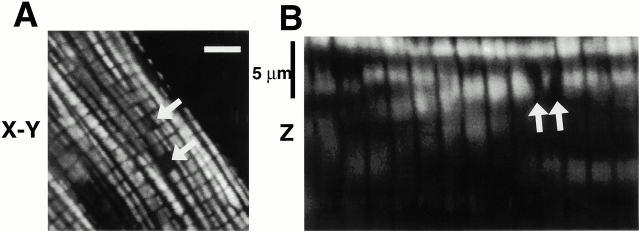
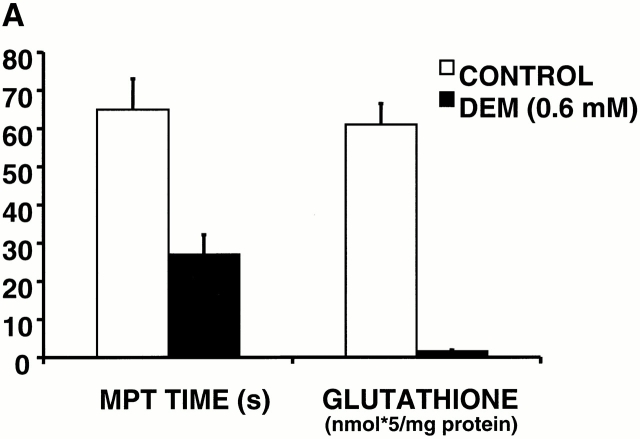
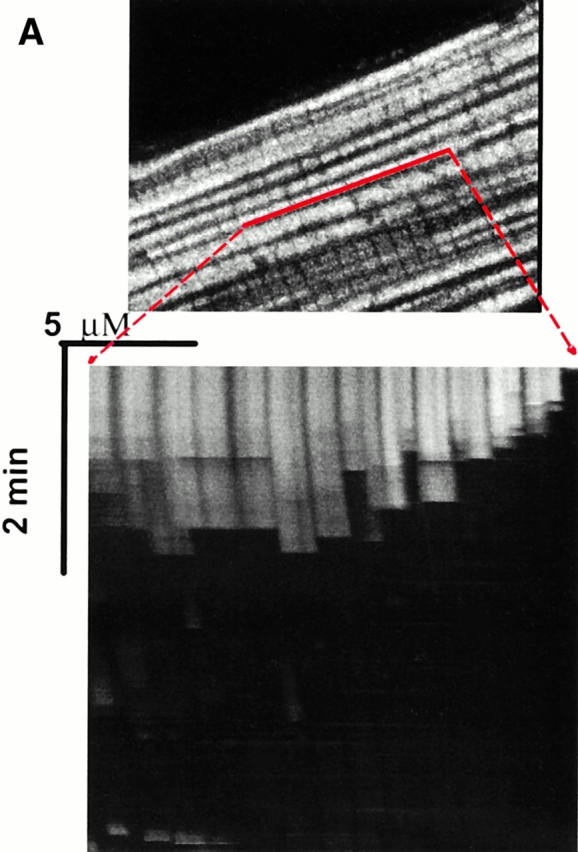
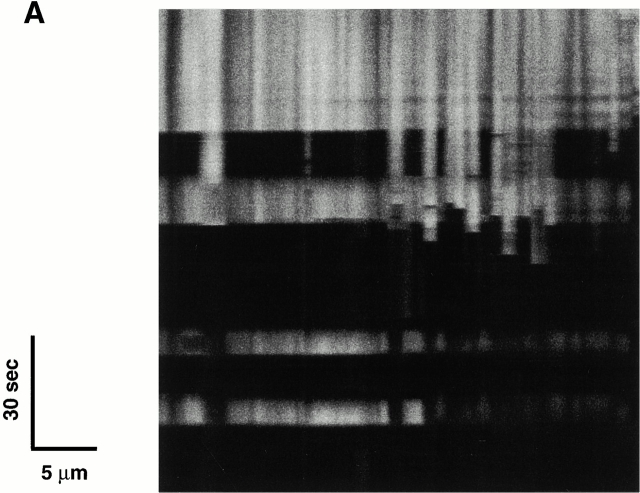
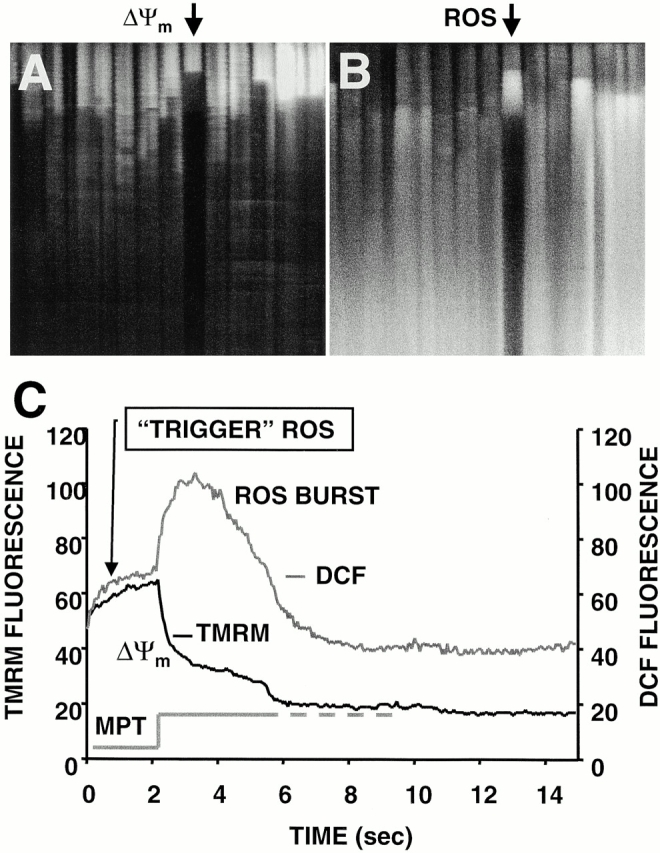
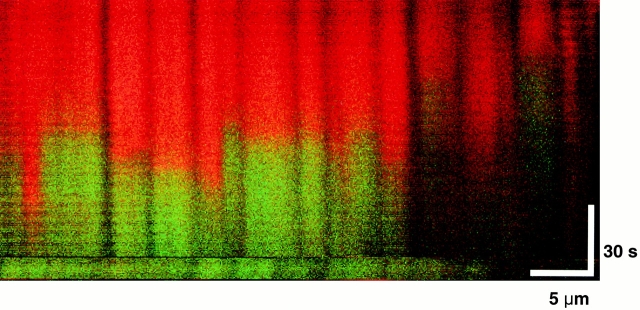
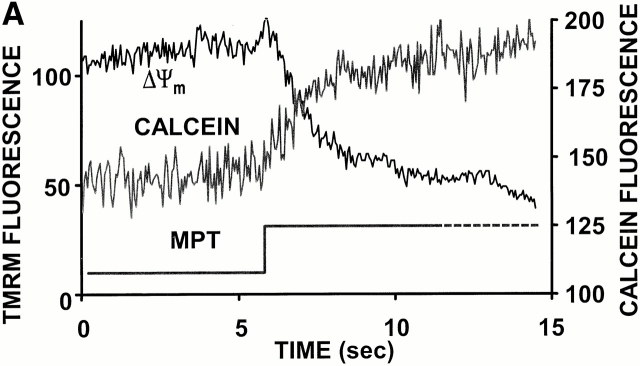
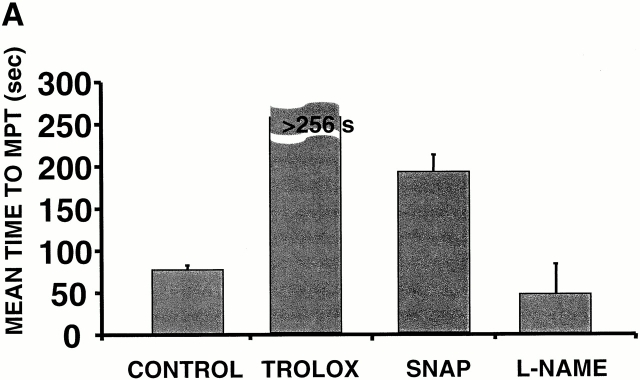
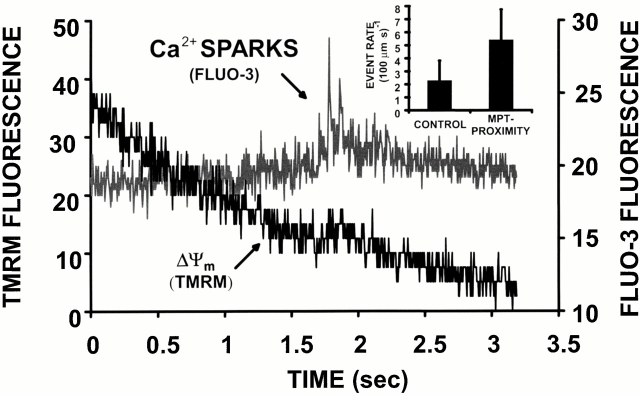
We sought to understand the relationship between reactive oxygen species (ROS) and the mitochondrial permeability transition (MPT) in cardiac myocytes based on the observation of increased ROS production at sites of spontaneously deenergized mitochondria. We devised a new model enabling incremental ROS accumulation in individual mitochondria in isolated cardiac myocytes via photoactivation of tetramethylrhodamine derivatives, which also served to report the mitochondrial transmembrane potential, DeltaPsi. This ROS accumulation reproducibly triggered abrupt (and sometimes reversible) mitochondrial depolarization. This phenomenon was ascribed to MPT induction because (a) bongkrekic acid prevented it and (b) mitochondria became permeable for calcein ( approximately 620 daltons) concurrently with depolarization. These photodynamically produced "triggering" ROS caused the MPT induction, as the ROS scavenger Trolox prevented it. The time required for triggering ROS to induce the MPT was dependent on intrinsic cellular ROS-scavenging redox mechanisms, particularly glutathione. MPT induction caused by triggering ROS coincided with a burst of mitochondrial ROS generation, as measured by dichlorofluorescein fluorescence, which we have termed mitochondrial "ROS-induced ROS release" (RIRR). This MPT induction/RIRR phenomenon in cardiac myocytes often occurred synchronously and reversibly among long chains of adjacent mitochondria demonstrating apparent cooperativity. The observed link between MPT and RIRR could be a fundamental phenomenon in mitochondrial and cell biology.
基于在自发去极化的线粒体部位观察到活性氧(ROS)生成增加的现象,我们试图了解心肌细胞中ROS与线粒体通透性转换(MPT)之间的关系。我们设计了一种新模型,通过四甲基罗丹明衍生物的光激活作用,使分离的心肌细胞中单个线粒体中的ROS逐步积累,该衍生物还可用于报告线粒体跨膜电位(ΔΨ)。这种ROS积累可重复性地引发线粒体突然(有时是可逆的)去极化。这一现象归因于MPT的诱导,原因如下:(a) 邦克雷酸可阻止其发生;(b) 线粒体在去极化的同时对钙黄绿素(约620道尔顿)变得通透。由于ROS清除剂生育三烯酚可阻止这种情况发生,所以这些光动力学产生的“触发”ROS导致了MPT的诱导。触发ROS诱导MPT所需的时间取决于细胞内固有的ROS清除氧化还原机制,尤其是谷胱甘肽。由触发ROS引起的MPT诱导与线粒体ROS生成的爆发同时发生,通过二氯荧光素荧光测量,我们将其称为线粒体“ROS诱导的ROS释放”(RIRR)。心肌细胞中的这种MPT诱导/RIRR现象通常在相邻线粒体的长链之间同步且可逆地发生,显示出明显的协同作用。观察到的MPT与RIRR之间的联系可能是线粒体和细胞生物学中的一个基本现象。