• 文献检索
  • 文档翻译
  • 深度研究
  • 学术资讯
  • Suppr Zotero 插件Zotero 插件
  • 邀请有礼
  • 套餐&价格
  • 历史记录
应用&插件
Suppr Zotero 插件Zotero 插件浏览器插件Mac 客户端Windows 客户端微信小程序
定价
高级版会员购买积分包购买API积分包
服务
文献检索文档翻译深度研究API 文档MCP 服务
关于我们
关于 Suppr公司介绍联系我们用户协议隐私条款
关注我们

Suppr 超能文献

核心技术专利:CN118964589B侵权必究
粤ICP备2023148730 号-1Suppr @ 2026

文献检索

告别复杂PubMed语法,用中文像聊天一样搜索,搜遍4000万医学文献。AI智能推荐,让科研检索更轻松。

立即免费搜索

文件翻译

保留排版,准确专业,支持PDF/Word/PPT等文件格式,支持 12+语言互译。

免费翻译文档

深度研究

AI帮你快速写综述,25分钟生成高质量综述,智能提取关键信息,辅助科研写作。

立即免费体验

重症监护期间的二氧化碳动力学与二氧化碳描记法

Carbon dioxide kinetics and capnography during critical care.

作者信息

Anderson C T, Breen P H

机构信息

Department of Anesthesiology, University of California - Irvine, Orange, California, USA.

出版信息

Crit Care. 2000;4(4):207-15. doi: 10.1186/cc696. Epub 2000 Jul 12.

DOI:10.1186/cc696
PMID:11094503
原文链接:https://pmc.ncbi.nlm.nih.gov/articles/PMC150038/
Abstract

Greater understanding of the pathophysiology of carbon dioxide kinetics during steady and nonsteady state should improve, we believe, clinical care during intensive care treatment. Capnography and the measurement of end-tidal partial pressure of carbon dioxide (PETCO2) will gradually be augmented by relatively new measurement methodology, including the volume of carbon dioxide exhaled per breath (VCO2,br) and average alveolar expired PCO2. Future directions include the study of oxygen kinetics.

摘要

我们认为,对稳态和非稳态期间二氧化碳动力学病理生理学的更深入理解应能改善重症监护治疗期间的临床护理。二氧化碳描记法以及呼气末二氧化碳分压(PETCO2)的测量将逐渐被包括每呼吸呼出二氧化碳量(VCO2,br)和平均肺泡呼出PCO2在内的相对较新的测量方法所补充。未来的方向包括对氧动力学的研究。
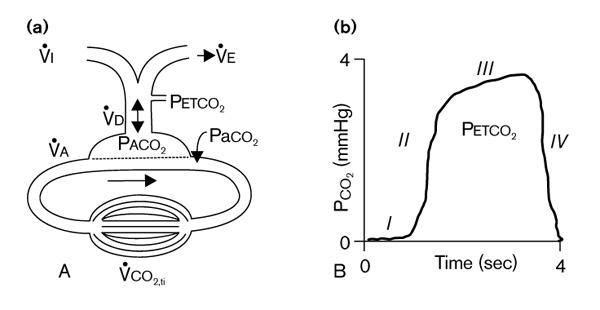
https://cdn.ncbi.nlm.nih.gov/pmc/blobs/2399/150038/ed4b8ab23829/cc696-5.jpg
https://cdn.ncbi.nlm.nih.gov/pmc/blobs/2399/150038/8afe5e990064/cc696-1.jpg
https://cdn.ncbi.nlm.nih.gov/pmc/blobs/2399/150038/4b3becd019fb/cc696-2.jpg
https://cdn.ncbi.nlm.nih.gov/pmc/blobs/2399/150038/b78789524170/cc696-3.jpg
https://cdn.ncbi.nlm.nih.gov/pmc/blobs/2399/150038/5a7f3f70a0c6/cc696-4.jpg
https://cdn.ncbi.nlm.nih.gov/pmc/blobs/2399/150038/ed4b8ab23829/cc696-5.jpg
https://cdn.ncbi.nlm.nih.gov/pmc/blobs/2399/150038/8afe5e990064/cc696-1.jpg
https://cdn.ncbi.nlm.nih.gov/pmc/blobs/2399/150038/4b3becd019fb/cc696-2.jpg
https://cdn.ncbi.nlm.nih.gov/pmc/blobs/2399/150038/b78789524170/cc696-3.jpg
https://cdn.ncbi.nlm.nih.gov/pmc/blobs/2399/150038/5a7f3f70a0c6/cc696-4.jpg
https://cdn.ncbi.nlm.nih.gov/pmc/blobs/2399/150038/ed4b8ab23829/cc696-5.jpg

相似文献

1
Carbon dioxide kinetics and capnography during critical care.重症监护期间的二氧化碳动力学与二氧化碳描记法
Crit Care. 2000;4(4):207-15. doi: 10.1186/cc696. Epub 2000 Jul 12.
2
End-tidal carbon dioxide monitoring: a VITAL sign worth watching.呼气末二氧化碳监测:一项值得关注的重要生命体征。
Crit Care Nurs Clin North Am. 2006 Jun;18(2):217-25, xi. doi: 10.1016/j.ccell.2006.02.002.
3
Capnography: beyond the numbers.二氧化碳描记法:超越数字本身。
Air Med J. 2002 Mar-Apr;21(2):43-8.
4
End-tidal carbon dioxide monitoring.呼气末二氧化碳监测
Crit Care Nurse. 2003 Aug;23(4):83-8.
5
Monitoring carbon dioxide in critical care: the newest vital sign?重症监护中二氧化碳的监测:最新的生命体征?
Crit Care Nurs Clin North Am. 2004 Sep;16(3):445-51, x. doi: 10.1016/j.ccell.2004.05.002.
6
Monitoring end-tidal carbon dioxide.监测呼气末二氧化碳。
Nursing. 2007 May;37(5):48-9. doi: 10.1097/01.NURSE.0000268775.48955.d3.
7
Capnography.二氧化碳描记法
Respir Care Clin N Am. 1995 Sep;1(1):107-17.
8
End-tidal carbon dioxide monitoring for weaning patients: a pilot study.用于撤机患者的呼气末二氧化碳监测:一项初步研究。
Dimens Crit Care Nurs. 1998 May-Jun;17(3):127-34. doi: 10.1097/00003465-199805000-00002.
9
End-tidal carbon dioxide monitoring.呼气末二氧化碳监测
Crit Care Nurse. 1998 Dec;18(6):88-93.
10
Disparity between mainstream and sidestream end-tidal carbon dioxide values and arterial carbon dioxide levels.主流与侧流呼气末二氧化碳值与动脉二氧化碳水平之间的差异。
Respir Care. 2013 Jul;58(7):1152-6. doi: 10.4187/respcare.02227. Epub 2013 Jan 15.

引用本文的文献

1
Evaluation of accuracy, filter performance, and durability among capnography sampling lines: a bench study.二氧化碳监测采样管的准确性、过滤性能及耐用性评估:一项实验台研究
J Clin Monit Comput. 2025 Aug 28. doi: 10.1007/s10877-025-01346-3.
2
Relationships between capnogram parameters by mainstream and sidestream techniques at different breathing frequencies.主流和侧流技术在不同呼吸频率下呼出气二氧化碳图参数之间的关系。
Sci Rep. 2024 Oct 26;14(1):25443. doi: 10.1038/s41598-024-75808-0.
3
Physiology-Guided Resuscitation: Monitoring and Augmenting Perfusion during Cardiopulmonary Arrest.

本文引用的文献

1
How does positive end-expiratory pressure decrease pulmonary CO2 elimination in anesthetized patients?呼气末正压是如何降低麻醉患者的肺二氧化碳清除率的?
Respir Physiol. 1999 Dec 1;118(2-3):227-36. doi: 10.1016/s0034-5687(99)00087-0.
2
The assessment of four different methods to verify tracheal tube placement in the critical care setting.在重症监护环境中对四种验证气管导管位置的不同方法的评估。
Anesth Analg. 1999 Apr;88(4):766-70. doi: 10.1097/00000539-199904000-00016.
3
Effectiveness of mechanical versus manual chest compressions in out-of-hospital cardiac resuscitation.
生理学指导的复苏:心肺复苏期间的灌注监测与增强
J Clin Med. 2024 Jun 16;13(12):3527. doi: 10.3390/jcm13123527.
4
Capnography waveforms: basic interpretation in neonatal intensive care.二氧化碳波形图:新生儿重症监护中的基本解读
Front Pediatr. 2024 Apr 4;12:1396846. doi: 10.3389/fped.2024.1396846. eCollection 2024.
5
Easy method to determine fluid responsiveness in septic shock patients: end-tidal CO2 - a prospective observational study.简便方法判断感染性休克患者液体反应性:呼气末二氧化碳-一项前瞻性观察研究。
Ulus Travma Acil Cerrahi Derg. 2024 Feb;30(2):90-96. doi: 10.14744/tjtes.2024.37309.
6
Dead space ventilation-related indices: bedside tools to evaluate the ventilation and perfusion relationship in patients with acute respiratory distress syndrome.死腔通气相关指数:评估急性呼吸窘迫综合征患者通气与灌注关系的床边工具。
Crit Care. 2023 Feb 3;27(1):46. doi: 10.1186/s13054-023-04338-4.
7
Clinical usefulness of end-tidal CO measured using a portable capnometer in patients with respiratory disease.使用便携式呼末二氧化碳测量仪测量呼吸疾病患者的呼末二氧化碳的临床应用价值。
Clin Respir J. 2023 Feb;17(2):96-104. doi: 10.1111/crj.13577. Epub 2023 Jan 6.
8
Value of variation of end-tidal carbon dioxide for predicting fluid responsiveness during the passive leg raising test in patients with mechanical ventilation: a systematic review and meta-analysis.被动抬腿试验中潮气末二氧化碳变化预测机械通气患者液体反应性的价值:系统评价和荟萃分析。
Crit Care. 2022 Jan 14;26(1):20. doi: 10.1186/s13054-022-03890-9.
9
Decreased CO Levels as Indicators of Possible Mechanical Ventilation-Induced Hyperventilation in COVID-19 Patients: A Retrospective Analysis.CO 水平降低可能提示 COVID-19 患者机械通气所致过度通气:一项回顾性分析。
Front Public Health. 2021 Jan 8;8:596168. doi: 10.3389/fpubh.2020.596168. eCollection 2020.
10
Assessment of a new volumetric capnography-derived parameter to reflect compression quality and to predict return of spontaneous circulation during cardiopulmonary resuscitation in a porcine model.评估一种新的容积二氧化碳图衍生参数,以反映在猪模型心肺复苏期间的压缩质量,并预测自主循环的恢复。
J Clin Monit Comput. 2022 Feb;36(1):199-207. doi: 10.1007/s10877-020-00637-1. Epub 2021 Jan 28.
院外心脏复苏中机械胸外按压与徒手胸外按压的效果比较
Am J Emerg Med. 1999 Mar;17(2):210. doi: 10.1016/s0735-6757(99)90065-7.
4
Utility of colorimetric end-tidal carbon dioxide detector for monitoring during prehospital cardiopulmonary resuscitation.比色法呼气末二氧化碳检测仪在院前心肺复苏监测中的应用价值。
Am J Emerg Med. 1999 Mar;17(2):203-6. doi: 10.1016/s0735-6757(99)90062-1.
5
Single-breath CO2 analysis as a predictor of lung volume in a healthy animal model during controlled ventilation.在控制通气期间,单呼吸二氧化碳分析作为健康动物模型中肺容积的预测指标。
Crit Care Med. 1998 Aug;26(8):1409-13. doi: 10.1097/00003246-199808000-00028.
6
Portable devices used to detect endotracheal intubation during emergency situations: a review.用于紧急情况下检测气管插管的便携式设备:综述
Crit Care Med. 1998 May;26(5):957-64. doi: 10.1097/00003246-199805000-00036.
7
Glottic positioning of the endotracheal tube tip: a diagnostic dilemma.气管导管尖端的声门定位:一个诊断难题。
Ann Emerg Med. 1998 May;31(5):643-6. doi: 10.1016/s0196-0644(98)70213-6.
8
Mainstream end-tidal carbon dioxide monitoring in the neonatal intensive care unit.新生儿重症监护病房中的主流呼气末二氧化碳监测
Pediatrics. 1998 Apr;101(4 Pt 1):648-53. doi: 10.1542/peds.101.4.648.
9
A comparison of the end-tidal-CO2 documented by capnometry and the arterial pCO2 in emergency patients.通过二氧化碳监测法记录的呼气末二氧化碳与急诊患者动脉血二氧化碳分压的比较。
Resuscitation. 1997 Oct;35(2):145-8. doi: 10.1016/s0300-9572(97)00043-9.
10
Noninvasive capnometry monitoring for respiratory status during pediatric seizures.小儿癫痫发作期间呼吸状态的无创二氧化碳监测
Crit Care Med. 1997 Jul;25(7):1242-6. doi: 10.1097/00003246-199707000-00029.