Levander F, Svensson M, Rådström P
Applied Microbiology, Center for Chemistry and Chemical Engineering, Lund Institute of Technology, Lund University, PO Box 124, SE-221 00 Lund, Sweden.
BMC Microbiol. 2001;1:23. doi: 10.1186/1471-2180-1-23. Epub 2001 Sep 26.
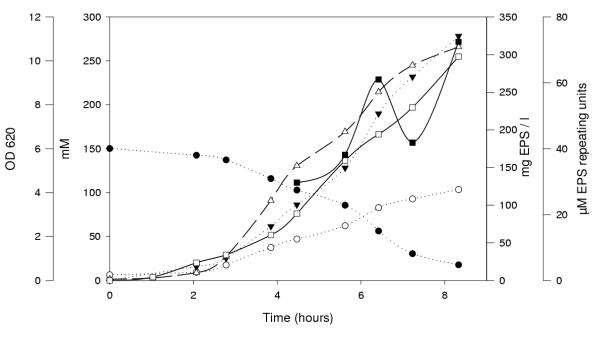
Exopolysaccharides (EPSs) produced by lactic acid bacteria are important for the texture of fermented foods and have received a great deal of interest recently. However, the low production levels of EPSs in combination with the complex media used for growth of the bacteria have caused problems in the accurate analysis of the EPS. The purpose of this study was to find a growth medium for physiological studies of the lactic acid bacterium Streptococcus thermophilus, and to develop a simple method for qualitative and quantitative analysis of EPSs produced in this medium.
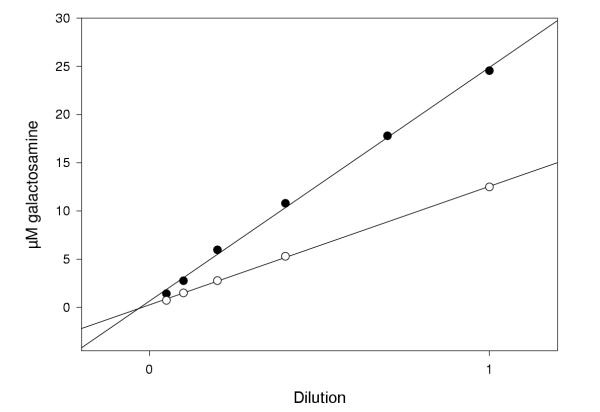
A semi-defined polysaccharide medium was developed and evaluated on six strains of Streptococcus thermophilus. The EPSs were analysed using a novel protocol incorporating ultracentrifugation for the removal of interfering sugars, hydrolysis and analysis of the monomer composition by High Performance Anion-Exchange Chromatography with pulsed amperometric detection. The medium and analysis method allowed accurate quantification and monomer analysis of 0.5 ml samples of EPSs from tube cultures.
The presented medium should be useful for physiological studies of S. thermophilus, and, in combination with the method of analysis of EPS, will allow downscaling of physiological studies and screening for EPSs.
乳酸菌产生的胞外多糖(EPSs)对发酵食品的质地很重要,近来受到了广泛关注。然而,EPSs产量低以及用于细菌生长的复杂培养基给EPS的准确分析带来了问题。本研究的目的是找到一种用于嗜热链球菌生理研究的生长培养基,并开发一种简单方法对该培养基中产生的EPSs进行定性和定量分析。
开发了一种半限定多糖培养基,并在6株嗜热链球菌上进行了评估。采用一种新方案分析EPSs,该方案包括通过超速离心去除干扰糖、水解以及用带脉冲安培检测的高效阴离子交换色谱法分析单体组成。该培养基和分析方法能够对来自试管培养物的0.5 ml EPSs样品进行准确的定量和单体分析。
所提供的培养基应有助于嗜热链球菌的生理研究,并且与EPS分析方法相结合,将能够缩小生理研究规模并筛选EPSs。