Wardemann Hedda, Boehm Thomas, Dear Neil, Carsetti Rita
Department of Developmental Immunology, Max-Planck Institute for Immunobiology, Freiburg 79108, Germany.
J Exp Med. 2002 Mar 18;195(6):771-80. doi: 10.1084/jem.20011140.
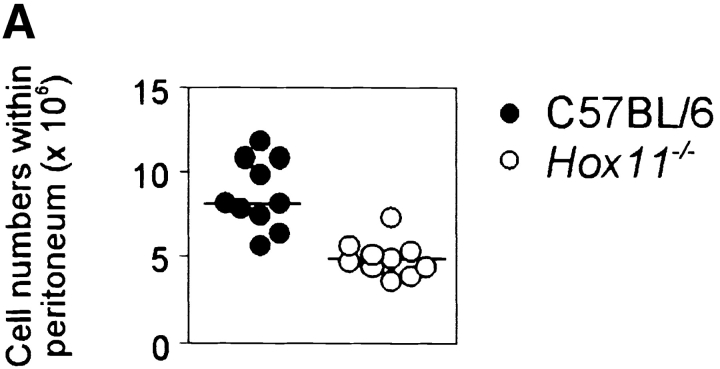
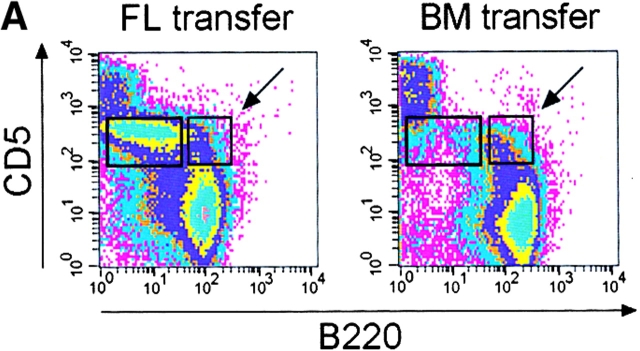
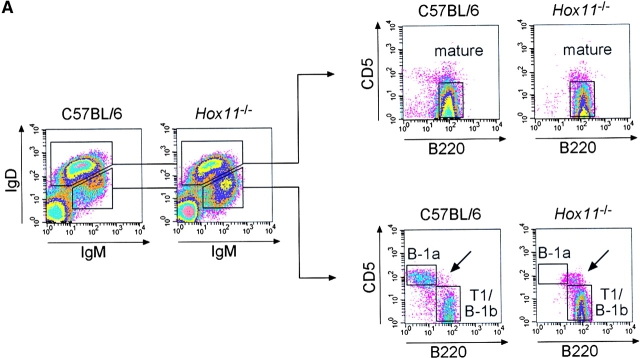
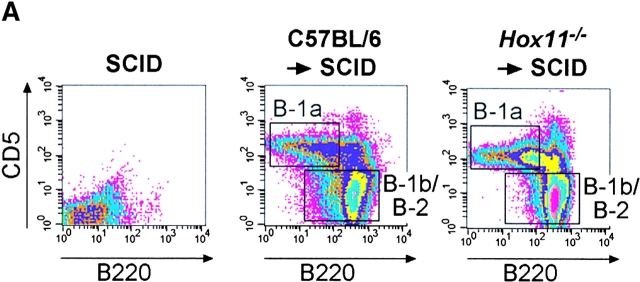
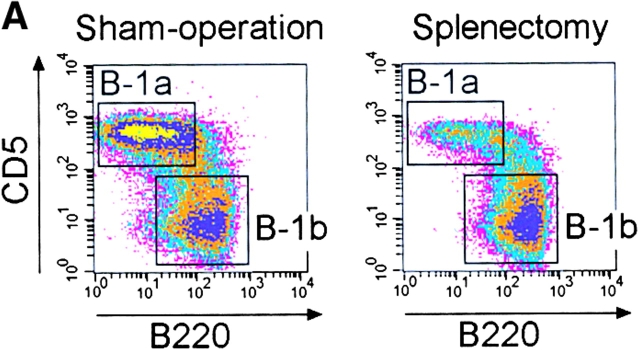
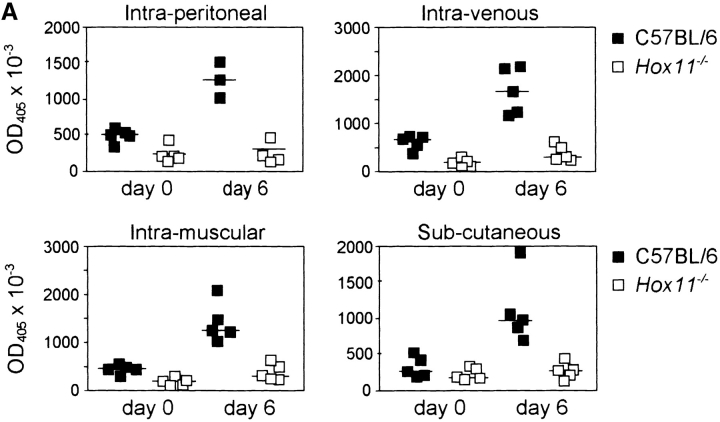
Splenectomized individuals are prone to overwhelming infections with encapsulated bacteria and splenectomy of mice increases susceptibility to streptococcal infections, yet the exact mechanism by which the spleen protects against such infections is unknown. Using congenitally asplenic mice as a model, we show that the spleen is essential for the generation of B-1a cells, a B cell population that cooperates with the innate immune system to control early bacterial and viral growth. Splenectomy of wild-type mice further demonstrated that the spleen is also important for the survival of B-1a cells. Transfer experiments demonstrate that lack of these cells, as opposed to the absence of the spleen per se, is associated with an inability to mount a rapid immune response against streptococcal polysaccharides. Thus, absence of the spleen and the associated increased susceptibility to streptococcal infections is correlated with lack of B-1a B cells. These findings reveal a hitherto unknown role of the spleen in generating and maintaining the B-1a B cell pool.
脾切除个体易发生由包膜细菌引起的暴发性感染,切除小鼠的脾脏会增加其对链球菌感染的易感性,但脾脏抵御此类感染的确切机制尚不清楚。我们以先天性无脾小鼠为模型,发现脾脏对于B-1a细胞的产生至关重要,B-1a细胞是一种B细胞群体,与先天免疫系统协作以控制早期细菌和病毒的生长。对野生型小鼠进行脾切除进一步表明,脾脏对B-1a细胞的存活也很重要。移植实验表明,与脾脏本身缺失相反,缺乏这些细胞与无法对链球菌多糖产生快速免疫反应有关。因此,脾脏缺失以及对链球菌感染易感性增加与B-1a B细胞缺乏相关。这些发现揭示了脾脏在产生和维持B-1a B细胞库方面迄今未知的作用。