González Víctor, Bustos Patricia, Ramírez-Romero Miguel A, Medrano-Soto Arturo, Salgado Heladia, Hernández-González Ismael, Hernández-Celis Juan Carlos, Quintero Verónica, Moreno-Hagelsieb Gabriel, Girard Lourdes, Rodríguez Oscar, Flores Margarita, Cevallos Miguel A, Collado-Vides Julio, Romero David, Dávila Guillermo
Centro de Investigación Sobre Fijación de Nitrógeno, Universidad Nacional Autónoma de México, Cuernavaca, Morelos, México 62210.
Genome Biol. 2003;4(6):R36. doi: 10.1186/gb-2003-4-6-r36. Epub 2003 May 13.
Symbiotic bacteria known as rhizobia interact with the roots of legumes and induce the formation of nitrogen-fixing nodules. In rhizobia, essential genes for symbiosis are compartmentalized either in symbiotic plasmids or in chromosomal symbiotic islands. To understand the structure and evolution of the symbiotic genome compartments (SGCs), it is necessary to analyze their common genetic content and organization as well as to study their differences. To date, five SGCs belonging to distinct species of rhizobia have been entirely sequenced. We report the complete sequence of the symbiotic plasmid of Rhizobium etli CFN42, a microsymbiont of beans, and a comparison with other SGC sequences available.
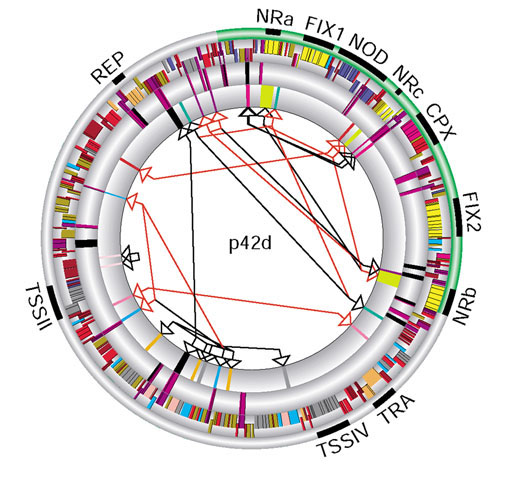
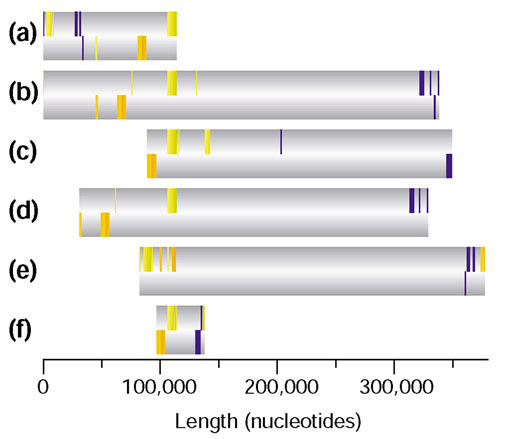
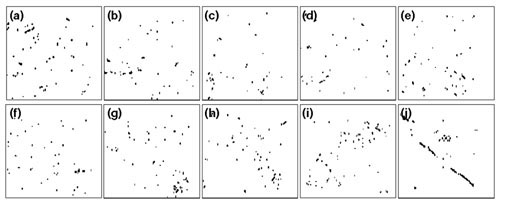
The symbiotic plasmid is a circular molecule of 371,255 base-pairs containing 359 coding sequences. Nodulation and nitrogen-fixation genes common to other rhizobia are clustered in a region of 125 kilobases. Numerous sequences related to mobile elements are scattered throughout. In some cases the mobile elements flank blocks of functionally related sequences, thereby suggesting a role in transposition. The plasmid contains 12 reiterated DNA families that are likely to participate in genomic rearrangements. Comparisons between this plasmid and complete rhizobial genomes and symbiotic compartments already sequenced show a general lack of synteny and colinearity, with the exception of some transcriptional units. There are only 20 symbiotic genes that are shared by all SGCs.
Our data support the notion that the symbiotic compartments of rhizobia genomes are mosaic structures that have been frequently tailored by recombination, horizontal transfer and transposition.
被称为根瘤菌的共生细菌与豆科植物的根相互作用,并诱导固氮根瘤的形成。在根瘤菌中,共生必需基因被分隔在共生质粒或染色体共生岛上。为了了解共生基因组区域(SGCs)的结构和进化,有必要分析它们共同的遗传内容和组织,并研究它们的差异。迄今为止,属于不同根瘤菌物种的5个SGCs已被完全测序。我们报告了菜豆微共生体根瘤菌CFN42共生质粒的完整序列,并与其他可用的SGC序列进行了比较。
共生质粒是一个371,255个碱基对的环状分子,包含359个编码序列。其他根瘤菌共有的结瘤和固氮基因聚集在一个125千碱基的区域。许多与移动元件相关的序列分散在各处。在某些情况下,移动元件位于功能相关序列的区域两侧,从而表明其在转座中的作用。该质粒包含12个重复的DNA家族,可能参与基因组重排。该质粒与已测序的完整根瘤菌基因组和共生区域之间的比较表明,除了一些转录单元外,普遍缺乏同线性和共线性。所有SGCs共有的共生基因只有20个。
我们的数据支持这样一种观点,即根瘤菌基因组的共生区域是镶嵌结构,经常通过重组、水平转移和转座进行调整。