Smith Linda S
School of Nursing, Oregon Health & Science University, Klamath Falls, Oregon, USA.
BMC Nurs. 2003 Jun 15;2(1):1. doi: 10.1186/1472-6955-2-1.
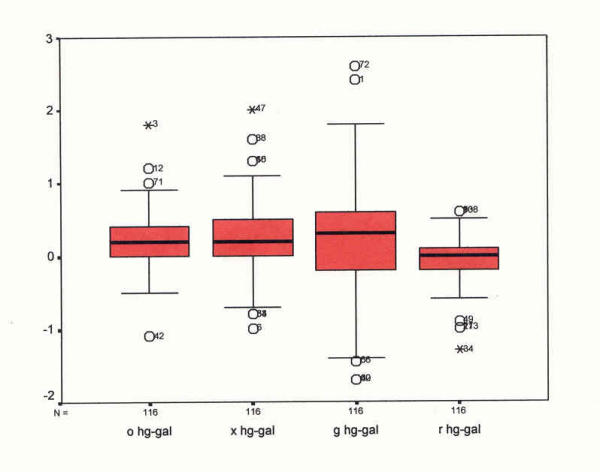
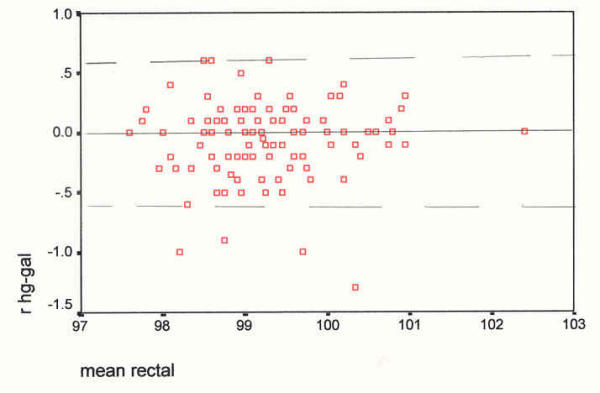
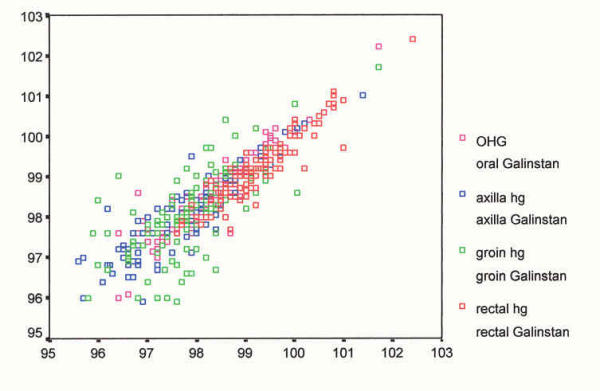
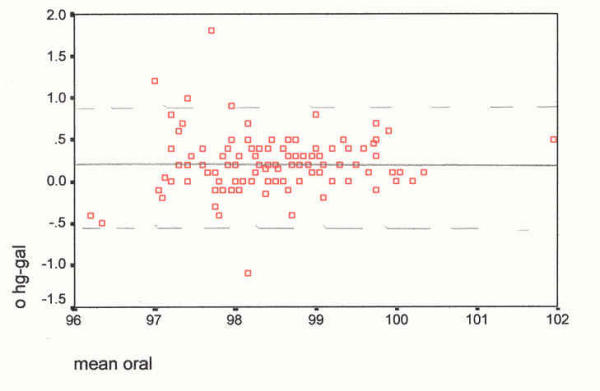
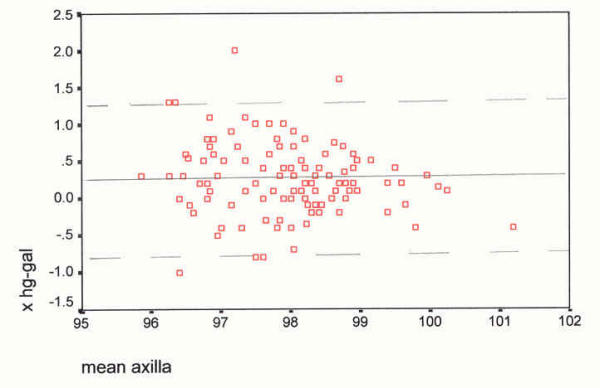
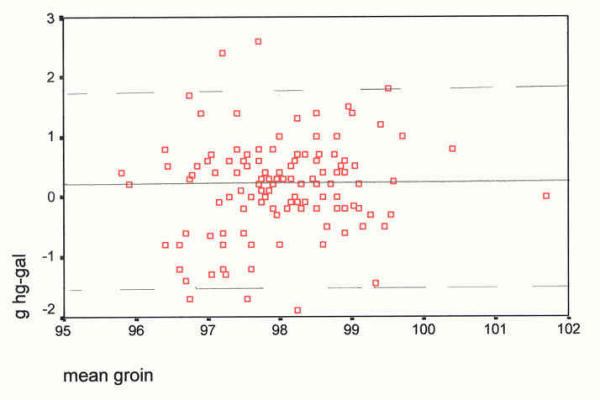
As a result of the recent international vigilance regarding disease assessment, accurate measurement of body temperature has become increasingly important. Yet, trusted low-tech, portable mercury glass thermometers are no longer available. Thus, comparing accuracy of mercury-free thermometers with mercury devices is essential. Study purposes were 1) to examine age, race, site as variables affecting temperature measurement in adults, and 2) to compare clinical accuracy of low-tech Galinstan-in-glass device to mercury-in-glass at oral, axillary, groin, and rectal sites in adults. METHODS: Setting 176 bed accredited healthcare facility, rural northwest USParticipants Convenience sample (N = 120) of hospitalized persons GreaterEqual; 18 years old.Instruments Temperatures ( degrees F) measured at oral, skin (simultaneous), immediately followed by rectal sites with four each mercury-glass (BD) and Galinstan-glass (Geratherm) thermometers; 10 minute dwell times. RESULTS: Participants averaged 61.6 years (SD 17.9), 188 pounds (SD 55.3); 61% female; race: 85% White, 8.3% Native Am., 4.2% Hispanic, 1.7 % Asian, 0.8% Black. For both mercury and Galinstan-glass thermometers, within-subject temperature readings were highest rectally; followed by oral, then skin sites. Galinstan assessments demonstrated rectal sites 0.91 degrees F > oral and FullEqual; 1.3 degrees F > skin sites. Devices strongly correlated between and across sites. Site difference scores between devices showed greatest variability at skin sites; least at rectal site. 95% confidence intervals of difference scores by site ( degrees F): oral (0.142 - 0.265), axilla (0.167 - 0.339), groin (0.037 - 0.321), and rectal (-0.111 - 0.111). Race correlated with age, temperature readings each site and device. CONCLUSION: Temperature readings varied by age, race. Mercury readings correlated with Galinstan thermometer readings at all sites. Site mean differences between devices were considered clinically insignificant. Still considered the gold standard, mercury-glass thermometers may no longer be available worldwide. Therefore, mercury-free, environmentally safe low-tech Galinstan-in-glass may be an appropriate replacement. This is especially important as we face new, internationally transmitted diseases.
由于近期国际上对疾病评估的警惕,准确测量体温变得越来越重要。然而,值得信赖的低技术便携式水银玻璃温度计已不再可用。因此,比较无汞温度计与水银温度计的准确性至关重要。研究目的如下:1)研究年龄、种族、测量部位作为影响成人体温测量的变量;2)比较低技术的玻璃铟镓锡温度计与玻璃水银温度计在成人的口腔、腋窝、腹股沟和直肠部位的临床准确性。
地点为美国西北部农村地区一家拥有176张床位的经认可的医疗机构。参与者为方便样本(N = 120),均为住院患者,年龄大于或等于18岁。仪器分别使用水银玻璃温度计(BD)和玻璃铟镓锡温度计(Geratherm)各四支,在口腔、皮肤(同时测量)、紧接着直肠部位测量温度(华氏度);停留时间为10分钟。
参与者平均年龄61.6岁(标准差17.9),体重188磅(标准差55.3);61%为女性;种族分布:85%为白人,8.3%为美洲原住民,4.2%为西班牙裔,1.7%为亚洲人,0.8%为黑人。对于水银温度计和玻璃铟镓锡温度计,受试者体内温度读数直肠部位最高;其次是口腔部位,然后是皮肤部位。玻璃铟镓锡温度计测量显示直肠部位比口腔部位高0.91华氏度且大于或等于;比皮肤部位高1.3华氏度。不同部位以及不同温度计之间的测量结果相关性很强。两种温度计之间的部位差异分数在皮肤部位变异性最大;在直肠部位最小。各部位差异分数的95%置信区间(华氏度):口腔(0.142 - 0.265),腋窝(0.167 - 0.339),腹股沟(0.037 - 0.321),直肠(-0.111 - 0.111)。种族与年龄、各部位及各温度计的温度读数相关。
体温读数因年龄、种族而异。所有部位水银温度计读数与玻璃铟镓锡温度计读数相关。两种温度计之间的部位平均差异在临床上被认为无显著意义。水银玻璃温度计虽仍被视为金标准,但可能在全球范围内不再可用。因此,无汞、对环境安全的低技术玻璃铟镓锡温度计可能是合适的替代品。在我们面临新的国际传播疾病的情况下,这一点尤为重要。