Damon Henri, Henry Luc, Roman Sabine, Barth Xavier, Mion François
Fédération des Spécialités Digestives, Hôpital E. Herriot, 69437 Lyon cedex 03, France.
BMC Gastroenterol. 2003 Aug 19;3:23. doi: 10.1186/1471-230X-3-23.
Anal sphincter defects have been shown to increase pressure asymmetry within the anal canal in patients with fecal incontinence. However, this correlation is far from perfect, and other factors may play a role. The goal of this study was to assess the impact of rectal prolapse on anal pressure asymmetry in patients with anal incontinence.
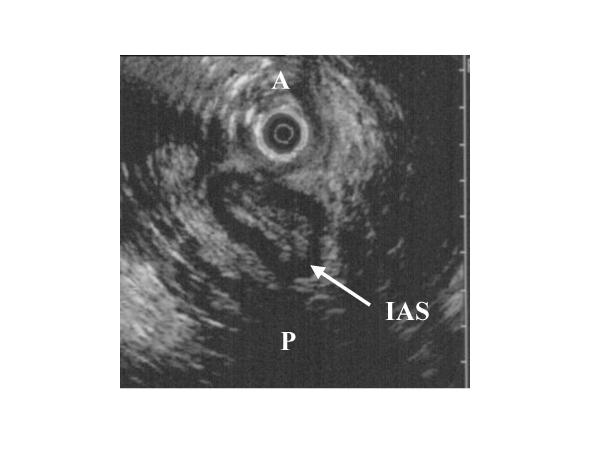
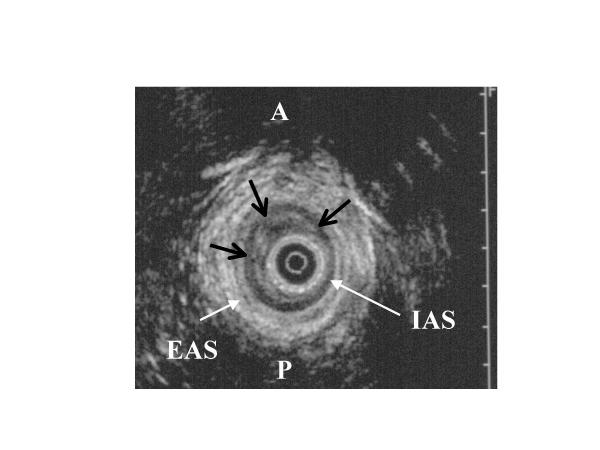
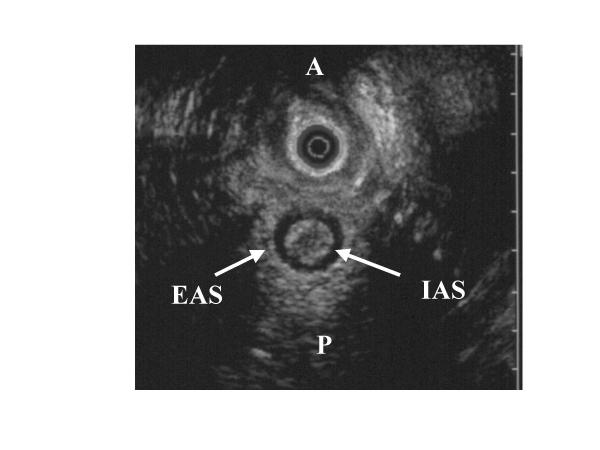
44 patients, (42 women, mean age: 64 (11) years), complaining of anal incontinence, underwent anal vector manometry, endo-anal ultrasonography (to assess sphincter defects) and pelvic viscerogram (for the diagnosis of rectal prolapse). Resting and squeeze anal pressures, and anal asymmetry index at rest and during voluntary squeeze were determined by vector manometry.
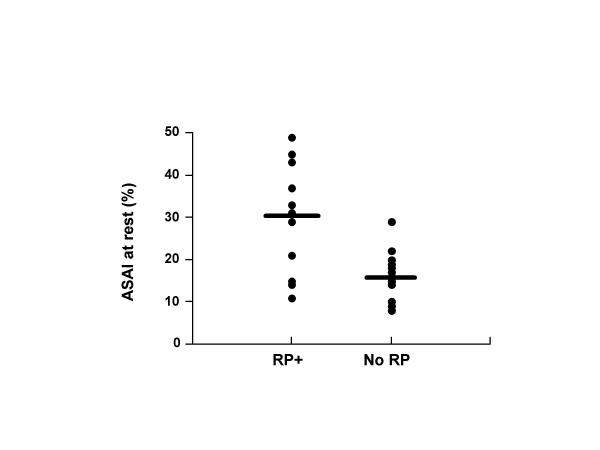
Ultrasonography identified 19 anal sphincter defects; there were 9 cases of overt rectal prolapse, and 14 other cases revealed by pelvic viscerogram (recto-anal intussuception). Patients with rectal prolapse had a significantly higher anal sphincter asymmetry index at rest, whether patients with anal sphincter defects were included in the analysis or not (30 (3) % versus 20 (2) %, p < 0.005). Among patients without rectal prolapse, a higher anal sphincter asymmetry index during squeezing was found in patients with anal sphincter defects (27 (2) % versus 19 (2) %, p < 0.03).
In anal incontinent patients, anal asymmetry index may be increased in case of anal sphincter defect and/or rectal prolapse. In the absence of anal sphincter defect at ultrasonogaphy, an increased anal asymmetry index at rest may point to the presence of a rectal prolapse.
已证实肛门括约肌缺陷会增加大便失禁患者肛管内的压力不对称。然而,这种相关性并不完美,其他因素可能也起到一定作用。本研究的目的是评估直肠脱垂对大便失禁患者肛门压力不对称的影响。
44例主诉大便失禁的患者(42例女性,平均年龄:64(11)岁)接受了肛门向量测压、肛门内超声检查(以评估括约肌缺陷)和盆腔脏器造影(用于诊断直肠脱垂)。通过向量测压确定静息和收缩时的肛门压力以及静息和自主收缩时的肛门不对称指数。
超声检查发现19例肛门括约肌缺陷;有9例明显的直肠脱垂,另有14例通过盆腔脏器造影发现(直肠肛管套叠)。无论分析中是否纳入有肛门括约肌缺陷的患者,直肠脱垂患者静息时的肛门括约肌不对称指数均显著更高(30(3)%对20(2)%,p<0.005)。在无直肠脱垂的患者中,有肛门括约肌缺陷的患者收缩时的肛门括约肌不对称指数更高(27(2)%对19(2)%,p<0.03)。
在大便失禁患者中,肛门括约肌缺陷和/或直肠脱垂时肛门不对称指数可能会升高。超声检查未发现肛门括约肌缺陷时,静息时肛门不对称指数升高可能提示存在直肠脱垂。