Hribal Marta L, Nakae Jun, Kitamura Tadahiro, Shutter John R, Accili Domenico
Russ Berrie Research Pavilion, Rm. 238, 1150 St. Nicholas Avenue, New York, NY 10032, USA.
J Cell Biol. 2003 Aug 18;162(4):535-41. doi: 10.1083/jcb.200212107.
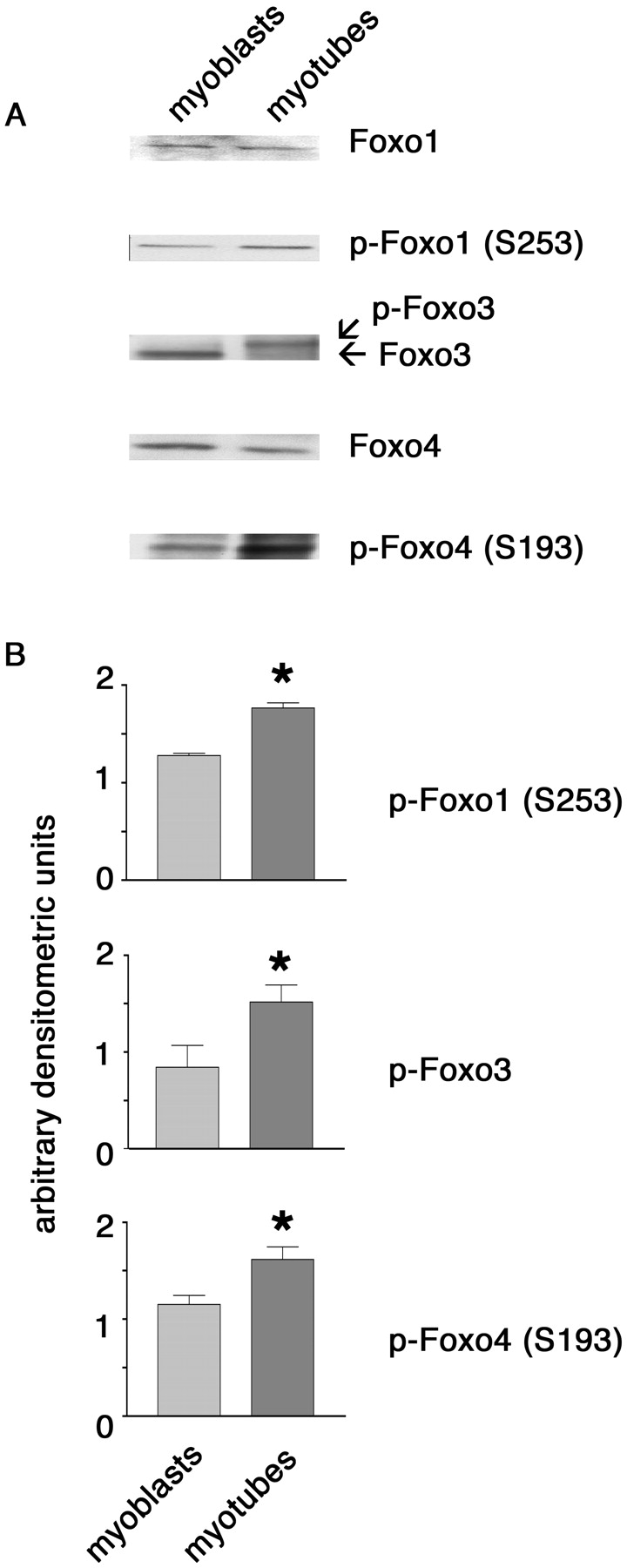
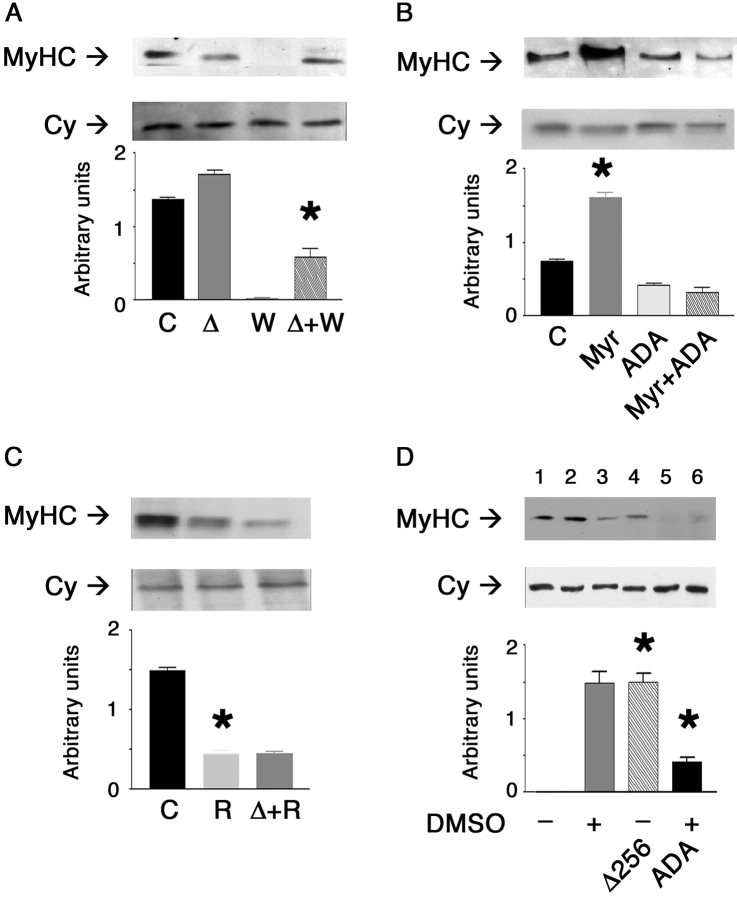
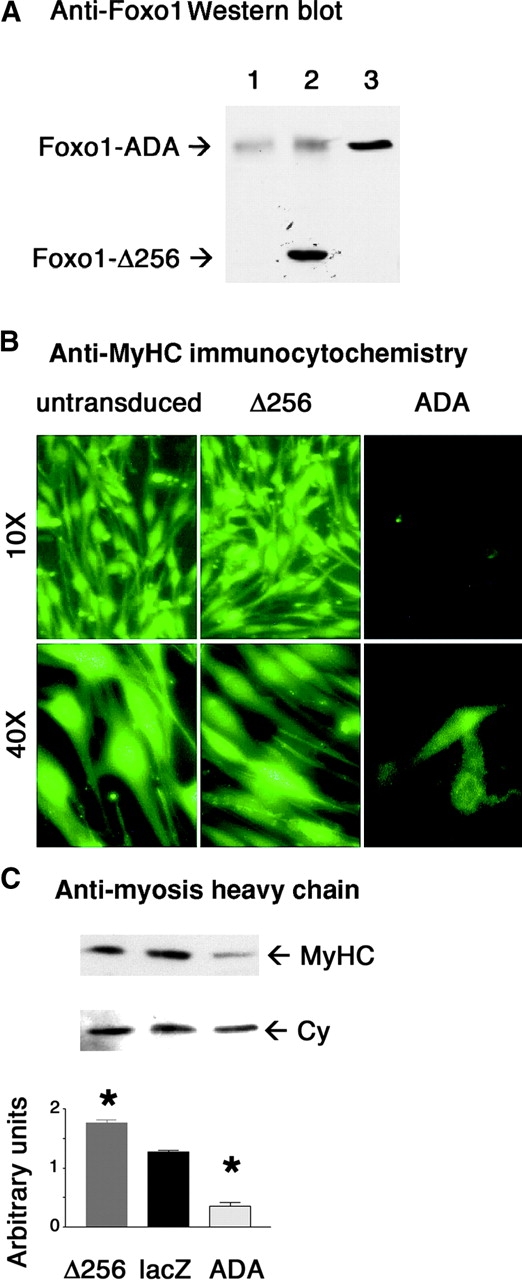
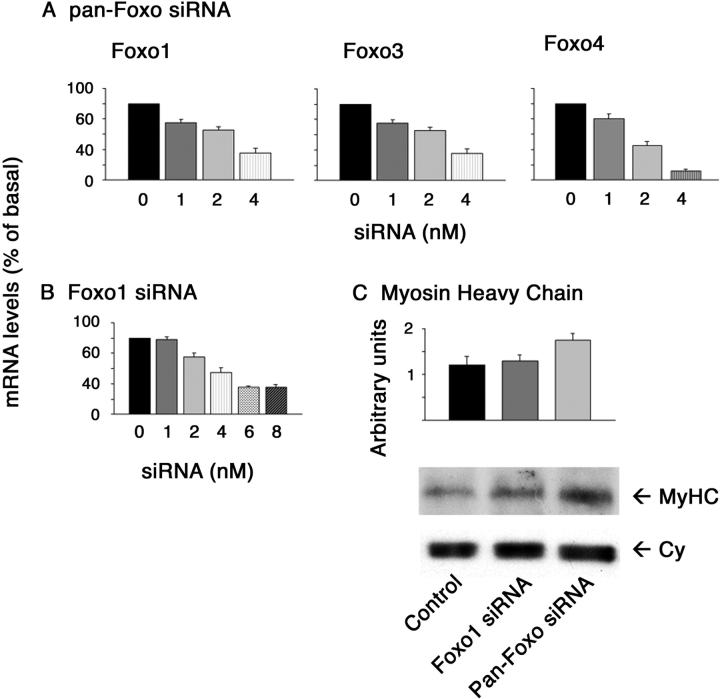
Insulin-like growth factors promote myoblast differentiation through phosphoinositol 3-kinase and Akt signaling. Akt substrates required for myogenic differentiation are unknown. Forkhead transcription factors of the forkhead box gene, group O (Foxo) subfamily are phosphorylated in an insulin-responsive manner by phosphatidylinositol 3-kinase-dependent kinases. Phosphorylation leads to nuclear exclusion and inactivation. We show that a constitutively active Foxo1 mutant inhibits differentiation of C2C12 cells and prevents myotube differentiation induced by constitutively active Akt. In contrast, a transcriptionally inactive mutant Foxo1 partially rescues inhibition of C2C12 differentiation mediated by wortmannin, but not by rapamycin, and is able to induce aggregation-independent myogenic conversion of teratocarcinoma cells. Inhibition of Foxo expression by siRNA resulted in more efficient differentiation, associated with increased myosin expression. These observations indicate that Foxo proteins are key effectors of Akt-dependent myogenesis.
胰岛素样生长因子通过磷酸肌醇3激酶和Akt信号传导促进成肌细胞分化。成肌分化所需的Akt底物尚不清楚。叉头框基因O组(Foxo)亚家族的叉头转录因子以胰岛素反应性方式被磷脂酰肌醇3激酶依赖性激酶磷酸化。磷酸化导致核排除和失活。我们发现,组成型活性Foxo1突变体抑制C2C12细胞的分化,并阻止组成型活性Akt诱导的肌管分化。相反,转录无活性的突变体Foxo1部分挽救了由渥曼青霉素介导的C2C12分化抑制,但不能挽救由雷帕霉素介导的抑制,并且能够诱导畸胎癌细胞的非聚集性成肌转化。通过小干扰RNA抑制Foxo表达导致更有效的分化,这与肌球蛋白表达增加有关。这些观察结果表明,Foxo蛋白是Akt依赖性成肌作用的关键效应物。