Topol Lilia, Jiang Xueyuan, Choi Hosoon, Garrett-Beal Lisa, Carolan Peter J, Yang Yingzi
Genetic Disease Research Branch, National Human Genome Research Institute, National Institutes of Health, Bethesda, MD 20892, USA.
J Cell Biol. 2003 Sep 1;162(5):899-908. doi: 10.1083/jcb.200303158.
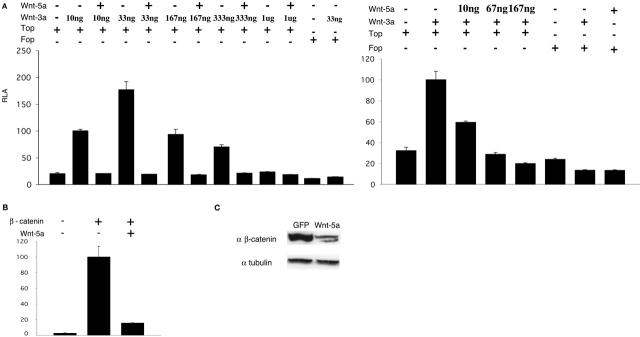
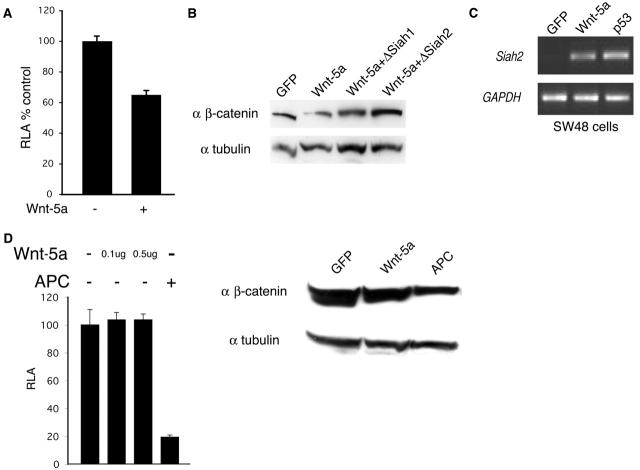
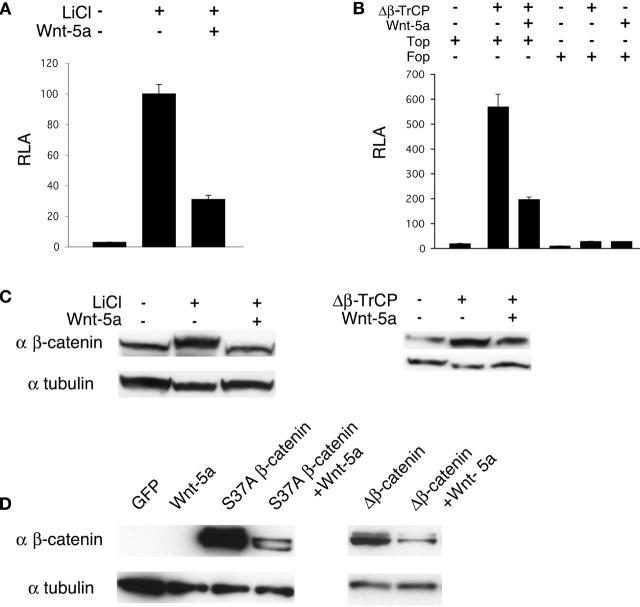
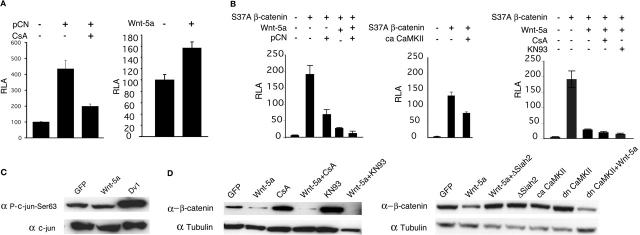
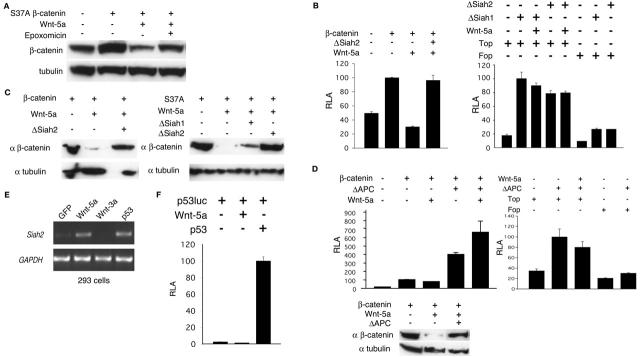
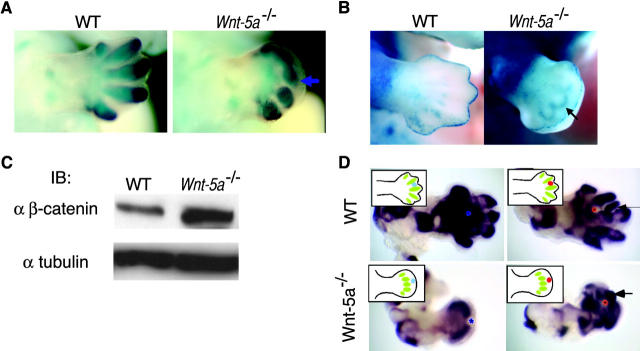
Wnts are secreted signaling molecules that can transduce their signals through several different pathways. Wnt-5a is considered a noncanonical Wnt as it does not signal by stabilizing beta-catenin in many biological systems. We have uncovered a new noncanonical pathway through which Wnt-5a antagonizes the canonical Wnt pathway by promoting the degradation of beta-catenin. This pathway is Siah2 and APC dependent, but GSK-3 and beta-TrCP independent. Furthermore, we provide evidence that Wnt-5a also acts in vivo to promote beta-catenin degradation in regulating mammalian limb development and possibly in suppressing tumor formation.
Wnts是分泌型信号分子,可通过几种不同途径转导其信号。Wnt-5a被认为是非经典Wnt,因为在许多生物系统中它不会通过稳定β-连环蛋白来传递信号。我们发现了一条新的非经典途径,通过该途径Wnt-5a通过促进β-连环蛋白的降解来拮抗经典Wnt途径。该途径依赖于Siah2和APC,但不依赖于GSK-3和β-TrCP。此外,我们提供的证据表明,Wnt-5a在体内也发挥作用,在调节哺乳动物肢体发育以及可能在抑制肿瘤形成过程中促进β-连环蛋白的降解。