Quon D V, d'Oliveira C E, Johnson P J
Department of Microbiology and Immunology, University of California, Los Angeles 90024.
Proc Natl Acad Sci U S A. 1992 May 15;89(10):4402-6. doi: 10.1073/pnas.89.10.4402.
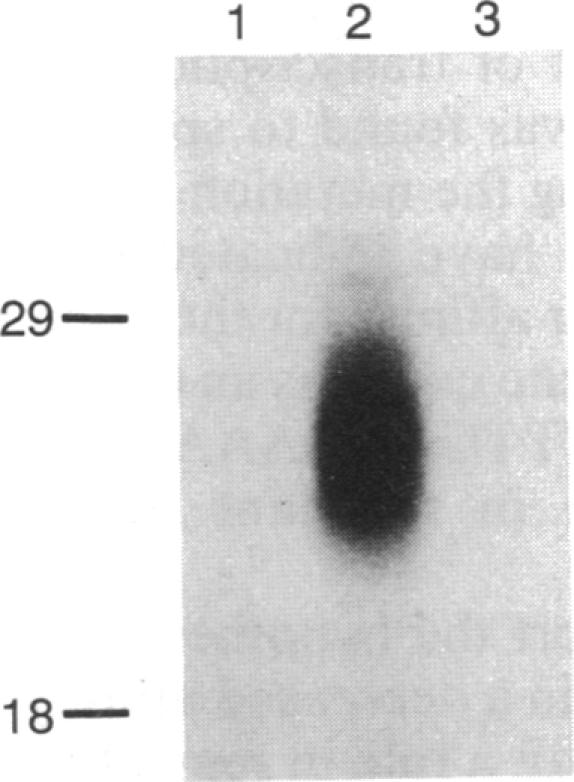
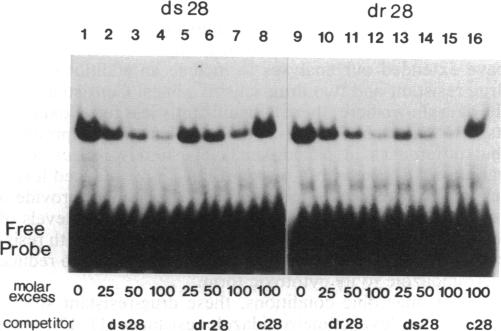
Metronidazole [1-(2-hydroxyethyl)-2-methyl-5-nitroimidazole] is used to treat infections caused by Trichomonas vaginalis, a sexually transmitted human parasite. This drug is administered in an inactive form and is reduced to its cytotoxic form within the hydrogenosome, an unusual organelle found in trichomonads. Metronidazole reduction occurs via ferredoxin-mediated electron transport. We have investigated the role of ferredoxin in metronidazole resistance. Immunoblot analysis of drug-resistant and -sensitive T. vaginalis strains shows that intracellular levels of ferredoxin are invariably reduced in the resistant strains relative to a sensitive strain. Similarly, Northern blot analysis shows that ferredoxin mRNA levels are reduced 50-65% in resistant strains. Using nuclear run-on assays, we show that ferredoxin gene transcription is reduced 40-65% in resistant strains. Sequence comparison of the region 5' of the ferredoxin gene among drug-sensitive and -resistant strains reveals two point mutations, at -178 and -239 nucleotides relative to the start of transcription, in a resistant strain. Interestingly, a protein of approximately 23 kDa binds to a 28-base-pair region that encompasses the mutation at -239 nucleotides. The binding affinity of this protein appears to be reduced in the mutant. These data strongly correlate drug resistance with altered regulation of ferredoxin gene transcription. A reduction in gene transcription results in decreased intracellular levels of ferredoxin. This, in turn, may play a role in metronidazole resistance by decreasing the ability of the cell to activate the drug.
甲硝唑[1-(2-羟乙基)-2-甲基-5-硝基咪唑]用于治疗由阴道毛滴虫引起的感染,阴道毛滴虫是一种通过性传播的人体寄生虫。这种药物以无活性形式给药,并在氢化酶体(一种在滴虫中发现的特殊细胞器)内还原为其细胞毒性形式。甲硝唑的还原通过铁氧化还原蛋白介导的电子传递发生。我们研究了铁氧化还原蛋白在甲硝唑耐药性中的作用。对耐药和敏感的阴道毛滴虫菌株进行免疫印迹分析表明,与敏感菌株相比,耐药菌株中铁氧化还原蛋白的细胞内水平总是降低的。同样,Northern印迹分析表明,耐药菌株中铁氧化还原蛋白mRNA水平降低了50 - 65%。使用核转录分析,我们表明耐药菌株中铁氧化还原蛋白基因转录降低了40 - 65%。对药物敏感和耐药菌株中铁氧化还原蛋白基因5'端区域的序列比较揭示,在一个耐药菌株中,相对于转录起始点,在-178和-239核苷酸处有两个点突变。有趣的是,一种约23 kDa的蛋白质与一个包含-239核苷酸处突变的28个碱基对区域结合。该蛋白质的结合亲和力在突变体中似乎降低了。这些数据强烈表明耐药性与铁氧化还原蛋白基因转录调控的改变相关。基因转录的减少导致细胞内铁氧化还原蛋白水平降低。反过来,这可能通过降低细胞激活药物的能力在甲硝唑耐药性中发挥作用。