Schiavo G, Poulain B, Rossetto O, Benfenati F, Tauc L, Montecucco C
Centro CNR Biomembrane, Università di Padova, Italy.
EMBO J. 1992 Oct;11(10):3577-83. doi: 10.1002/j.1460-2075.1992.tb05441.x.
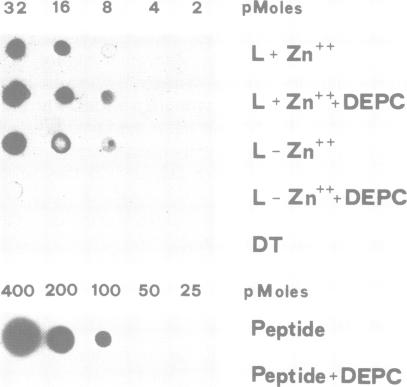
Tetanus and botulinum neurotoxins are the most potent toxins known. They bind to nerve cells, penetrate the cytosol and block neurotransmitter release. Comparison of their predicted amino acid sequences reveals a highly conserved segment that contains the HexxH zinc binding motif of metalloendopeptidases. The metal content of tetanus toxin was then measured and it was found that one atom of zinc is bound to the light chain of tetanus toxin. Zinc could be reversibly removed by incubation with heavy metal chelators. Zn2+ is coordinated by two histidines with no involvement in cysteines, suggesting that it plays a catalytic rather than a structural role. Bound Zn2+ was found to be essential for the tetanus toxin inhibition of neurotransmitter release in Aplysia neurons injected with the light chain. The intracellular activity of the toxin was blocked by phosphoramidon, a very specific inhibitor of zinc endopeptidases. Purified preparations of light chain showed a highly specific proteolytic activity against synaptobrevin, an integral membrane protein of small synaptic vesicles. The present findings indicate that tetanus toxin, and possibly also the botulinum neurotoxins, are metalloproteases and that they block neurotransmitter release via this protease activity.
破伤风毒素和肉毒杆菌神经毒素是已知毒性最强的毒素。它们与神经细胞结合,穿透细胞质并阻断神经递质释放。对其预测的氨基酸序列进行比较,发现一个高度保守的片段,其中包含金属内肽酶的HexxH锌结合基序。随后对破伤风毒素的金属含量进行了测定,发现一个锌原子与破伤风毒素的轻链结合。通过与重金属螯合剂孵育,锌可以被可逆地去除。Zn2+由两个组氨酸配位,不涉及半胱氨酸,这表明它起催化作用而非结构作用。发现结合的Zn2+对于注射了轻链的海兔神经元中破伤风毒素抑制神经递质释放至关重要。毒素的细胞内活性被磷酰胺素阻断,磷酰胺素是锌内肽酶的一种非常特异性的抑制剂。纯化的轻链制剂对突触小泡膜整合蛋白突触小泡蛋白显示出高度特异性的蛋白水解活性。目前的研究结果表明,破伤风毒素以及可能的肉毒杆菌神经毒素都是金属蛋白酶,并且它们通过这种蛋白酶活性阻断神经递质释放。