• 文献检索
  • 文档翻译
  • 深度研究
  • 学术资讯
  • Suppr Zotero 插件Zotero 插件
  • 邀请有礼
  • 套餐&价格
  • 历史记录
应用&插件
Suppr Zotero 插件Zotero 插件浏览器插件Mac 客户端Windows 客户端微信小程序
定价
高级版会员购买积分包购买API积分包
服务
文献检索文档翻译深度研究API 文档MCP 服务
关于我们
关于 Suppr公司介绍联系我们用户协议隐私条款
关注我们

Suppr 超能文献

核心技术专利:CN118964589B侵权必究
粤ICP备2023148730 号-1Suppr @ 2026

文献检索

告别复杂PubMed语法,用中文像聊天一样搜索,搜遍4000万医学文献。AI智能推荐,让科研检索更轻松。

立即免费搜索

文件翻译

保留排版,准确专业,支持PDF/Word/PPT等文件格式,支持 12+语言互译。

免费翻译文档

深度研究

AI帮你快速写综述,25分钟生成高质量综述,智能提取关键信息,辅助科研写作。

立即免费体验

1918年流感大流行由具有两种受体结合变体的高度保守病毒引起。

1918 influenza pandemic caused by highly conserved viruses with two receptor-binding variants.

作者信息

Reid Ann H, Janczewski Thomas A, Lourens Raina M, Elliot Alex J, Daniels Rod S, Berry Colin L, Oxford John S, Taubenberger Jeffery K

机构信息

Department of Cellular Pathology and Genetics, Armed Forces Institute of Pathology, 1413 Research Boulevard, Building 101, Rockville, MD 20850-3125, USA.

出版信息

Emerg Infect Dis. 2003 Oct;9(10):1249-53. doi: 10.3201/eid0910.020789.

DOI:10.3201/eid0910.020789
PMID:14609459
原文链接:https://pmc.ncbi.nlm.nih.gov/articles/PMC3033089/
Abstract

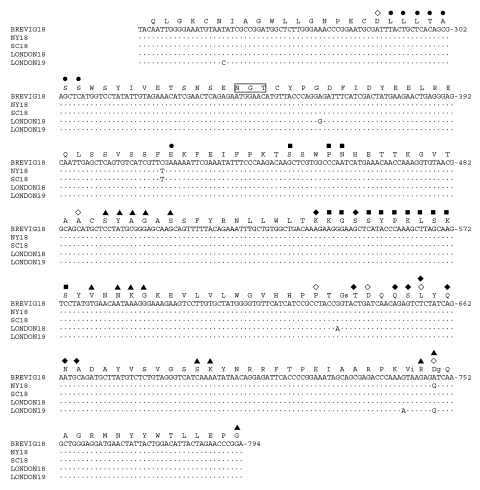
The “Spanish influenza pandemic swept the globe in the autumn and winter of 1918–19, and resulted in the deaths of approximately 40 million people. Clinically, epidemiologically, and pathologically, the disease was remarkably uniform, which suggests that similar viruses were causing disease around the world. To assess the homogeneity of the 1918 pandemic influenza virus, partial hemagglutinin gene sequences have been determined for five cases, including two newly identified samples from London, United Kingdom. The strains show 98.9% to 99.8% nucleotide sequence identity. One of the few differences between the strains maps to the receptor-binding site of hemagglutinin, suggesting that two receptor-binding configurations were co-circulating during the pandemic. The results suggest that in the early stages of an influenza A pandemic, mutations that occur during replication do not become fixed so that a uniform “consensus” strain circulates for some time.

摘要

1918年至1919年秋冬,“西班牙流感”大流行席卷全球,导致约4000万人死亡。在临床、流行病学和病理学上,这种疾病表现出显著的一致性,这表明世界各地的致病病毒相似。为评估1918年大流行流感病毒的同源性,已测定了5个病例的部分血凝素基因序列,其中包括来自英国伦敦的两个新鉴定样本。这些毒株的核苷酸序列同一性为98.9%至99.8%。毒株之间为数不多的差异之一位于血凝素的受体结合位点,这表明在大流行期间两种受体结合构型共同传播。结果表明,在甲型流感大流行的早期阶段,复制过程中发生的突变不会固定下来,因此一种统一的“共识”毒株会传播一段时间。
https://cdn.ncbi.nlm.nih.gov/pmc/blobs/f5e9/3033089/c14abd4e523b/02-0789-F.jpg

相似文献

1
1918 influenza pandemic caused by highly conserved viruses with two receptor-binding variants.1918年流感大流行由具有两种受体结合变体的高度保守病毒引起。
Emerg Infect Dis. 2003 Oct;9(10):1249-53. doi: 10.3201/eid0910.020789.
2
Improvement of influenza A/Fujian/411/02 (H3N2) virus growth in embryonated chicken eggs by balancing the hemagglutinin and neuraminidase activities, using reverse genetics.通过反向遗传学平衡血凝素和神经氨酸酶活性来提高甲型流感病毒/福建/411/02(H3N2)在鸡胚中的生长。
J Virol. 2005 Jun;79(11):6763-71. doi: 10.1128/JVI.79.11.6763-6771.2005.
3
Virology. Resurrected influenza virus yields secrets of deadly 1918 pandemic.病毒学。复活的流感病毒揭示了1918年致命大流行的秘密。
Science. 2005 Oct 7;310(5745):28-9. doi: 10.1126/science.310.5745.28.
4
The 1918 influenza virus: A killer comes into view.1918年流感病毒:杀手现身。
Virology. 2000 Sep 1;274(2):241-5. doi: 10.1006/viro.2000.0495.
5
The 1918 'Spanish' flu: pearls from swine?1918年的“西班牙”流感:源自猪的线索?
Nat Med. 1999 Apr;5(4):384-5. doi: 10.1038/7383.
6
The 1918 Spanish influenza: integrating history and biology.1918年西班牙流感:整合历史与生物学
Microbes Infect. 2001 Jan;3(1):81-7. doi: 10.1016/s1286-4579(00)01351-4.
7
Structure, receptor binding, and antigenicity of influenza virus hemagglutinins from the 1957 H2N2 pandemic.1957 年 H2N2 大流行流感病毒血凝素的结构、受体结合和抗原性。
J Virol. 2010 Feb;84(4):1715-21. doi: 10.1128/JVI.02162-09. Epub 2009 Dec 9.
8
Existing antivirals are effective against influenza viruses with genes from the 1918 pandemic virus.现有的抗病毒药物对带有1918年大流行病毒基因的流感病毒有效。
Proc Natl Acad Sci U S A. 2002 Oct 15;99(21):13849-54. doi: 10.1073/pnas.212519699. Epub 2002 Oct 4.
9
The virulence of the 1918 pandemic influenza virus: unraveling the enigma.1918年大流行性流感病毒的毒力:揭开谜团
Arch Virol Suppl. 2005(19):101-15. doi: 10.1007/3-211-29981-5_9.
10
Integrating historical, clinical and molecular genetic data in order to explain the origin and virulence of the 1918 Spanish influenza virus.整合历史、临床和分子遗传学数据,以解释1918年西班牙流感病毒的起源和毒力。
Philos Trans R Soc Lond B Biol Sci. 2001 Dec 29;356(1416):1829-39. doi: 10.1098/rstb.2001.1020.

引用本文的文献

1
An ancient influenza genome from Switzerland allows deeper insights into host adaptation during the 1918 flu pandemic in Europe.一份来自瑞士的古代流感病毒基因组,有助于更深入地了解1918年欧洲流感大流行期间病毒对宿主的适应性。
BMC Biol. 2025 Jul 1;23(1):179. doi: 10.1186/s12915-025-02282-z.
2
Molecular Evolution of the H5 and H7 Highly Pathogenic Avian Influenza Virus Haemagglutinin Cleavage Site Motif.H5和H7高致病性禽流感病毒血凝素裂解位点基序的分子进化
Rev Med Virol. 2025 Jan;35(1):e70012. doi: 10.1002/rmv.70012.
3
Two complete 1918 influenza A/H1N1 pandemic virus genomes characterized by next-generation sequencing using RNA isolated from formalin-fixed, paraffin-embedded autopsy lung tissue samples along with evidence of secondary bacterial co-infection.

本文引用的文献

1
Preparing for pandemic influenza: the need for enhanced surveillance.为大流行性流感做准备:加强监测的必要性。
Vaccine. 2002 May 15;20 Suppl 2:S63-5. doi: 10.1016/s0264-410x(02)00135-4.
2
Perspectives on antiviral use during pandemic influenza.大流行性流感期间抗病毒药物使用的观点。
Philos Trans R Soc Lond B Biol Sci. 2001 Dec 29;356(1416):1877-84. doi: 10.1098/rstb.2001.1007.
3
The evolution of human influenza viruses.人类流感病毒的演变
通过对从福尔马林固定、石蜡包埋的尸检肺组织样本中分离的RNA进行下一代测序,鉴定出两个完整的1918年甲型H1N1流感大流行病毒基因组,以及继发性细菌合并感染的证据。
mBio. 2024 Mar 13;15(3):e0321823. doi: 10.1128/mbio.03218-23. Epub 2024 Feb 13.
4
An Investigation of Severe Influenza Cases in Russia during the 2022-2023 Epidemic Season and an Analysis of HA-D222G/N Polymorphism in Newly Emerged and Dominant Clade 6B.1A.5a.2a A(H1N1)pdm09 Viruses.2022 - 2023流行季俄罗斯重症流感病例调查及新出现的优势6B.1A.5a.2a进化枝A(H1N1)pdm09病毒中HA - D222G/N多态性分析
Pathogens. 2023 Dec 19;13(1):1. doi: 10.3390/pathogens13010001.
5
100-year-old pandemic flu viruses yield new genomes.百年前的大流行性流感病毒产生了新的基因组。
Nature. 2022 Jul;607(7918):244-245. doi: 10.1038/d41586-022-01741-9.
6
Archival influenza virus genomes from Europe reveal genomic variability during the 1918 pandemic.欧洲的流感病毒档案基因组揭示了 1918 年大流行期间的基因组变异性。
Nat Commun. 2022 May 10;13(1):2314. doi: 10.1038/s41467-022-29614-9.
7
The beginning and ending of a respiratory viral pandemic-lessons from the Spanish flu.呼吸道病毒大流行的始末——以西班牙流感为例。
Microb Biotechnol. 2022 May;15(5):1301-1317. doi: 10.1111/1751-7915.14053. Epub 2022 Mar 22.
8
Microorganisms as Shapers of Human Civilization, from Pandemics to Even Our Genomes: Villains or Friends? A Historical Approach.微生物:塑造人类文明的力量,从大流行到我们的基因组:敌人还是朋友?一种历史视角
Microorganisms. 2021 Dec 6;9(12):2518. doi: 10.3390/microorganisms9122518.
9
Intra-species sialic acid polymorphism in humans: a common niche for influenza and coronavirus pandemics?人类种内唾液酸多态性:流感和冠状病毒大流行的常见生态位?
Emerg Microbes Infect. 2021 Dec;10(1):1191-1199. doi: 10.1080/22221751.2021.1935329.
10
Influenza A Virus Hemagglutinin and Other Pathogen Glycoprotein Interactions with NK Cell Natural Cytotoxicity Receptors NKp46, NKp44, and NKp30.甲型流感病毒血凝素与其他病原体糖蛋白与 NK 细胞自然细胞毒性受体 NKp46、NKp44 和 NKp30 的相互作用。
Viruses. 2021 Jan 21;13(2):156. doi: 10.3390/v13020156.
Philos Trans R Soc Lond B Biol Sci. 2001 Dec 29;356(1416):1861-70. doi: 10.1098/rstb.2001.0999.
4
Integrating historical, clinical and molecular genetic data in order to explain the origin and virulence of the 1918 Spanish influenza virus.整合历史、临床和分子遗传学数据,以解释1918年西班牙流感病毒的起源和毒力。
Philos Trans R Soc Lond B Biol Sci. 2001 Dec 29;356(1416):1829-39. doi: 10.1098/rstb.2001.1020.
5
Rapid molecular analysis of the haemagglutinin gene of human influenza A H3N2 viruses isolated in spain from 1996 to 2000.1996年至2000年在西班牙分离出的甲型H3N2人流感病毒血凝素基因的快速分子分析
Arch Virol. 2001;146(11):2133-47. doi: 10.1007/s007050170025.
6
Death by influenza virus protein.死于流感病毒蛋白。
Nat Med. 2001 Dec;7(12):1286-8. doi: 10.1038/nm1201-1286.
7
The 1918 Spanish influenza: integrating history and biology.1918年西班牙流感:整合历史与生物学
Microbes Infect. 2001 Jan;3(1):81-7. doi: 10.1016/s1286-4579(00)01351-4.
8
Early alterations of the receptor-binding properties of H1, H2, and H3 avian influenza virus hemagglutinins after their introduction into mammals.H1、H2和H3禽流感病毒血凝素引入哺乳动物后其受体结合特性的早期变化
J Virol. 2000 Sep;74(18):8502-12. doi: 10.1128/jvi.74.18.8502-8512.2000.
9
The 1918 flu and other influenza pandemics: "over there" and back again.1918年流感及其他流感大流行:“在那边”又回来了。
Lab Invest. 1999 Feb;79(2):95-101.
10
Origin and evolution of the 1918 "Spanish" influenza virus hemagglutinin gene.1918年“西班牙”流感病毒血凝素基因的起源与演变
Proc Natl Acad Sci U S A. 1999 Feb 16;96(4):1651-6. doi: 10.1073/pnas.96.4.1651.