Xie Gary, Bonner Carol A, Song Jian, Keyhani Nemat O, Jensen Roy A
Los Alamos National Laboratory, Los Alamos, New Mexico 87544, USA.
BMC Biol. 2004 Jun 23;2:15. doi: 10.1186/1741-7007-2-15.
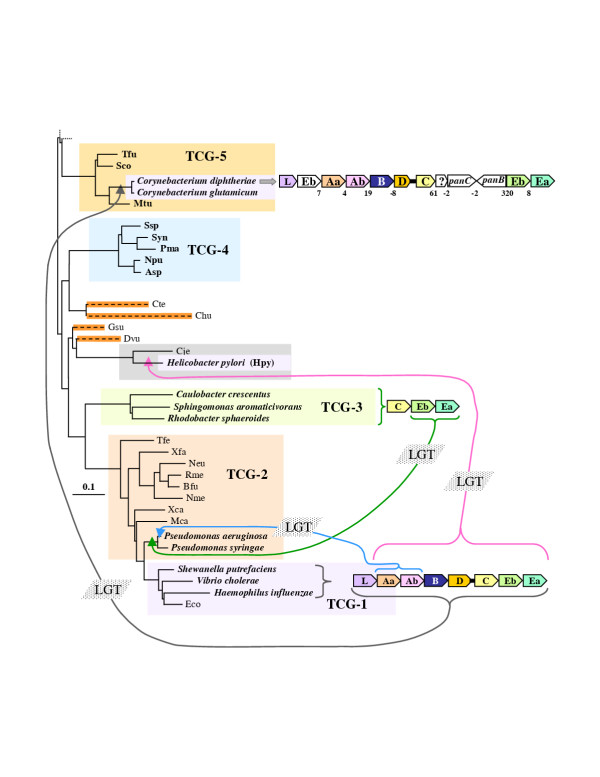
The growing conviction that lateral gene transfer plays a significant role in prokaryote genealogy opens up a need for comprehensive evaluations of gene-enzyme systems on a case-by-case basis. Genes of tryptophan biosynthesis are frequently organized as whole-pathway operons, an attribute that is expected to facilitate multi-gene transfer in a single step. We have asked whether events of lateral gene transfer are sufficient to have obscured our ability to track the vertical genealogy that underpins tryptophan biosynthesis.
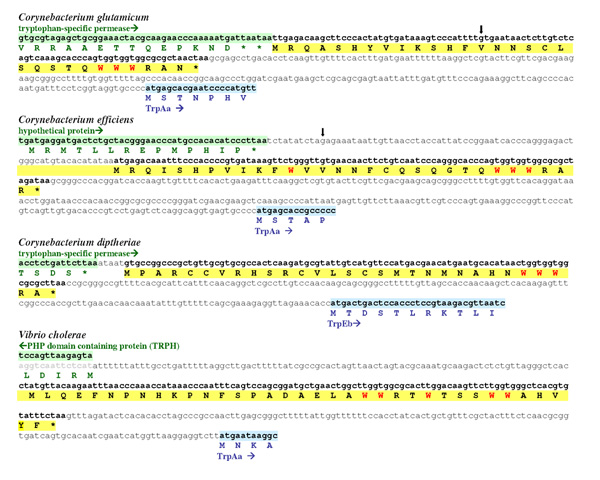
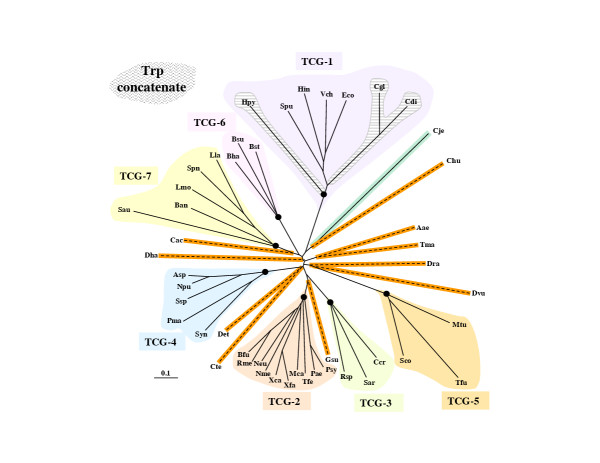
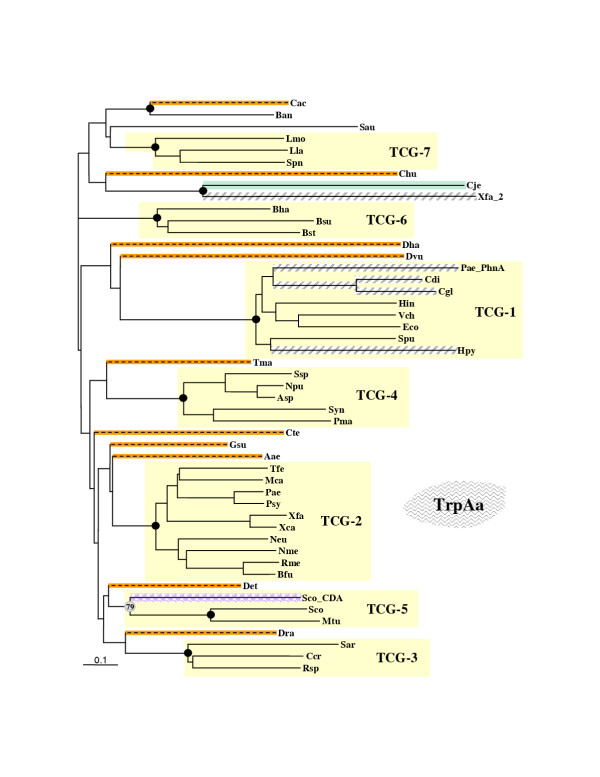
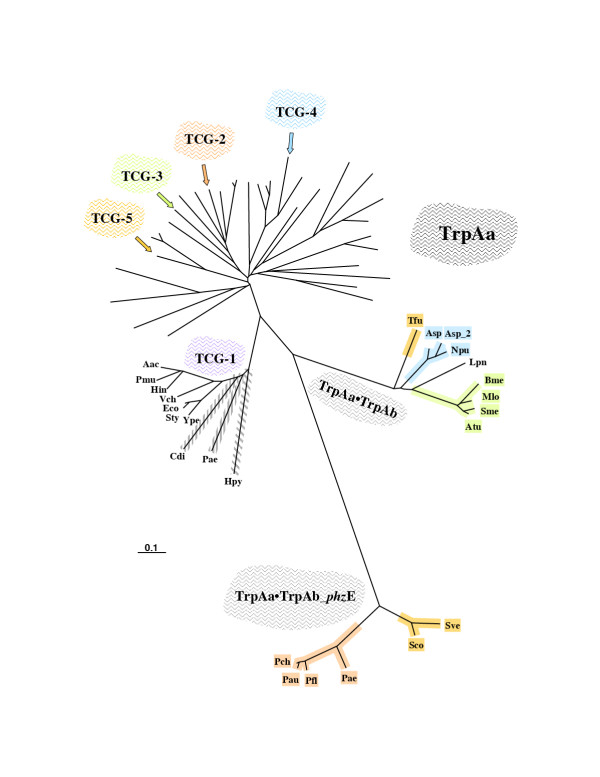
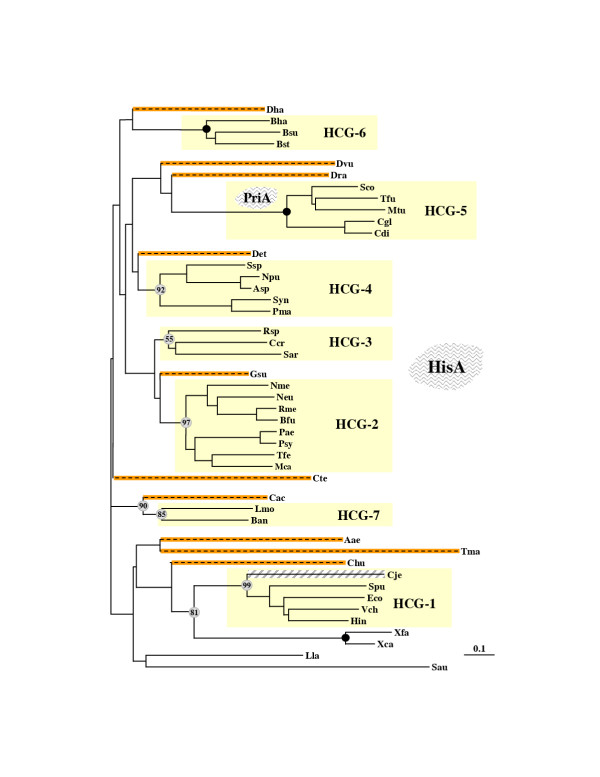
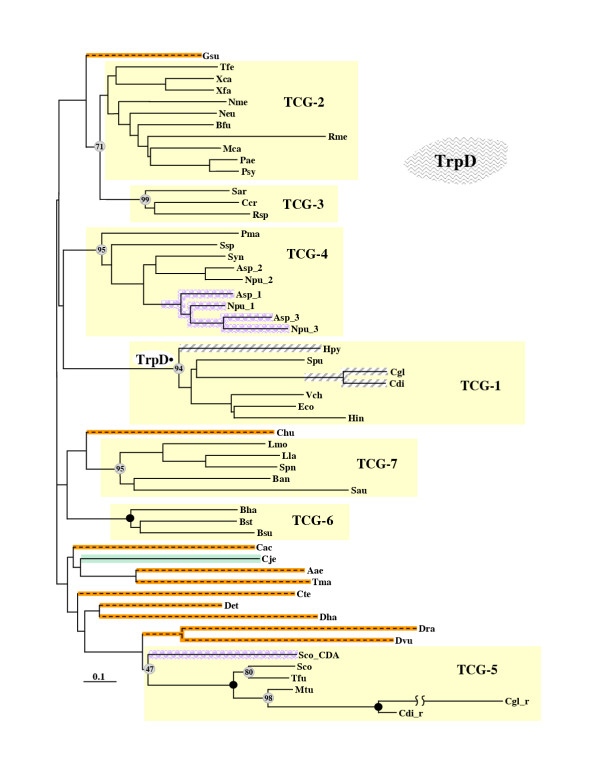
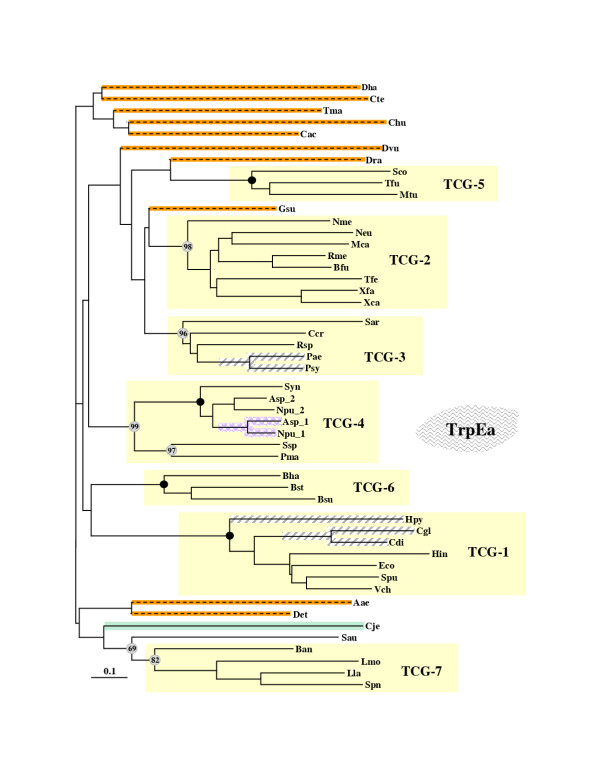
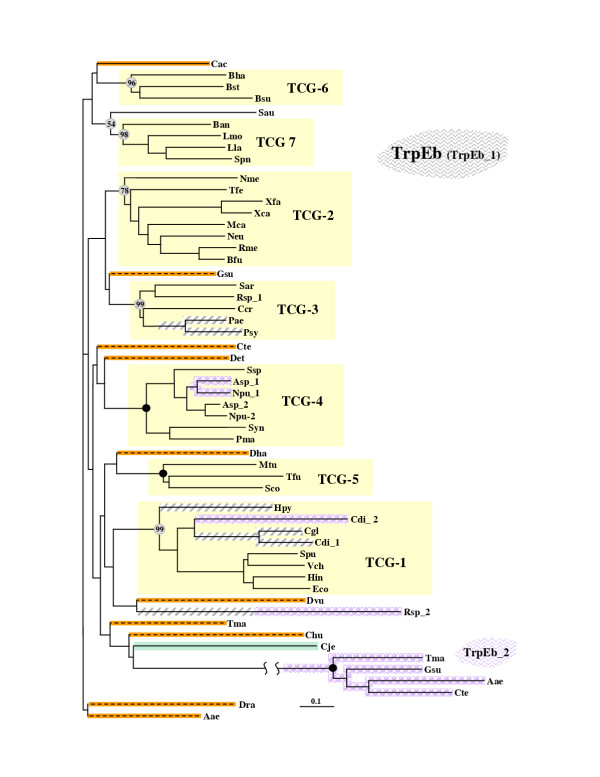
In 47 complete-genome Bacteria, the genes encoding the seven catalytic domains that participate in primary tryptophan biosynthesis were distinguished from any paralogs or xenologs engaged in other specialized functions. A reliable list of orthologs with carefully ascertained functional roles has thus been assembled and should be valuable as an annotation resource. The protein domains associated with primary tryptophan biosynthesis were then concatenated, yielding single amino-acid sequence strings that represent the entire tryptophan pathway. Lateral gene transfer of several whole-pathway trp operons was demonstrated by use of phylogenetic analysis. Lateral gene transfer of partial-pathway trp operons was also shown, with newly recruited genes functioning either in primary biosynthesis (rarely) or specialized metabolism (more frequently).
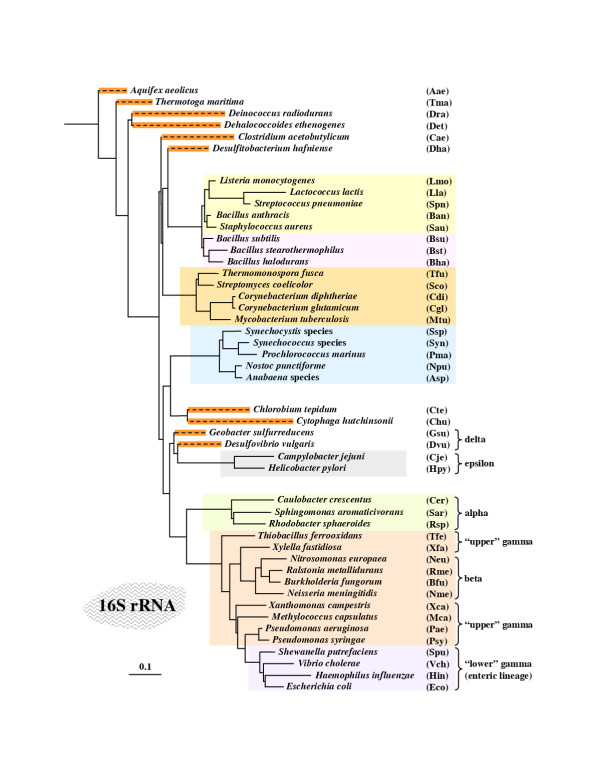
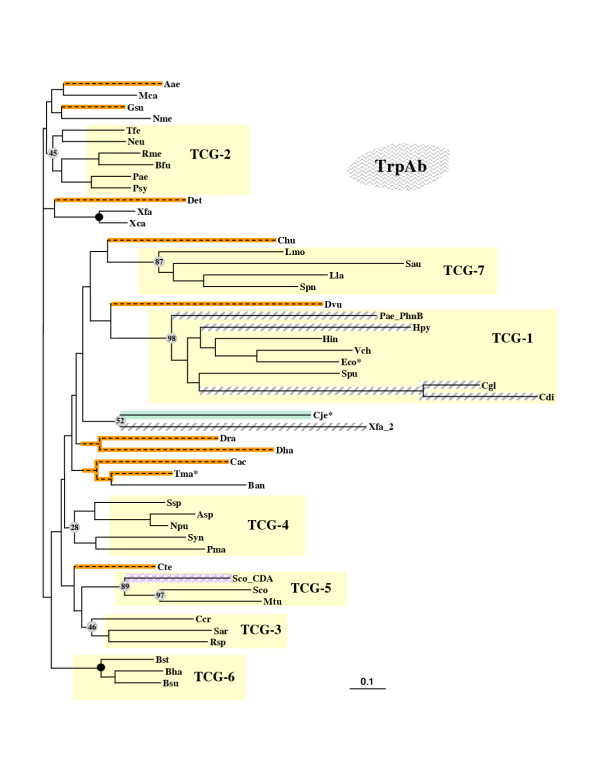
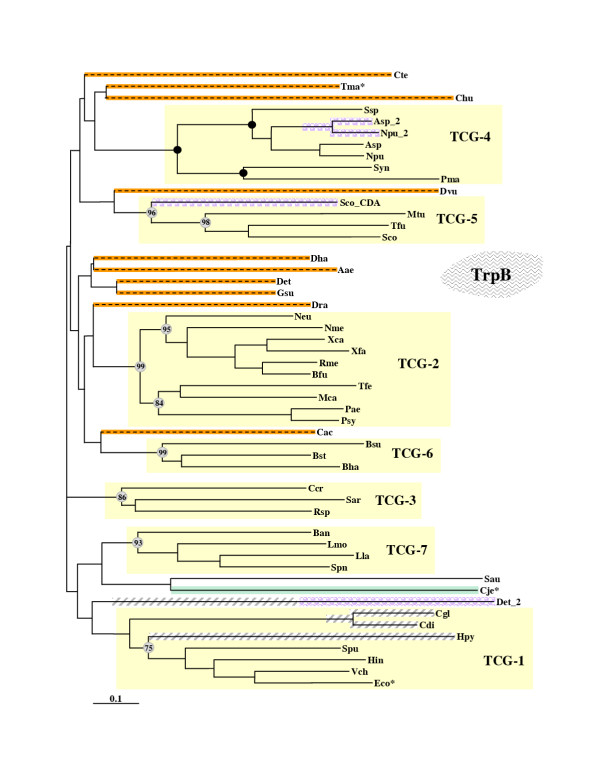
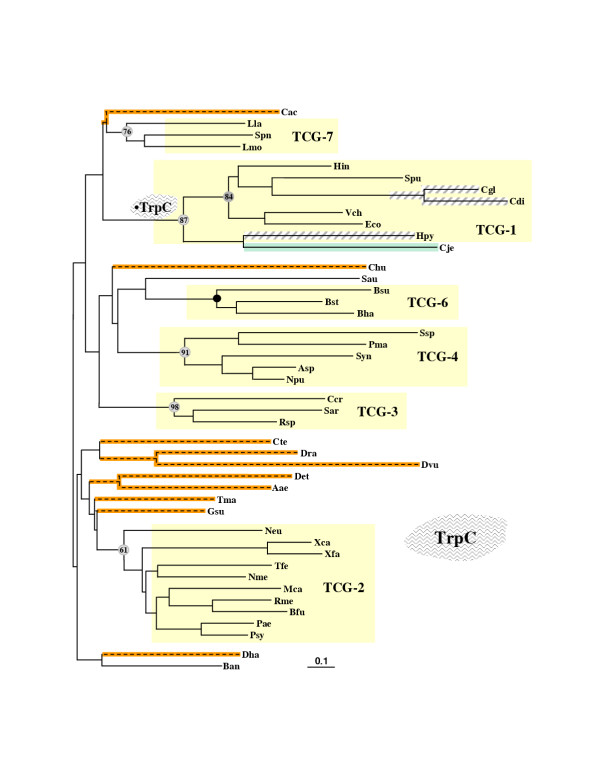
(i) Concatenated tryptophan protein trees are congruent with 16S rRNA subtrees provided that the genomes represented are of sufficiently close phylogenetic spacing. There are currently seven tryptophan congruency groups in the Bacteria. Recognition of a succession of others can be expected in the near future, but ultimately these should coalesce to a single grouping that parallels the 16S rRNA tree (except for cases of lateral gene transfer). (ii) The vertical trace of evolution for tryptophan biosynthesis can be deduced. The daunting complexities engendered by paralogy, xenology, and idiosyncrasies of nomenclature at this point in time have necessitated an expert-assisted manual effort to achieve a correct analysis. Once recognized and sorted out, paralogy and xenology can be viewed as features that enrich evolutionary histories.
越来越多的人相信横向基因转移在原核生物谱系中起着重要作用,这就需要逐案对基因 - 酶系统进行全面评估。色氨酸生物合成的基因通常被组织成全途径操纵子,这一特性预计有助于多基因一步转移。我们探讨了横向基因转移事件是否足以模糊我们追踪色氨酸生物合成基础垂直谱系的能力。
在47个完整基因组细菌中,参与色氨酸初级生物合成的七个催化结构域的编码基因与参与其他特殊功能的任何旁系同源物或异源同源物区分开来。因此,已经汇编了一份具有仔细确定功能作用的可靠直系同源物列表,作为注释资源应该很有价值。然后将与色氨酸初级生物合成相关的蛋白质结构域连接起来,产生代表整个色氨酸途径的单氨基酸序列串。通过系统发育分析证明了几个全途径trp操纵子的横向基因转移。还显示了部分途径trp操纵子的横向基因转移,新招募的基因在初级生物合成中发挥作用(很少见)或在特殊代谢中发挥作用(更常见)。
(i)只要所代表的基因组具有足够接近的系统发育间隔,连接的色氨酸蛋白质树与16S rRNA子树是一致的。目前细菌中有七个色氨酸一致性组。预计在不久的将来会识别出更多的组,但最终这些组应合并为一个与16S rRNA树平行的单一分组(横向基因转移的情况除外)。(ii)可以推断出色氨酸生物合成的垂直进化轨迹。此时,由于旁系同源性、异源同源性和命名法的特殊性所带来的艰巨复杂性,需要专家协助的人工努力才能进行正确的分析。一旦被识别和梳理清楚,旁系同源性和异源同源性可以被视为丰富进化历史的特征。