Adib Hagbaghery Mohsen, Salsali Mahvash, Ahmadi Fazlollah
Faculty of Nursing and Midwifery, Kashan University of Medical Sciences, Kashan, Iran.
Hum Resour Health. 2004 Jun 24;2(1):9. doi: 10.1186/1478-4491-2-9.
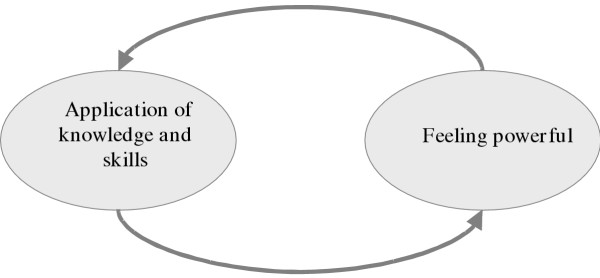
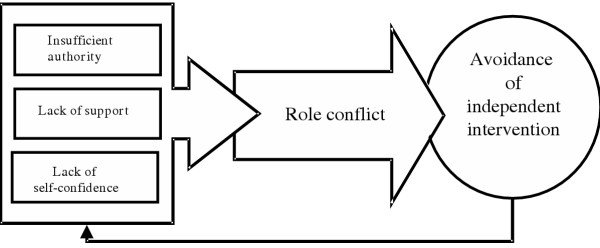
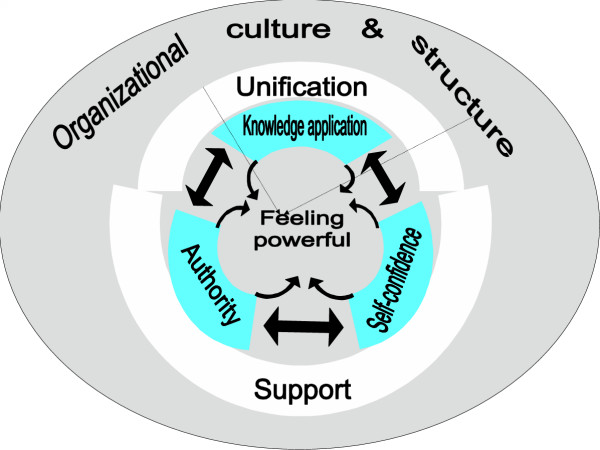
Nurses are expected to empower their clients, but they cannot do so if they themselves feel powerless. They must become empowered before they can empower others. Some researchers have emphasized that understanding the concept of power is an important prerequisite of any empowerment program. While many authors have tried to define the concept of power, there is no comprehensive definition. This paper is an attempt to clarify the concept of power in nursing. It also would present a model describing the factors affecting nurse empowerment. METHODS: We chose the grounded-theory approach for analysis of the participants' experiences and their viewpoints regarding the concept of professional power in nursing. Semi-structured interviews and participant observation methods were used to gather the data. Forty-four participants were interviewed and 12 sessions of observation were carried out. The constant comparative analysis method was used. RESULTS: Six main themes emerged from the data: "Application of knowledge and skills", "Having authority", "Being self-confident", "Unification and solidarity", "Being supported" and "Organizational culture and structure". According to the participants, nurses' power is influenced by these six variables. A theoretical model was designed to represent the interrelationships between these six variables. CONCLUSIONS: Nurses' power depends on gaining and applying professional knowledge and skills. Delegating authority and enhancing self-confidence of the nurses also help them to apply their knowledge in practice. Unification of the nurses and their mutual support play the key roles in development of their collective power and provide a base for better working conditions, professional independence and self-regulation.
护士应增强服务对象的能力,但如果自身感到无力,就无法做到这一点。她们必须先获得能力,才能赋予他人能力。一些研究者强调,理解权力概念是任何赋权项目的重要前提。尽管许多作者试图定义权力概念,但尚无全面的定义。本文旨在阐明护理领域的权力概念,还将提出一个描述影响护士赋权因素的模型。
我们选择扎根理论方法来分析参与者对护理专业权力概念的体验和观点。采用半结构化访谈和参与观察方法收集数据。对44名参与者进行了访谈,并进行了12次观察。使用持续比较分析法。
数据中出现了六个主要主题:“知识与技能的应用”“拥有权威”“自信”“团结统一”“得到支持”以及“组织文化与结构”。参与者认为,护士的权力受这六个变量影响。设计了一个理论模型来表示这六个变量之间的相互关系。
护士的权力取决于获取和应用专业知识与技能。授予护士权力并增强其自信心也有助于她们在实践中应用知识。护士的团结统一及其相互支持在其集体权力发展中起关键作用,并为改善工作条件、专业独立性和自我管理提供基础。