Gaetz Jedidiah, Kapoor Tarun M
Laboratory of Chemistry and Cell Biology, The Rockefeller University, 1230 York Ave., Box 202, New York, NY 10021, USA.
J Cell Biol. 2004 Aug 16;166(4):465-71. doi: 10.1083/jcb.200404015.
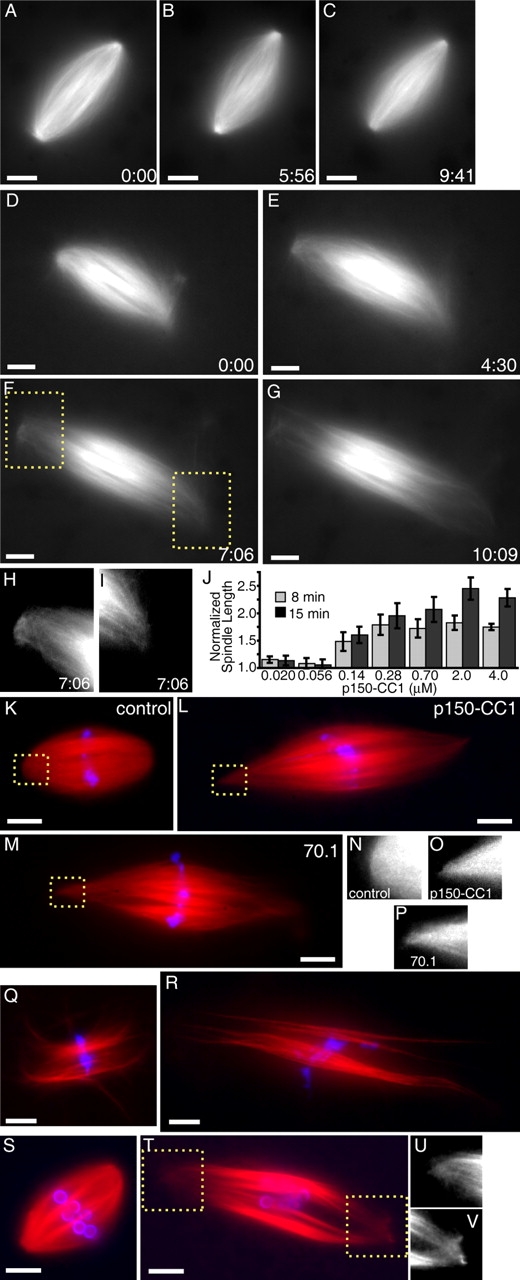
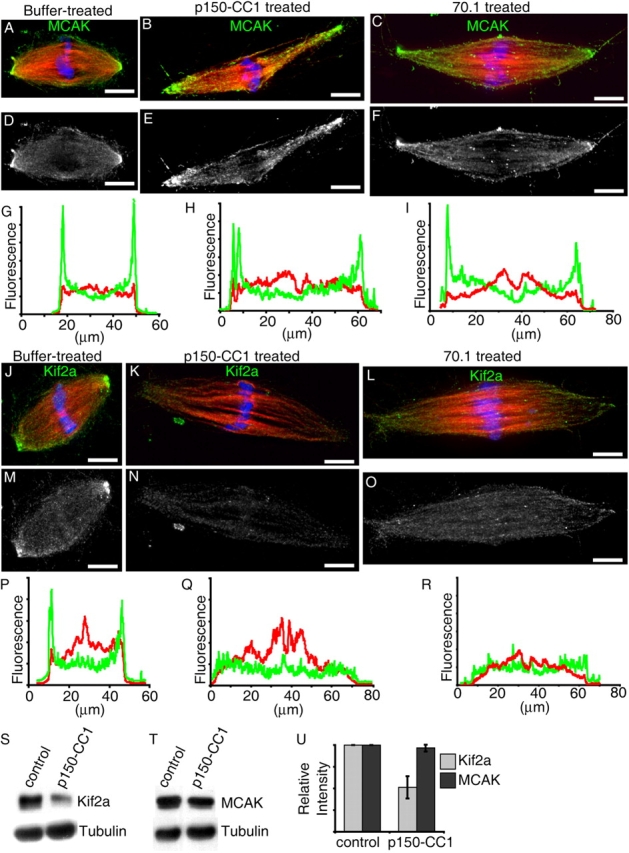
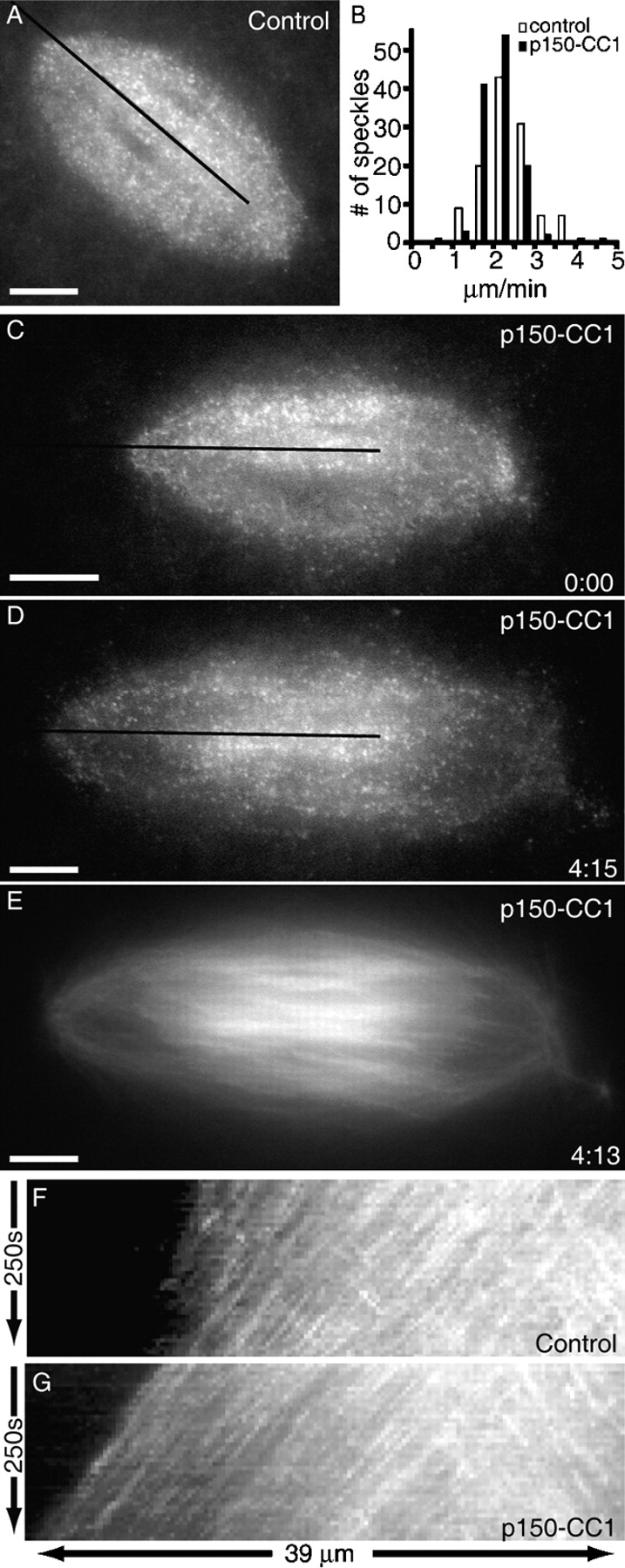
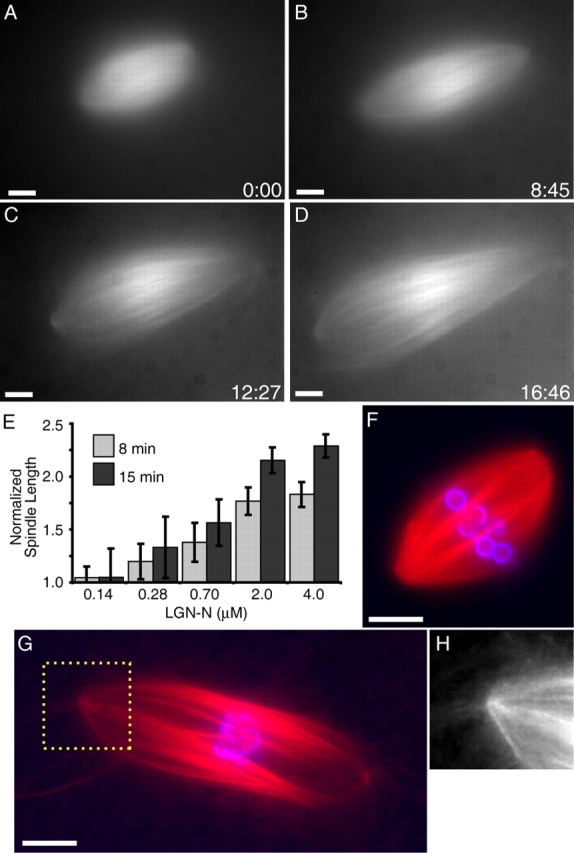
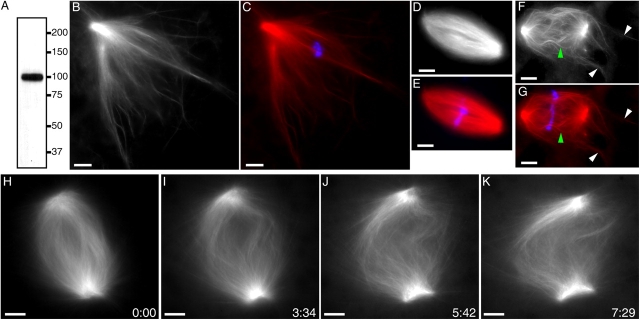
During cell division metaphase spindles maintain constant length, whereas spindle microtubules continuously flux polewards, requiring addition of tubulin subunits at microtubule plus-ends, polewards translocation of the microtubule lattice, and removal of tubulin subunits from microtubule minus-ends near spindle poles. How these processes are coordinated is unknown. Here, we show that dynein/dynactin, a multi-subunit microtubule minus-end-directed motor complex, and NuMA, a microtubule cross-linker, regulate spindle length. Fluorescent speckle microscopy reveals that dynactin or NuMA inhibition suppresses microtubule disassembly at spindle poles without affecting polewards microtubule sliding. The observed uncoupling of these two components of flux indicates that microtubule depolymerization is not required for the microtubule transport associated with polewards flux. Inhibition of Kif2a, a KinI kinesin known to depolymerize microtubules in vitro, results in increased spindle microtubule length. We find that dynein/dynactin contribute to the targeting of Kif2a to spindle poles, suggesting a model in which dynein/dynactin regulate spindle length and coordinate flux by maintaining microtubule depolymerizing activities at spindle poles.
在细胞分裂中期,纺锤体保持恒定长度,而纺锤体微管持续向两极流动,这需要在微管正端添加微管蛋白亚基、微管晶格向两极移位以及在纺锤体两极附近的微管负端去除微管蛋白亚基。这些过程如何协调尚不清楚。在这里,我们表明动力蛋白/动力蛋白激活蛋白(一种多亚基微管负端定向运动复合体)和核有丝分裂装置蛋白(一种微管交联蛋白)调节纺锤体长度。荧光斑点显微镜显示,抑制动力蛋白激活蛋白或核有丝分裂装置蛋白可抑制纺锤体两极的微管解聚,而不影响微管向两极的滑动。观察到的这两个流动成分的解偶联表明,微管运输相关的微管解聚对于微管向两极流动不是必需的。抑制Kif2a(一种已知在体外使微管解聚的KinI驱动蛋白)会导致纺锤体微管长度增加。我们发现动力蛋白/动力蛋白激活蛋白有助于将Kif2a靶向纺锤体两极,这提示了一个模型,即动力蛋白/动力蛋白激活蛋白通过维持纺锤体两极的微管解聚活性来调节纺锤体长度并协调流动。