Kopp J B, Klotman M E, Adler S H, Bruggeman L A, Dickie P, Marinos N J, Eckhaus M, Bryant J L, Notkins A L, Klotman P E
Laboratory of Developmental Biology, National Institute of Dental Research, National Institutes of Health, Bethesda, MD 20892.
Proc Natl Acad Sci U S A. 1992 Mar 1;89(5):1577-81. doi: 10.1073/pnas.89.5.1577.
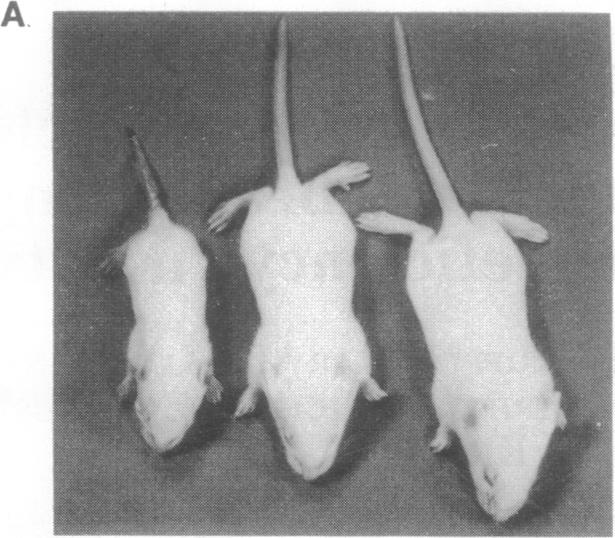
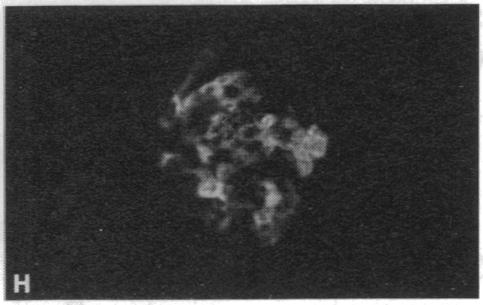
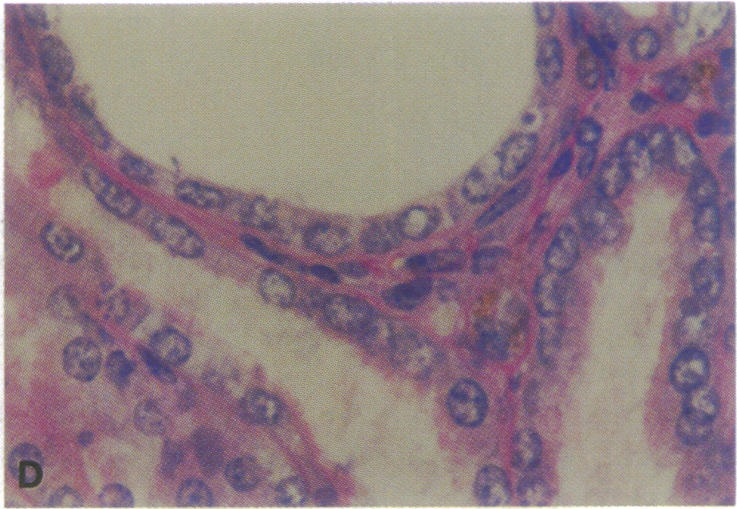
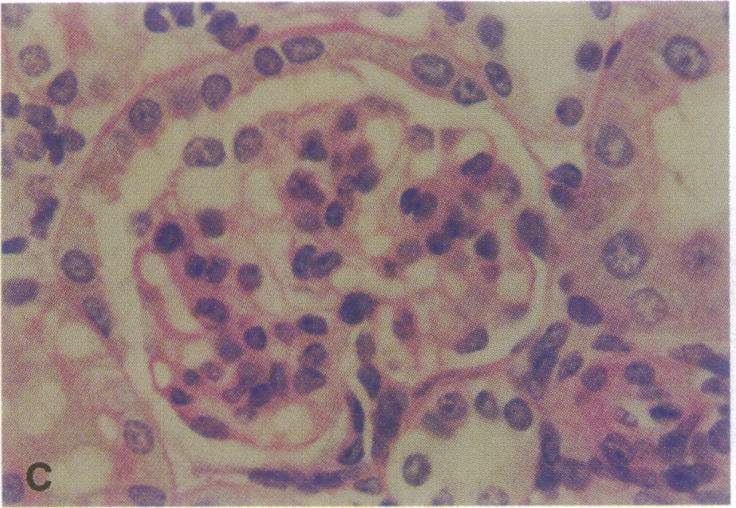
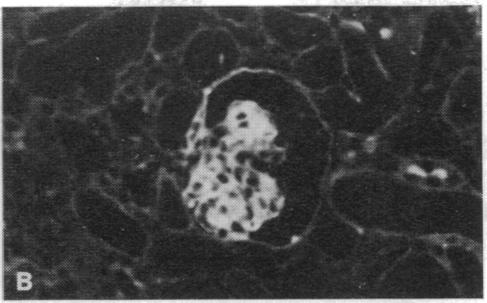
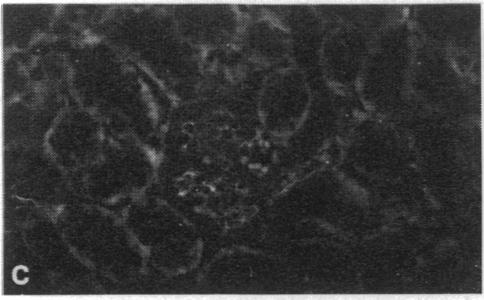
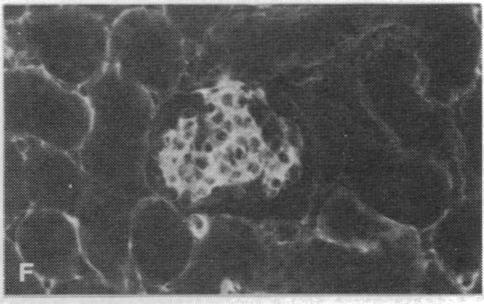
Patients infected with human immunodeficiency virus type 1 (HIV-1) develop a renal syndrome characterized by proteinuria, renal failure, and focal segmental glomerulosclerosis. By using a noninfectious HIV-1 DNA construct lacking the gag and pol genes, three transgenic mouse lines have been generated that develop a syndrome remarkably similar to the human disease. In the present study, we have characterized in detail one of these lines, Tg26. In Tg26 mice, proteinuria was detectable at approximately 24 days of age, followed by severe nephrotic syndrome and rapid progression to end-stage renal failure. Renal histology showed focal segmental glomerulosclerosis and microcystic tubular dilatation. Indirect immunofluorescence studies demonstrated increased accumulation of the basement membrane components laminin, collagen type IV, and heparan sulfate proteoglycan. The viral protein Rev was present in sclerotic glomeruli. Northern blot analysis of total renal RNA showed expression of viral genes prior to the appearance of histologic renal disease, with greatly diminished viral gene expression late in the disease course. Kidneys from transgenic mice expressed increased steady-state levels of collagen alpha 1(IV) mRNA when glomerulosclerosis was present. We conclude that the presence of HIV-1 genes is associated with progressive renal dysfunction and glomerulosclerosis in transgenic mice.
感染1型人类免疫缺陷病毒(HIV-1)的患者会出现一种以蛋白尿、肾衰竭和局灶节段性肾小球硬化为特征的肾脏综合征。通过使用一种缺乏gag和pol基因的非感染性HIV-1 DNA构建体,已培育出三种转基因小鼠品系,它们所患的综合征与人类疾病极为相似。在本研究中,我们详细描述了其中一个品系Tg26。在Tg26小鼠中,约24日龄时可检测到蛋白尿,随后出现严重的肾病综合征,并迅速进展为终末期肾衰竭。肾脏组织学检查显示局灶节段性肾小球硬化和微囊性肾小管扩张。间接免疫荧光研究表明,基底膜成分层粘连蛋白、IV型胶原和硫酸乙酰肝素蛋白聚糖的积累增加。硬化的肾小球中存在病毒蛋白Rev。对肾脏总RNA进行的Northern印迹分析显示,在肾脏组织学疾病出现之前病毒基因就有表达,而在疾病后期病毒基因表达大幅减少。当出现肾小球硬化时,转基因小鼠肾脏中胶原α1(IV)mRNA的稳态水平升高。我们得出结论,HIV-1基因的存在与转基因小鼠进行性肾功能障碍和肾小球硬化有关。