Traidl-Hoffmann Claudia, Mariani Valentina, Hochrein Hubertus, Karg Kathrin, Wagner Hermann, Ring Johannes, Mueller Martin J, Jakob Thilo, Behrendt Heidrun
ZAUM-Center for Allergy and Environment, Division of Environmental Dermatology and Allergy GSF/TUM, Universität München, 80802 Munich, Germany.
J Exp Med. 2005 Feb 21;201(4):627-36. doi: 10.1084/jem.20041065.
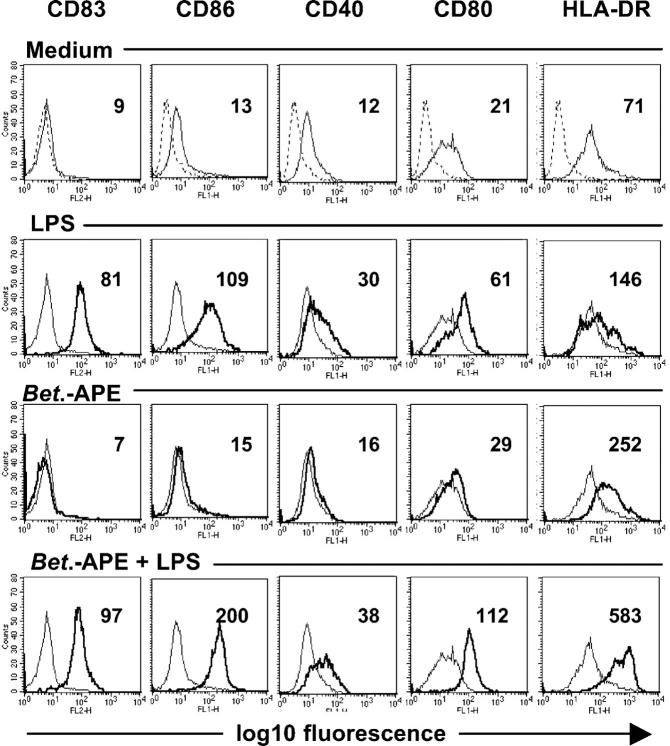
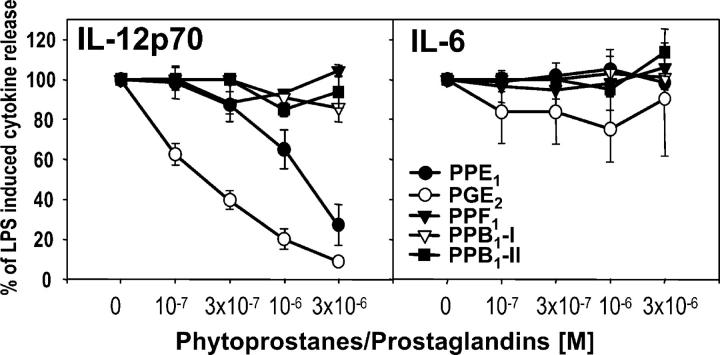
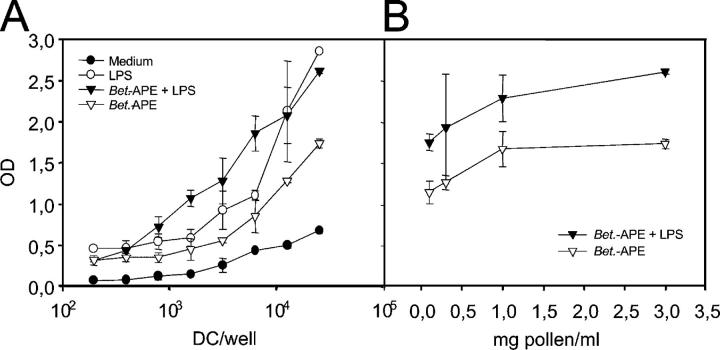
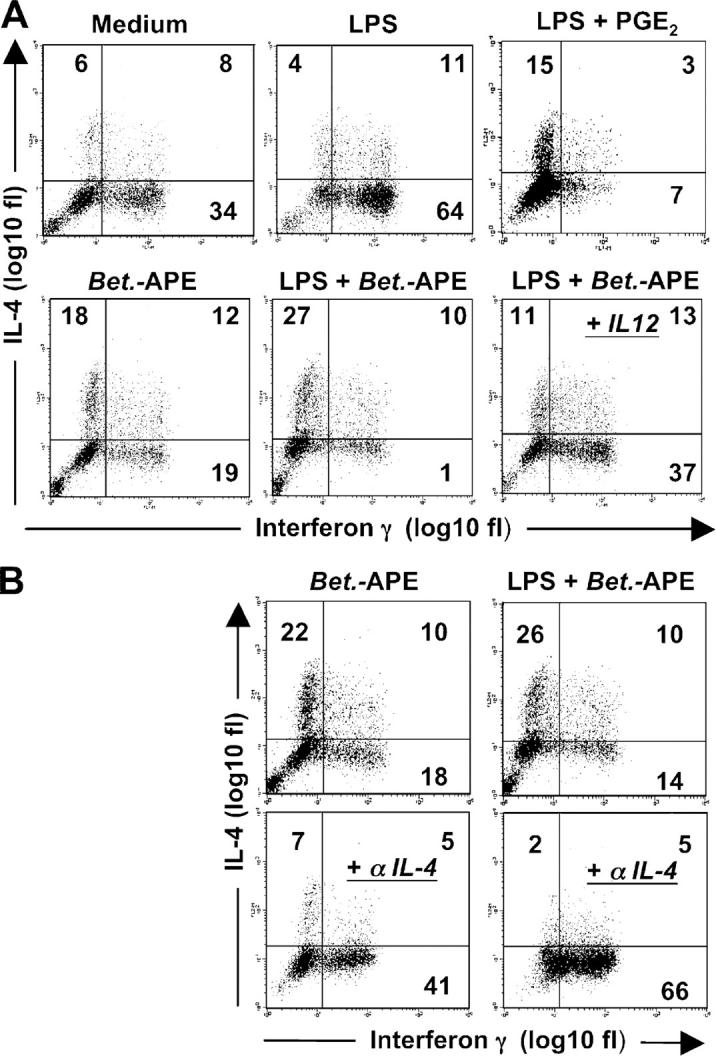
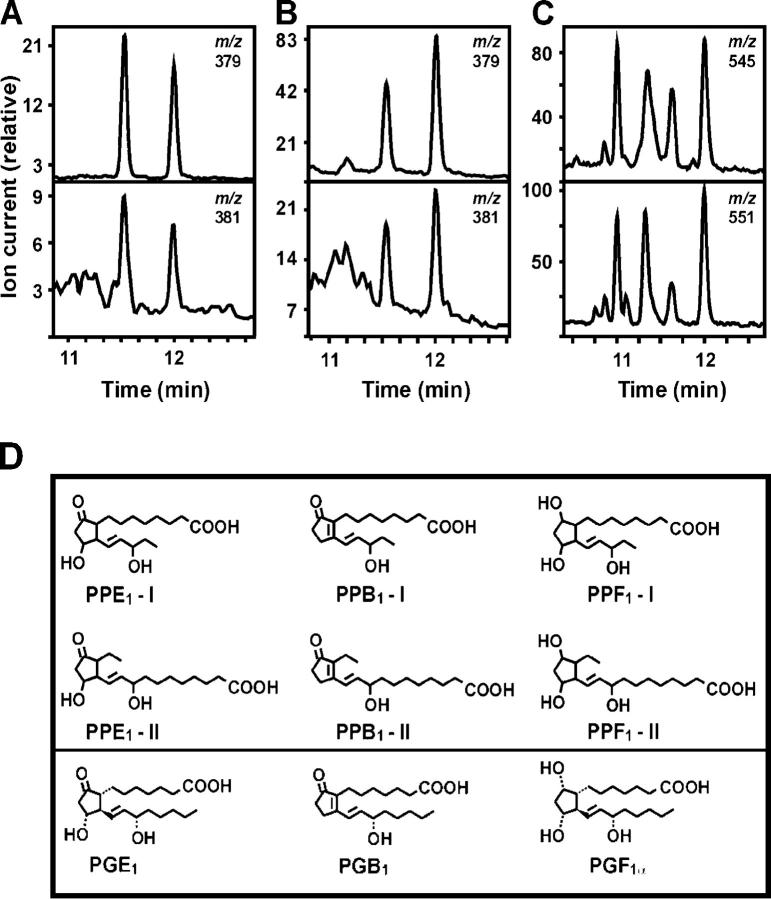
Pollen grains induce allergies in susceptible individuals by release of allergens upon contact with mucosal membranes of the upper respiratory tract. We recently demonstrated that pollen not only function as allergen carriers but also as rich sources of bioactive lipids that attract cells involved in allergic inflammation such as neutrophils and eosinophils. Here we demonstrate that soluble factors from birch (Betula alba L.) pollen activate human dendritic cells (DCs) as documented by phenotypical and functional maturation and altered cytokine production. Betula alba L. aqueous pollen extracts (Bet.-APE) selectively inhibited interleukin (IL)-12 p70 production of lipopolysaccharide (LPS)- or CD40L-activated DC, whereas IL-6, IL-10, and TNFalpha remained unchanged. Presence of Bet.-APE during DC activation resulted in DC with increased T helper type 2 (Th2) cell and reduced Th1 cell polarizing capacity. Chemical analysis of Bet.-APE revealed the presence of phytoprostanes (dinor isoprostanes) with prostaglandin E(1)-, F(1)-, A(1)-, or B(1)-ring systems of which only E(1)-phytoprostanes dose dependently inhibited the LPS-induced IL-12 p70 release and augmented the Th2 cell polarizing capacity of DC. These results suggest that pollen-derived E(1)-phytoprostanes not only resemble endogenous prostaglandin E(2) structurally but also functionally in that they act as regulators that modulate human DC function in a fashion that favors Th2 cell polarization.
花粉粒通过与上呼吸道黏膜接触后释放过敏原,从而在易感个体中引发过敏反应。我们最近证明,花粉不仅作为过敏原载体,还作为生物活性脂质的丰富来源,吸引参与过敏性炎症的细胞,如中性粒细胞和嗜酸性粒细胞。在此,我们证明,桦树(Betula alba L.)花粉中的可溶性因子可激活人类树突状细胞(DCs),这可通过表型和功能成熟以及细胞因子产生的改变得到证明。桦树水提花粉提取物(Bet.-APE)选择性抑制脂多糖(LPS)或CD40L激活的DC产生白细胞介素(IL)-12 p70,而IL-6、IL-10和肿瘤坏死因子α保持不变。在DC激活过程中存在Bet.-APE会导致DC增加2型辅助性T细胞(Th2)并降低Th1细胞极化能力。对Bet.-APE的化学分析显示存在具有前列腺素E(1)-、F(1)-、A(1)-或B(1)-环系统的植物前列腺素(二氢异前列腺素),其中只有E(1)-植物前列腺素剂量依赖性地抑制LPS诱导的IL-12 p70释放并增强DC的Th2细胞极化能力。这些结果表明,花粉衍生的E(1)-植物前列腺素不仅在结构上类似于内源性前列腺素E(2),而且在功能上也类似,因为它们作为调节剂,以有利于Th2细胞极化的方式调节人类DC功能。