Padua Darin A, Carcia Christopher R, Arnold Brent L, Granata Kevin P
Department of Exercise and Sport Science, 216 Fetzer CB#8700, University of North Carolina, Chapel Hill, NC 27599-8700, USA.
J Mot Behav. 2005 Mar;37(2):111-25. doi: 10.3200/JMBR.37.2.111-126.
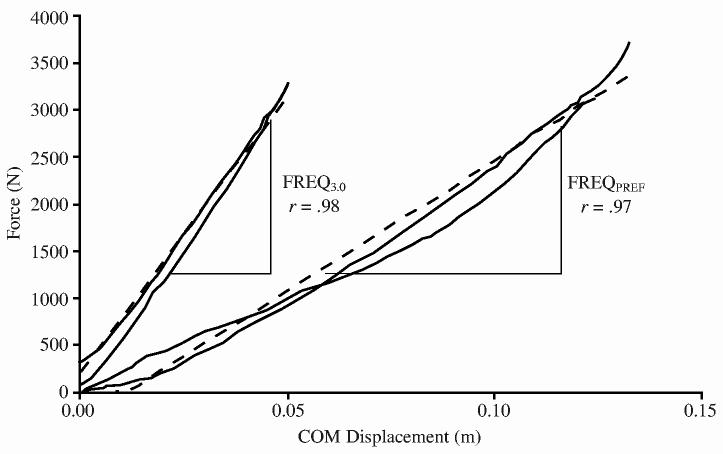
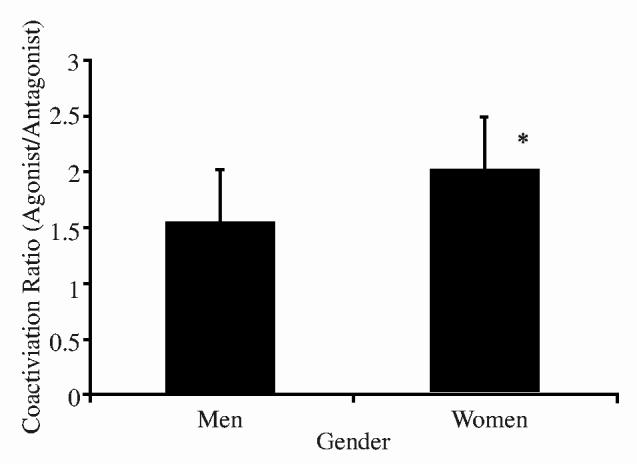
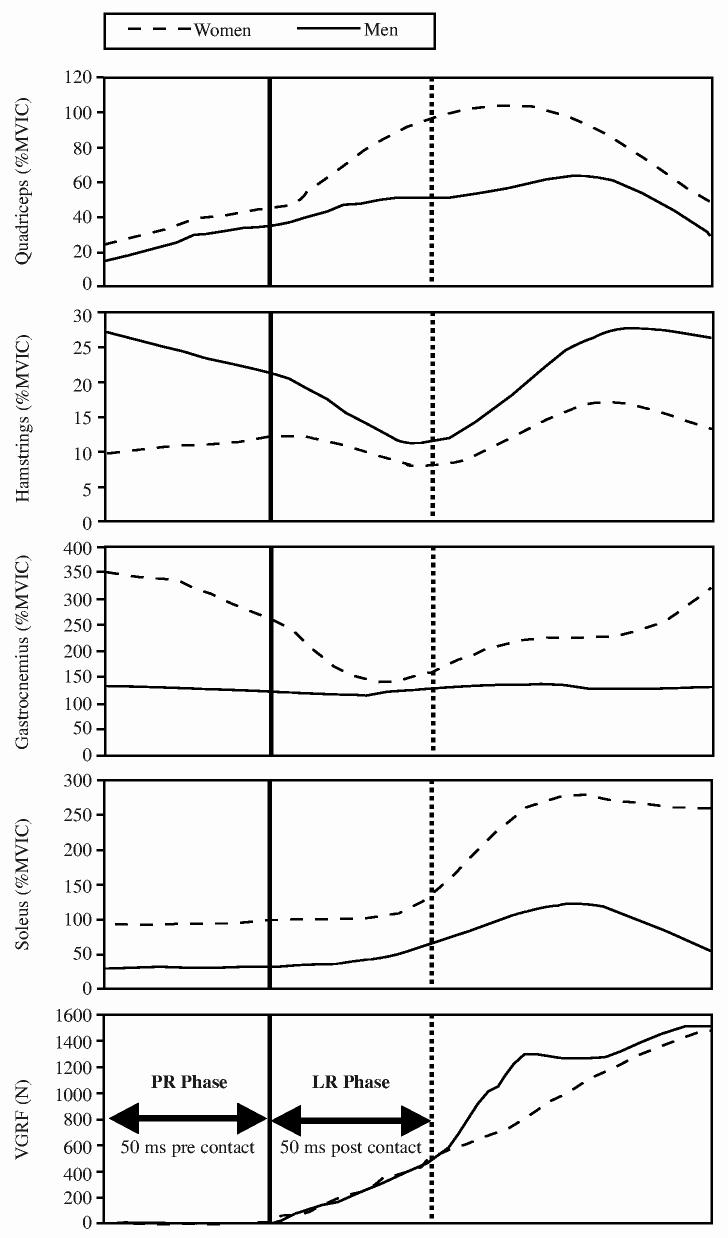
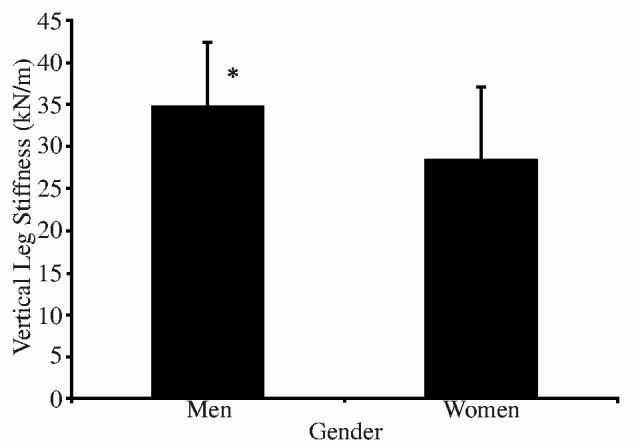
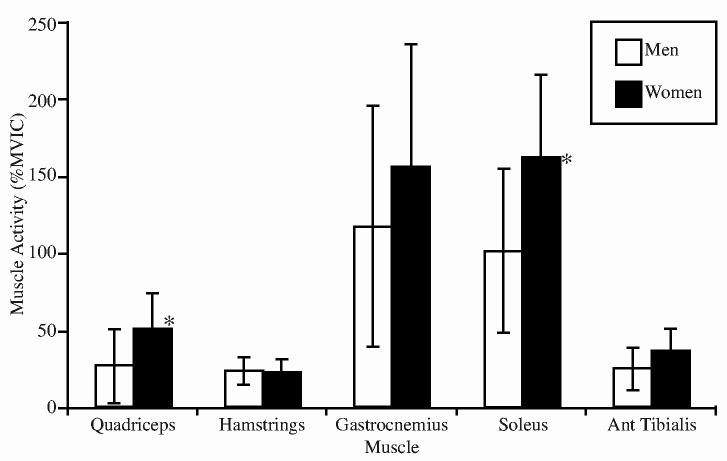
The authors compared leg stiffness (K(VERT)), muscle activation, and joint movement patterns between 11 men and 10 women during hopping. Physically active and healthy men and women performed continuous 2-legged hopping at their preferred rate and at 3.0 Hz. Compared with men, women demonstrated decreased K(VERT); however, after the authors normalized for body mass, gender differences in K(VERT) were eliminated. In comparison with men, women also demonstrated increased quadriceps and soleus activity, as well as greater quadriceps-to-hamstrings coactivation ratios. There were no significant gender differences for joint movement patterns (p>.05). The relationship between the observed gender differences in muscle recruitment and the increased risk of anterior cruciate ligament injury in women requires further study.
作者比较了11名男性和10名女性单脚跳时的腿部僵硬度(K(VERT))、肌肉激活情况和关节运动模式。身体健康且积极运动的男性和女性以自己偏好的频率和3.0赫兹的频率进行连续双腿单脚跳。与男性相比,女性的K(VERT)降低;然而,在作者对体重进行标准化处理后,K(VERT)的性别差异消失了。与男性相比,女性的股四头肌和比目鱼肌活动也增加,股四头肌与腘绳肌的共同激活比率也更高。关节运动模式方面没有显著的性别差异(p>0.05)。观察到的女性在肌肉募集方面的性别差异与女性前交叉韧带损伤风险增加之间的关系需要进一步研究。