Case M E, Schweizer M, Kushner S R, Giles N H
Proc Natl Acad Sci U S A. 1979 Oct;76(10):5259-63. doi: 10.1073/pnas.76.10.5259.
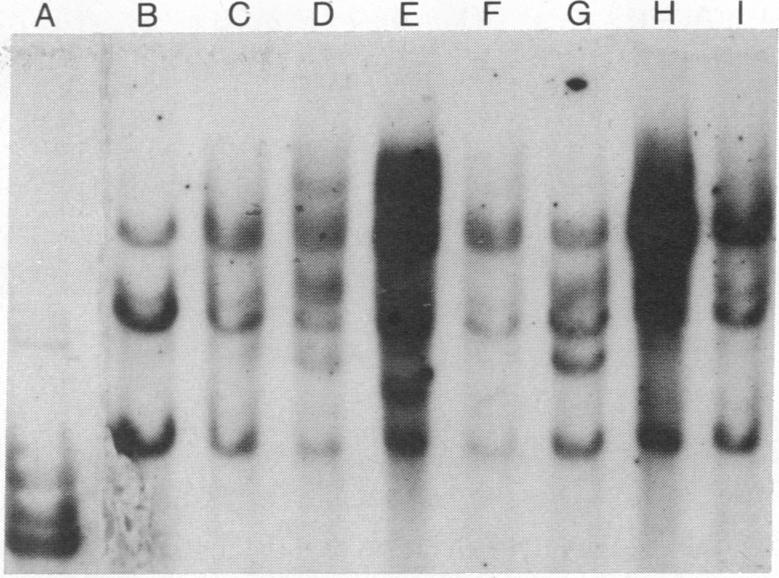
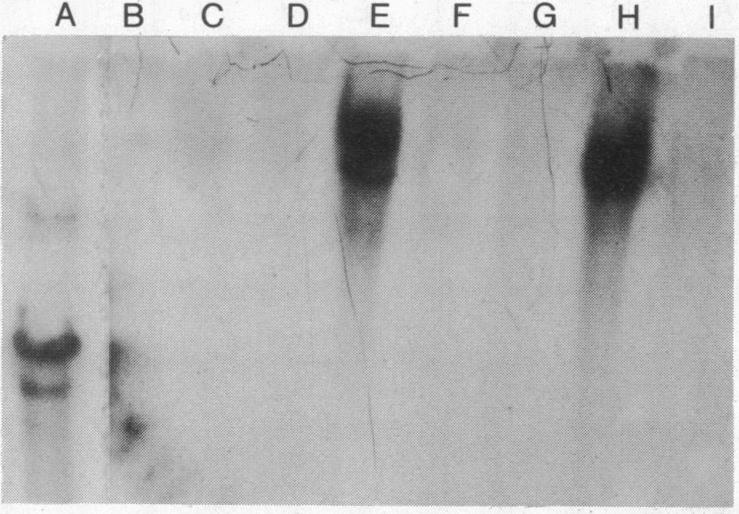
An efficient transformation system has been developed for Neurospora crassa that uses spheroplasts and pVK88 plasmid DNA. pVK88 is a recombinant Escherichia coli plasmid carrying the N. crassa qa-2(+) gene which encodes catabolic dehydroquinase (3-dehydroquinate hydro-lyase, EC 4.2.1.10) and is part of the qa gene cluster. The recipient strain carries a stable qa-2(-) mutation and an arom-9(-) mutation, thus lacking both catabolic and biosynthetic dehydroquinase activities. Transformants were selected as colonies able to grow in the absence of an aromatic amino acid supplement. These colonies were qa-2(+) and had normal levels of catabolic dehydroquinase. DNA.DNA hybridization evidence with appropriate labeled probes indicates clearly that in some instances transformation involves the integration of bacterial plasmid sequences together with the qa-2(+) gene into the N. crassa genome. On the basis of genetic, enzyme assay, and DNA hybridization data, at least three types of transformation events can be distinguished: (i) replacement of the qa-2(-) gene by the qa-2(+) gene without any effect on the expression of the other genes in the qa cluster, (ii) linked insertion of a normal qa-2(+) gene accompanied by inactivation of the adjacent qa-4(+) gene, and (iii) insertion of a normal qa-2(+) gene at an unlinked site in the N. crassa genome. This newly integrated qa-2(+) genetic material is inherited in a typical Mendelian fashion. A low level of transformation has also been obtained by using linear total N. crassa DNA. Two such qa-2(+) transformants are unlinked to the qa-2(-) gene of the recipient.
已为粗糙脉孢菌开发了一种高效转化系统,该系统使用原生质球和pVK88质粒DNA。pVK88是一种重组大肠杆菌质粒,携带粗糙脉孢菌qa - 2(+)基因,该基因编码分解代谢脱氢奎尼酸酶(3 - 脱氢奎尼酸水解酶,EC 4.2.1.10),是qa基因簇的一部分。受体菌株携带稳定的qa - 2(-)突变和arom - 9(-)突变,因此缺乏分解代谢和生物合成脱氢奎尼酸酶活性。转化体被选择为能够在不添加芳香族氨基酸的情况下生长的菌落。这些菌落是qa - 2(+),并且具有正常水平的分解代谢脱氢奎尼酸酶。用适当标记探针进行的DNA - DNA杂交证据清楚地表明,在某些情况下,转化涉及细菌质粒序列与qa - 2(+)基因一起整合到粗糙脉孢菌基因组中。根据遗传、酶分析和DNA杂交数据,至少可以区分三种类型的转化事件:(i) qa - 2(+)基因取代qa - 2(-)基因,而对qa基因簇中其他基因的表达没有任何影响;(ii) 正常qa - 2(+)基因的连锁插入,同时相邻的qa - 4(+)基因失活;(iii) 正常qa - 2(+)基因插入粗糙脉孢菌基因组中一个不连锁的位点。这种新整合的qa - 2(+)遗传物质以典型的孟德尔方式遗传。使用线性的粗糙脉孢菌总DNA也获得了低水平的转化。两个这样的qa - 2(+)转化体与受体的qa - 2(-)基因不连锁。