Hay S I, Noor A M, Nelson A, Tatem A J
TALA Research Group, Department of Zoology, University of Oxford, Oxford, UK.
Trop Med Int Health. 2005 Oct;10(10):1073-86. doi: 10.1111/j.1365-3156.2005.01487.x.
Human population totals are used for generating burden of disease estimates at global, continental and national scales to help guide priority setting in international health financing. These exercises should be aware of the accuracy of the demographic information used.
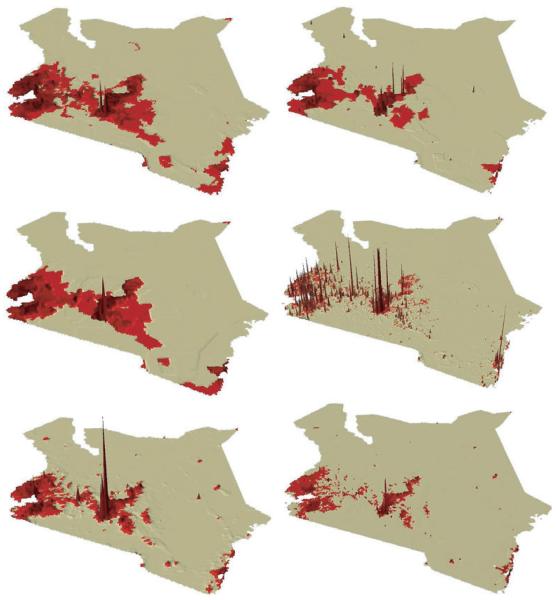
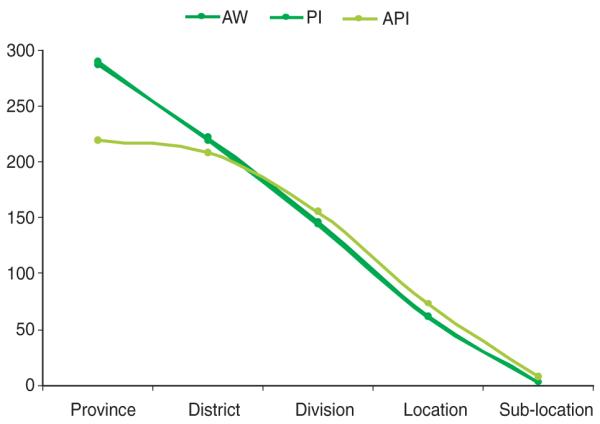
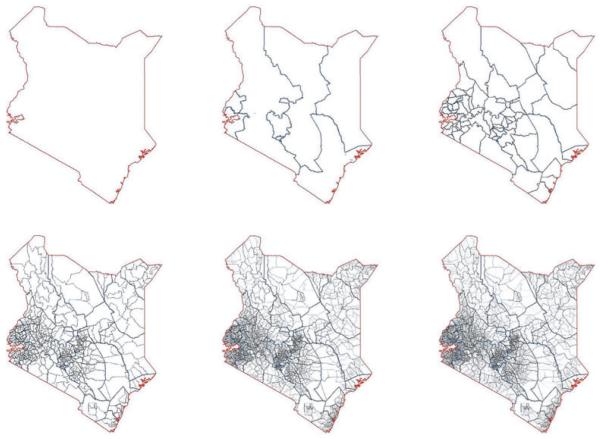
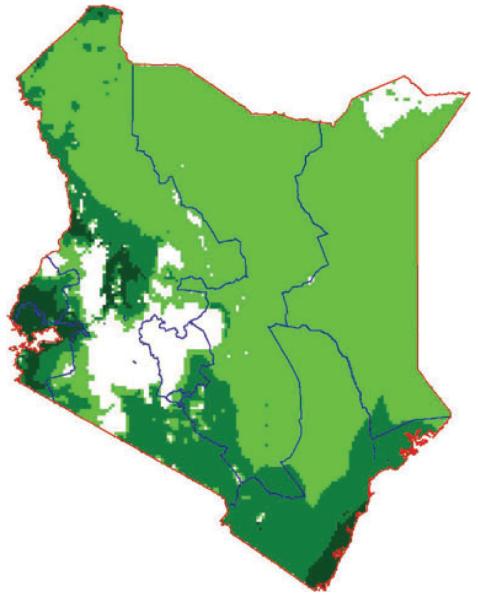
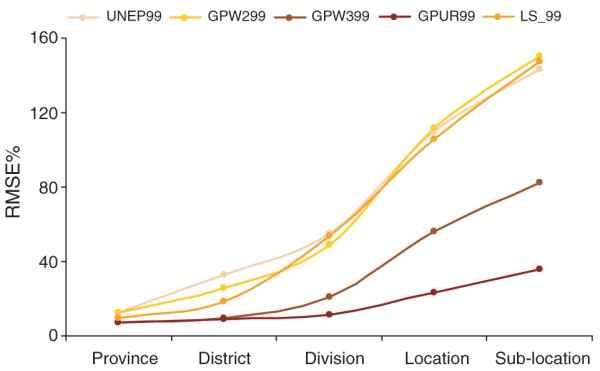
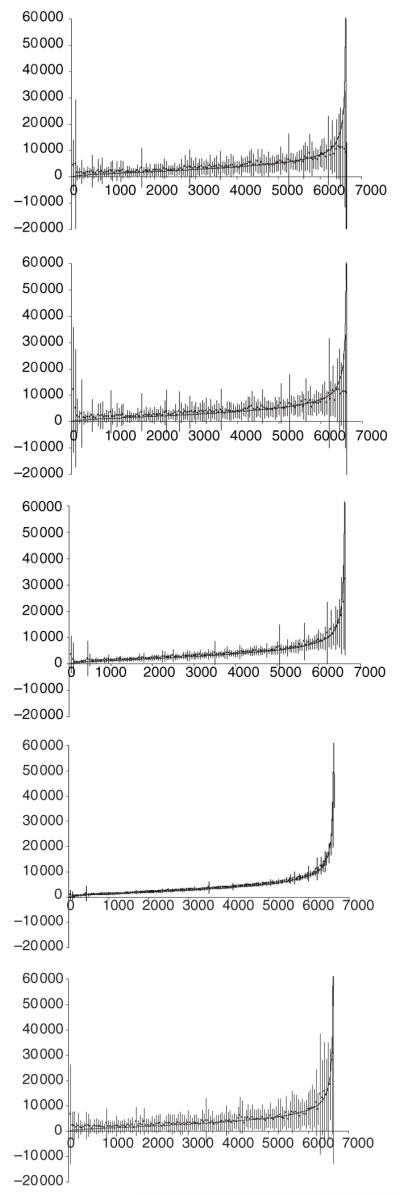
The analysis presented in this paper tests the accuracy of five large-area, public-domain human population distribution data maps against high spatial resolution population census data enumerated in Kenya in 1999. We illustrate the epidemiological significance, by assessing the impact of using these different human population surfaces in determining populations at risk of various levels of climate suitability for malaria transmission. We also describe how areal weighting, pycnophylactic interpolation and accessibility potential interpolation techniques can be used to generate novel human population distribution surfaces from local census information and evaluate to what accuracy this can be achieved.
We demonstrate which human population distribution surface performed best and which population interpolation techniques generated the most accurate bespoke distributions. Despite various levels of modelling complexity, the accuracy achieved by the different surfaces was primarily determined by the spatial resolution of the input population data. The simplest technique of areal weighting performed best.
Differences in estimates of populations at risk of malaria in Kenya of over 1 million persons can be generated by the choice of surface, highlighting the importance of these considerations in deriving per capita health metrics in public health. Despite focussing on Kenya the results of these analyses have general application and are discussed in this wider context.
全球、各大洲和国家层面的疾病负担估计数是通过人口总数得出的,以帮助指导国际卫生筹资的优先事项设定。这些工作应了解所使用人口统计信息的准确性。
本文所呈现的分析针对1999年肯尼亚进行的高空间分辨率人口普查数据,检验了五份大面积公开领域人口分布数据地图的准确性。我们通过评估使用这些不同的人口表面在确定处于不同疟疾传播气候适宜水平风险中的人口时的影响,来说明其流行病学意义。我们还描述了如何利用面积加权、密度曲面插值法和可达性潜力插值技术,根据当地人口普查信息生成新的人口分布表面,并评估能够达到何种精度。
我们展示了哪种人口分布表面表现最佳,以及哪种人口插值技术生成了最准确的定制分布。尽管模型复杂度各不相同,但不同表面所达到的准确性主要由输入人口数据的空间分辨率决定。最简单的面积加权技术表现最佳。
选择不同的表面会导致肯尼亚疟疾风险人群估计数相差超过100万,这凸显了这些因素在推导公共卫生人均健康指标中的重要性。尽管分析聚焦于肯尼亚,但这些分析结果具有普遍适用性,并在更广泛的背景下进行了讨论。