Nagao T, Mitamura T, Wang X H, Negoro S, Yomo T, Urabe I, Okada H
Department of Biotechnology, Faculty of Engineering, Osaka University, Japan.
J Bacteriol. 1992 Aug;174(15):5013-20. doi: 10.1128/jb.174.15.5013-5020.1992.
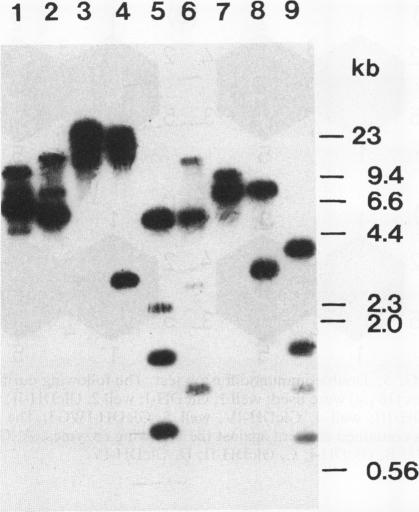
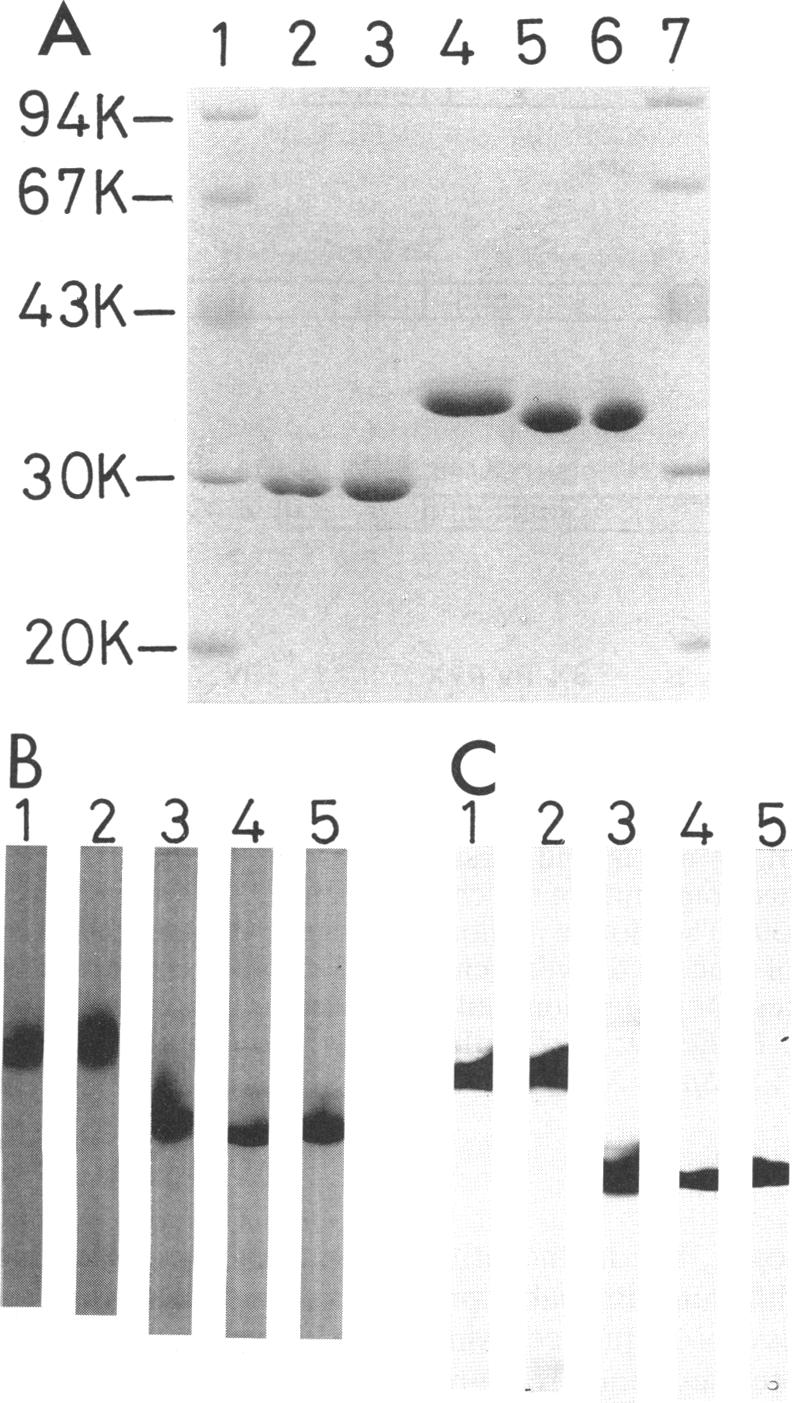
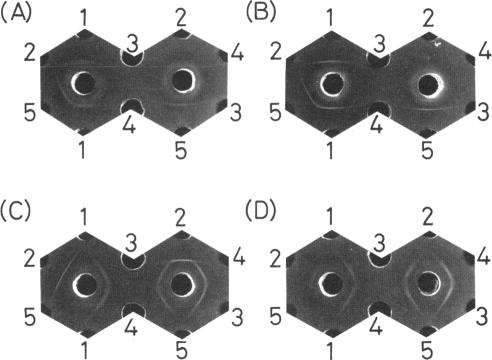
Bacillus megaterium is known to have several genes that code for isozymes of glucose dehydrogenase. Two of them, gdhI and gdhII, were cloned from B. megaterium IAM1030 in our previous work (T. Mitamura, R. V. Evora, T. Nakai, Y. Makino, S. Negoro, I. Urabe, and H. Okada, J. Ferment. Bioeng. 70:363-369, 1990). In the present study, two new genes, gdhIII and gdhIV, were isolated from the same strain and their nucleotide sequences were identified. Each gene has an open reading frame of 783 bp available to encode a peptide of 261 amino acids. Thus, a total of four glucose dehydrogenase genes have been cloned from B. megaterium IAM1030. In addition, this strain does not seem to have other glucose dehydrogenase genes that can be distinguished from the four cloned genes so far examined by Southern hybridization analysis. The two newly cloned genes were expressed in Escherichia coli cells, and the products, GlcDH-III and GlcDH-IV, were purified and characterized and compared with the other isozymes, GlcDH-I and GlcDH-II, encoded by gdhI and gdhII, respectively. These isozymes showed different mobilities in sodium dodecyl sulfate-polyacrylamide gel electrophoresis (GlcDH-I greater than GlcDH-III = GlcDH-IV greater than GlcDH-II), although they have the same number of amino acid residues. Double-immunodiffusion tests showed that GlcDH-I is immunologically different from the other isozymes and that GlcDH-III and GlcDH-IV are identical to one another but a little different from GlcDH-II. These glucose dehydrogenases were stabilized in the presence of 2 M NaCl. The effect of NaCl was especially large for GlcDH-III, which is most unstable enzyme. Kinetic studies showed that these isozymes are divided into two groups with respect to coenzyme specificity, although they can utilize both NAD and NADP: GlcDH-III and GlcDH-IV prefer NAD, and GlcDH-I and GlcDH-II prefer NADP. The phylogenic relationship of these glucose dehydrogenase genes is also discussed.
巨大芽孢杆菌已知有几个编码葡萄糖脱氢酶同工酶的基因。其中两个基因,gdhI和gdhII,是我们之前从巨大芽孢杆菌IAM1030中克隆出来的(T. Mitamura、R. V. Evora、T. Nakai、Y. Makino、S. Negoro、I. Urabe和H. Okada,《发酵与生物工程杂志》70:363 - 369,1990年)。在本研究中,从同一菌株中分离出两个新基因gdhIII和gdhIV,并确定了它们的核苷酸序列。每个基因都有一个783 bp的开放阅读框,可编码一个261个氨基酸的肽段。因此,总共从巨大芽孢杆菌IAM1030中克隆出了四个葡萄糖脱氢酶基因。此外,通过Southern杂交分析,该菌株似乎没有其他可与目前已检测的四个克隆基因区分开的葡萄糖脱氢酶基因。这两个新克隆的基因在大肠杆菌细胞中表达,产物GlcDH - III和GlcDH - IV被纯化并进行了特性分析,并与分别由gdhI和gdhII编码的其他同工酶GlcDH - I和GlcDH - II进行了比较。这些同工酶在十二烷基硫酸钠 - 聚丙烯酰胺凝胶电泳中显示出不同的迁移率(GlcDH - I大于GlcDH - III = GlcDH - IV大于GlcDH - II),尽管它们具有相同数量的氨基酸残基。双向免疫扩散试验表明,GlcDH - I在免疫学上与其他同工酶不同,GlcDH - III和GlcDH - IV彼此相同,但与GlcDH - II略有不同。这些葡萄糖脱氢酶在2 M NaCl存在下得到稳定。NaCl对GlcDH - III的影响尤其大,GlcDH - III是最不稳定的酶。动力学研究表明,尽管这些同工酶都能利用NAD和NADP,但就辅酶特异性而言,它们可分为两组:GlcDH - III和GlcDH - IV更喜欢NAD,而GlcDH - I和GlcDH - II更喜欢NADP。还讨论了这些葡萄糖脱氢酶基因的系统发育关系。