Kalinowski D P, Illenye S, Van Houten B
Department of Pathology, University of Vermont, Burlington 05405.
Nucleic Acids Res. 1992 Jul 11;20(13):3485-94. doi: 10.1093/nar/20.13.3485.
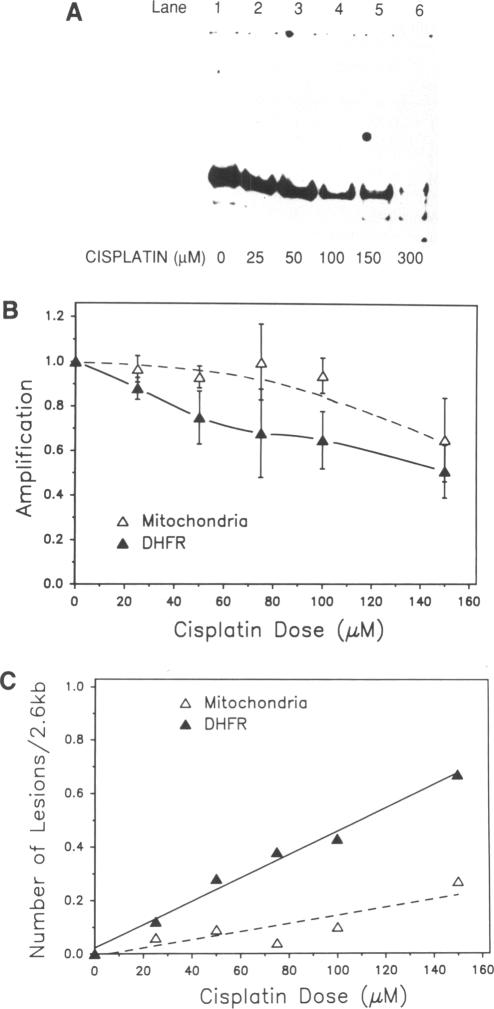
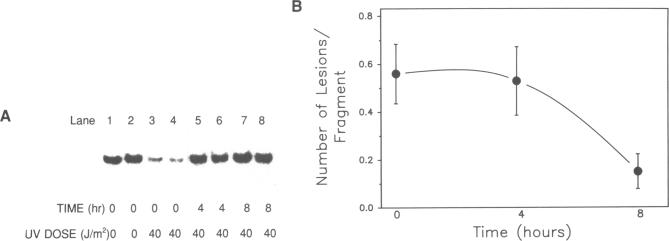
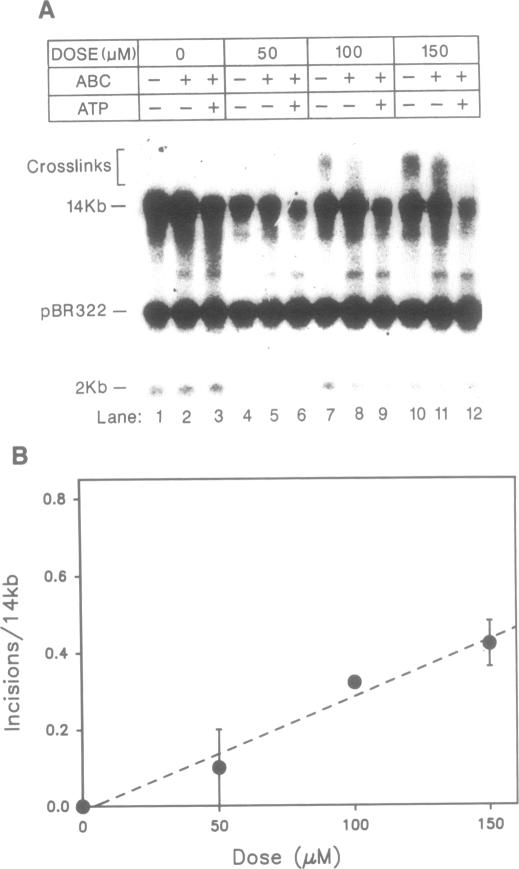
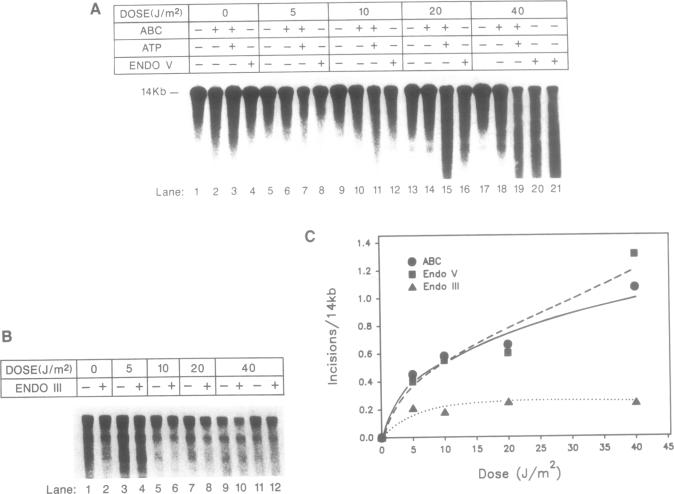
The polymerase chain reaction (PCR) represents an alternative to the current methods for investigating DNA damage and repair in specific genomic segments. In theory, any DNA lesion which blocks Taq polymerase can be measured by this assay. We used quantitative PCR (QPCR) to determine the lesion frequencies produced by cisplatin and ultraviolet light (UV) in a 2.3 kilobase (kb) segment of mitochondrial DNA and a 2.6 kb segment of the DHFR gene in mouse leukemia L1210 cells. The frequency of UV-induced lesions increased linearly with dose, and was 0.58 lesions/10 kb/10 J/m2 in the mitochondrial DNA, and 0.37 lesions/10 kb/10 J/m2 in the DHFR gene. With cisplatin, the lesion frequency also increased linearly with dose, and was 0.17 lesions/10 kb/10 microM in the DHFR gene, and 0.07 lesions/10 kb/10 microM in mitochondrial DNA. This result is contrary to that of Murata et al., 1990 (1), in which mitochondrial DNA received greater cisplatin damage than did nuclear DNA. Using PCR to measure the repair of UV-induced lesions in the DHFR gene segment, we observed that less than 10% of the lesions were removed by 4 h, but over 70% of the lesions were removed by 8 h. Repair of 43% of UV-induced lesions in mitochondrial DNA was also observed during a 24 h period.
聚合酶链反应(PCR)是目前用于研究特定基因组片段中DNA损伤与修复方法的一种替代方法。理论上,任何阻碍Taq聚合酶的DNA损伤都可以通过该检测方法进行测量。我们使用定量PCR(QPCR)来确定顺铂和紫外线(UV)在小鼠白血病L1210细胞线粒体DNA的2.3千碱基(kb)片段和二氢叶酸还原酶(DHFR)基因的2.6 kb片段中产生的损伤频率。紫外线诱导的损伤频率随剂量呈线性增加,在线粒体DNA中为0.58个损伤/10 kb/10 J/m²,在DHFR基因中为0.37个损伤/10 kb/10 J/m²。对于顺铂,损伤频率也随剂量呈线性增加,在DHFR基因中为0.17个损伤/10 kb/10 microM,在线粒体DNA中为0.07个损伤/10 kb/10 microM。这一结果与村田等人1990年的研究结果(1)相反,在他们的研究中,线粒体DNA受到的顺铂损伤比核DNA更大。通过PCR测量DHFR基因片段中紫外线诱导损伤的修复情况,我们观察到在4小时内不到10%的损伤被修复,但在8小时内超过70%的损伤被修复。在24小时内还观察到线粒体DNA中43%的紫外线诱导损伤得到了修复。