Abel Steffen, Savchenko Tatyana, Levy Maggie
Department of Plant Sciences, University of California, Davis, CA 95616, USA.
BMC Evol Biol. 2005 Dec 20;5:72. doi: 10.1186/1471-2148-5-72.
Calcium signaling plays a prominent role in plants for coordinating a wide range of developmental processes and responses to environmental cues. Stimulus-specific generation of intracellular calcium transients, decoding of calcium signatures, and transformation of the signal into cellular responses are integral modules of the transduction process. Several hundred proteins with functions in calcium signaling circuits have been identified, and the number of downstream targets of calcium sensors is expected to increase. We previously identified a novel, calmodulin-binding nuclear protein, IQD1, which stimulates glucosinolate accumulation and plant defense in Arabidopsis thaliana. Here, we present a comparative genome-wide analysis of a new class of putative calmodulin target proteins in Arabidopsis and rice.
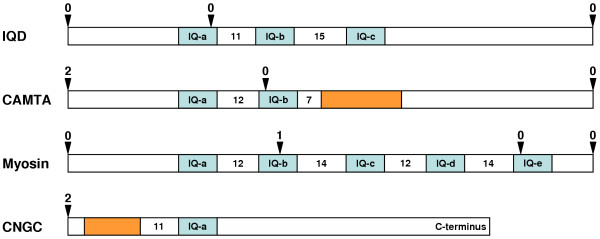
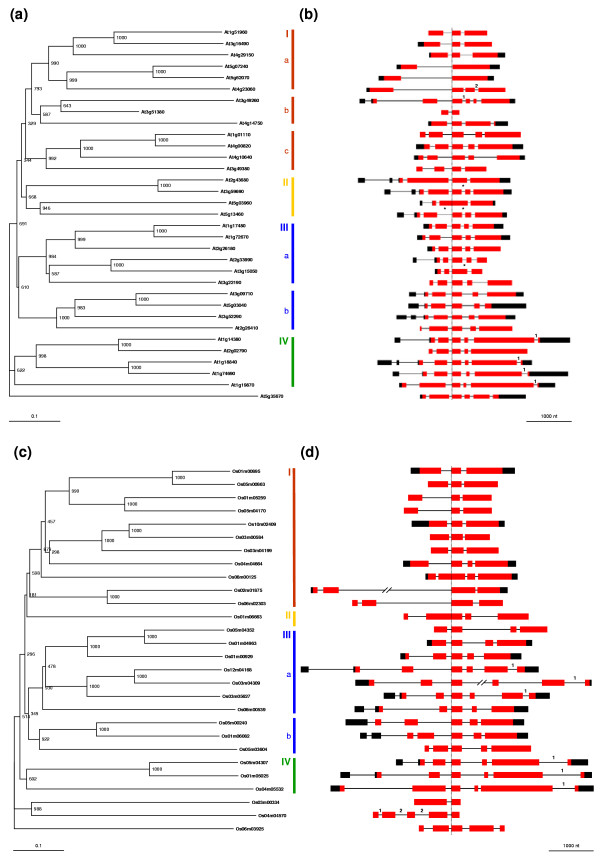
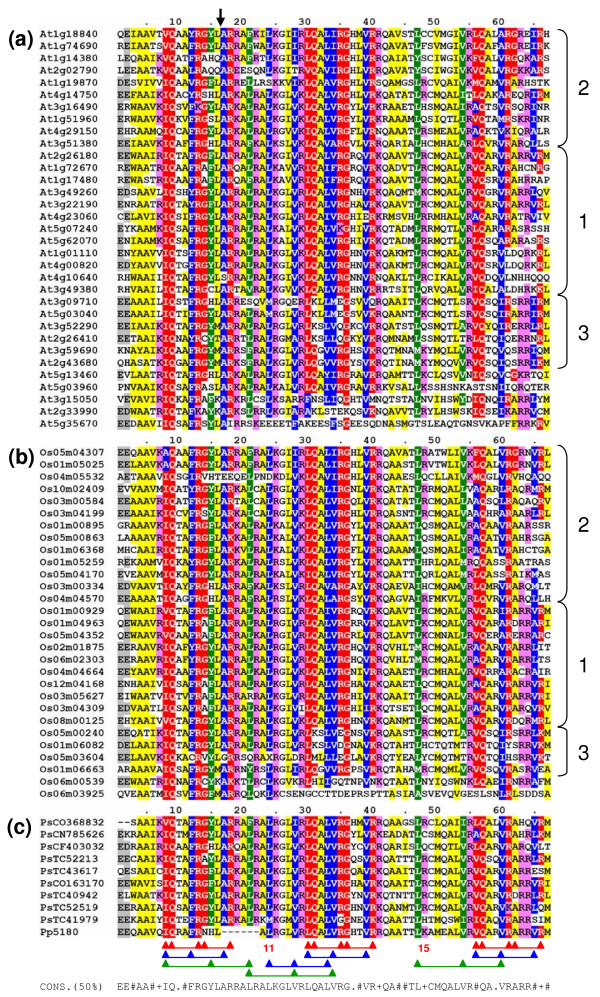
We identified and analyzed 33 and 29 IQD1-like genes in Arabidopsis thaliana and Oryza sativa, respectively. The encoded IQD proteins contain a plant-specific domain of 67 conserved amino acid residues, referred to as the IQ67 domain, which is characterized by a unique and repetitive arrangement of three different calmodulin recruitment motifs, known as the IQ, 1-5-10, and 1-8-14 motifs. We demonstrated calmodulin binding for IQD20, the smallest IQD protein in Arabidopsis, which consists of a C-terminal IQ67 domain and a short N-terminal extension. A striking feature of IQD proteins is the high isoelectric point (approximately 10.3) and frequency of serine residues (approximately 11%). We compared the Arabidopsis and rice IQD gene families in terms of gene structure, chromosome location, predicted protein properties and motifs, phylogenetic relationships, and evolutionary history. The existence of an IQD-like gene in bryophytes suggests that IQD proteins are an ancient family of calmodulin-binding proteins and arose during the early evolution of land plants.
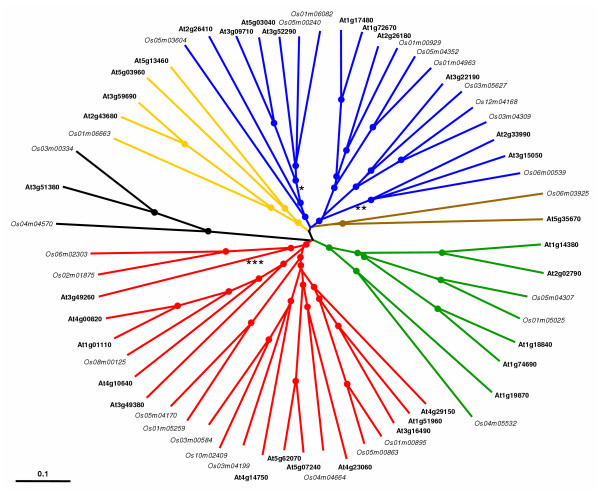
Comparative phylogenetic analyses indicate that the major IQD gene lineages originated before the monocot-eudicot divergence. The extant IQD loci in Arabidopsis primarily resulted from segmental duplication and reflect preferential retention of paralogous genes, which is characteristic for proteins with regulatory functions. Interaction of IQD1 and IQD20 with calmodulin and the presence of predicted calmodulin binding sites in all IQD family members suggest that IQD proteins are a new class of calmodulin targets. The basic isoelectric point of IQD proteins and their frequently predicted nuclear localization suggest that IQD proteins link calcium signaling pathways to the regulation of gene expression. Our comparative genomics analysis of IQD genes and encoded proteins in two model plant species provides the first step towards the functional dissection of this emerging family of putative calmodulin targets.
钙信号传导在植物中起着重要作用,可协调多种发育过程及对环境信号的响应。细胞内钙瞬变的刺激特异性产生、钙信号特征的解码以及信号向细胞反应的转化是转导过程的重要组成部分。已鉴定出数百种在钙信号传导通路中起作用的蛋白质,预计钙传感器的下游靶标数量还会增加。我们之前鉴定出一种新型的钙调蛋白结合核蛋白IQD1,它可促进拟南芥中芥子油苷的积累和植物防御。在此,我们对拟南芥和水稻中一类新的假定钙调蛋白靶蛋白进行了全基因组比较分析。
我们分别在拟南芥和水稻中鉴定并分析了33个和29个IQD1样基因。编码的IQD蛋白包含一个由67个保守氨基酸残基组成的植物特异性结构域,称为IQ67结构域,其特征是三种不同的钙调蛋白招募基序具有独特且重复的排列,即IQ基序、1-5-10基序和1-8-14基序。我们证实了拟南芥中最小的IQD蛋白IQD20与钙调蛋白的结合,IQD20由一个C端IQ67结构域和一个短的N端延伸组成。IQD蛋白的一个显著特征是高的等电点(约10.3)和丝氨酸残基的频率(约11%)。我们从基因结构、染色体定位、预测的蛋白质特性和基序、系统发育关系以及进化历史等方面比较了拟南芥和水稻的IQD基因家族。苔藓植物中存在IQD样基因表明IQD蛋白是一个古老的钙调蛋白结合蛋白家族,在陆地植物的早期进化过程中出现。
比较系统发育分析表明,主要的IQD基因谱系在单子叶植物与双子叶植物分化之前就已起源。拟南芥中现存的IQD基因座主要源于片段重复,反映了旁系同源基因的优先保留,这是具有调节功能的蛋白质的特征。IQD1和IQD20与钙调蛋白的相互作用以及所有IQD家族成员中预测的钙调蛋白结合位点的存在表明IQD蛋白是一类新的钙调蛋白靶标。IQD蛋白的碱性等电点及其频繁预测的核定位表明IQD蛋白将钙信号通路与基因表达调控联系起来。我们对两种模式植物物种中IQD基因及其编码蛋白的比较基因组学分析为剖析这个新兴的假定钙调蛋白靶标家族的功能迈出了第一步。