Berger Lucie, François Pascal, Gaboriaud Geneviève, Rosenwald Jean-Claude
Medical Physics Department, Institut Curie, 26 rue D'Ulm, Paris F-75005, France.
J Appl Clin Med Phys. 2006 Winter;7(1):105-14. doi: 10.1120/jacmp.v7i1.2158. Epub 2006 Feb 15.
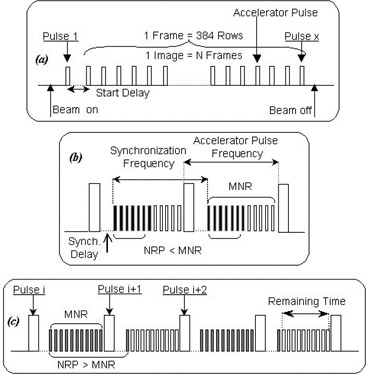
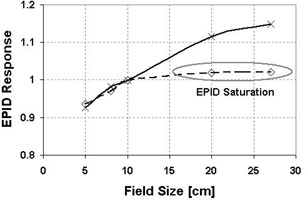
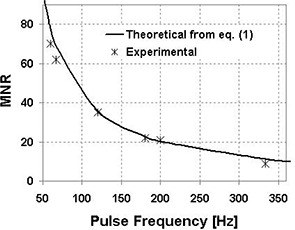
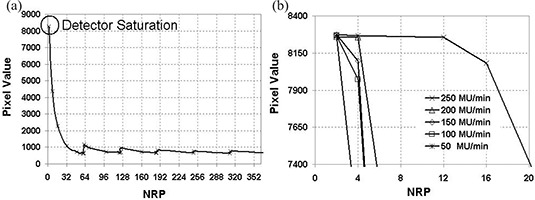
Today, electronic portal imaging devices (EPIDs) are widely used as a replacement to portal films for patient position verification, but the image quality is not always optimal. The general aim of this study was to optimize the acquisition parameters of an amorphous silicon EPID commercially available for clinical use in radiation therapy with the view to avoid saturation of the system. Special attention was paid to selection of the parameter corresponding to the number of rows acquired between accelerator pulses (NRP) for various beam energies and dose rates. The image acquisition system (IAS2) has been studied, and portal image acquisition was found to be strongly dependent on the accelerator pulse frequency. This frequency is set for each "energy - dose rate" combination of the linear accelerator. For all combinations, the image acquisition parameters were systematically changed to determine their influence on the performances of the Varian aS500 EPID system. New parameters such as the maximum number of rows (MNR) and the number of pulses per frame (NPF) were introduced to explain portal image acquisition theory. Theoretical and experimental values of MNR and NPF were compared, and they were in good agreement. Other results showed that NRP had a major influence on detector saturation and dose per image. A rule of thumb was established to determine the optimum NRP value to be used. This practical application was illustrated by a clinical example in which the saturation of the aSi EPID was avoided by NRP optimization. Moreover, an additional study showed that image quality was relatively insensitive to this parameter.
如今,电子射野影像装置(EPID)被广泛用于替代射野片进行患者体位验证,但图像质量并非总是最佳。本研究的总体目标是优化一种临床用于放射治疗的商用非晶硅EPID的采集参数,以避免系统饱和。对于各种束流能量和剂量率,特别关注与加速器脉冲之间采集的行数(NRP)相对应的参数选择。对图像采集系统(IAS2)进行了研究,发现射野图像采集强烈依赖于加速器脉冲频率。该频率针对直线加速器的每个“能量 - 剂量率”组合进行设置。对于所有组合,系统地改变图像采集参数,以确定它们对Varian aS500 EPID系统性能的影响。引入了诸如最大行数(MNR)和每帧脉冲数(NPF)等新参数来解释射野图像采集理论。比较了MNR和NPF的理论值与实验值,二者吻合良好。其他结果表明,NRP对探测器饱和及每张图像剂量有重大影响。建立了一个经验法则来确定要使用的最佳NRP值。通过一个临床实例说明了这一实际应用,其中通过优化NRP避免了非晶硅EPID的饱和。此外,一项补充研究表明图像质量对该参数相对不敏感。