Divecha N, Banfić H, Irvine R F
Department of Biochemistry, AFRC Institute of Animal Physiology and Genetics Research, Babraham, Cambridge, UK.
EMBO J. 1991 Nov;10(11):3207-14. doi: 10.1002/j.1460-2075.1991.tb04883.x.
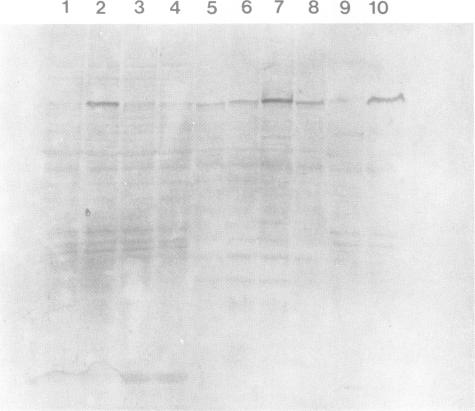
When Swiss 3T3 cells are treated with Insulin-like Growth Factor I, a rapid decrease in the mass of polyphosphoinositol lipids (phosphatidylinositol 4-phosphate and phosphatidylinositol 4,5-bisphosphate) occurs within the nuclei, with a concomitant increase in nuclear diacylglycerol and translocation of protein kinase C to the nuclear region. This is in contrast to the effects of the regulatory peptide, bombesin, which causes similar inositol lipid changes in the plasma membrane, has no effect on nuclear inositide levels and causes a translocation of protein kinase C to post-nuclear membranes. These results suggest the existence of a discrete nuclear polyphosphoinositide signalling system entirely distinct from the well-known plasma membrane-located system, which is under regulatory control by cell surface-located receptors.
当用胰岛素样生长因子I处理瑞士3T3细胞时,细胞核内的多磷酸肌醇脂质(磷脂酰肌醇4-磷酸和磷脂酰肌醇4,5-二磷酸)质量迅速下降,同时核二酰基甘油增加,蛋白激酶C转位至核区域。这与调节肽蛙皮素的作用相反,蛙皮素可使质膜中的肌醇脂质发生类似变化,对核肌醇磷脂水平无影响,并导致蛋白激酶C转位至核后膜。这些结果表明存在一个完全不同于位于质膜的著名系统的离散核多磷酸肌醇信号系统,该系统受位于细胞表面的受体调控。