Laun Katja, Coggill Penny, Palmer Sophie, Sims Sarah, Ning Zemin, Ragoussis Jiannis, Volpi Emanuela, Wilson Natalie, Beck Stephan, Ziegler Andreas, Volz Armin
Institut für Immungenetik, Charité-Universitätsmedizin Berlin, Campus Virchow-Klinikum, Humboldt-Universität zu Berlin, Berlin, Germany.
PLoS Genet. 2006 May;2(5):e73. doi: 10.1371/journal.pgen.0020073. Epub 2006 May 12.
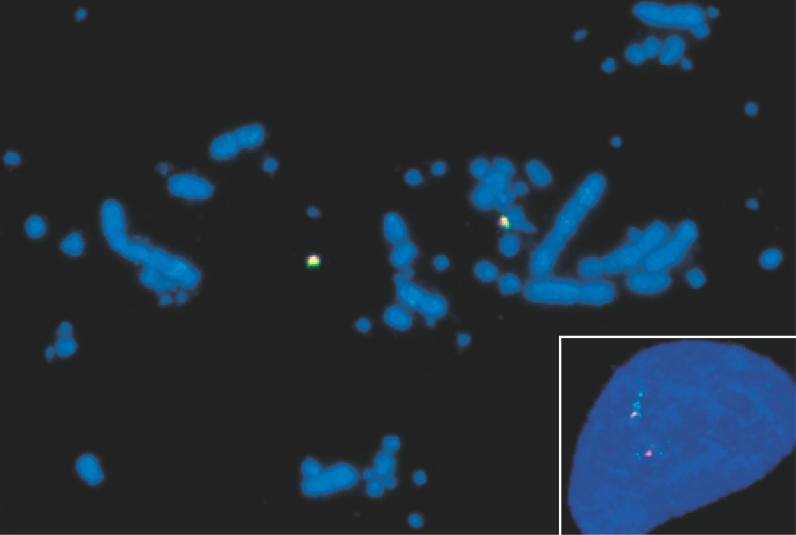
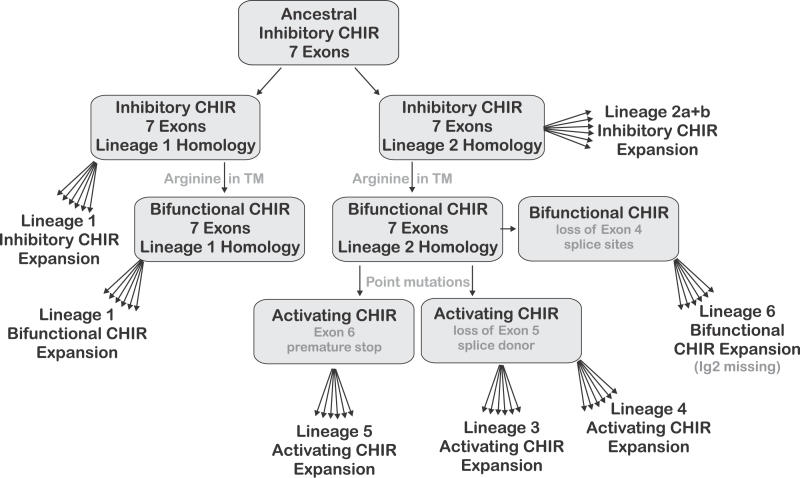
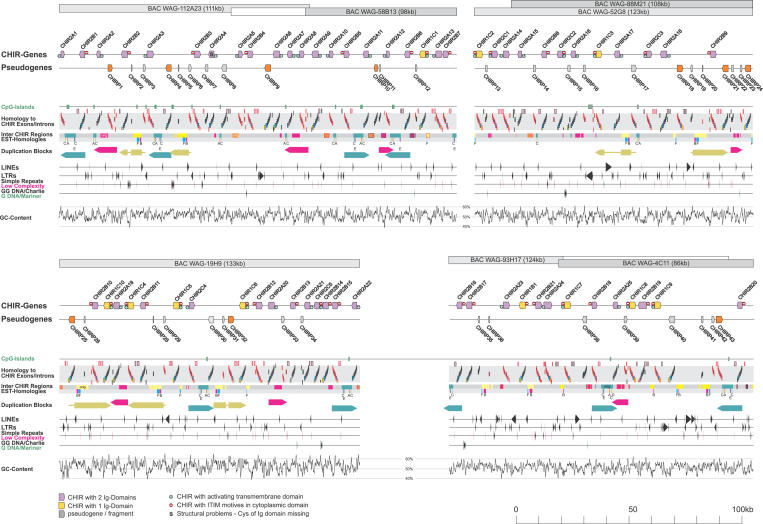
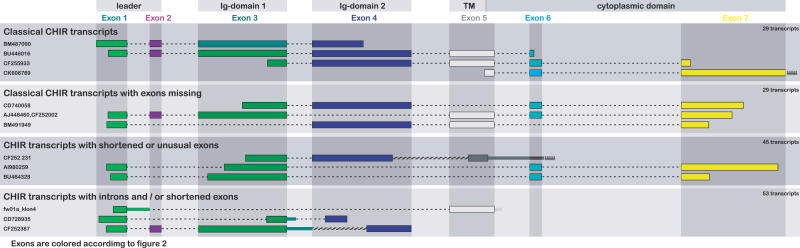
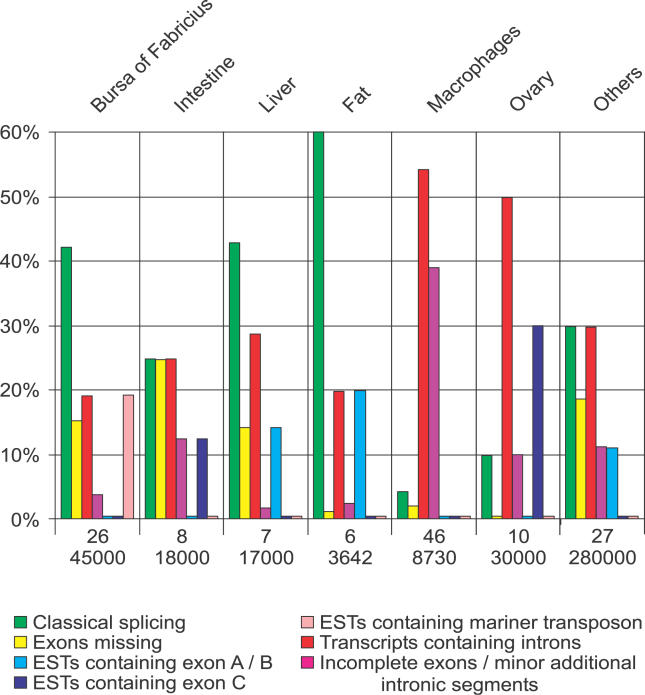
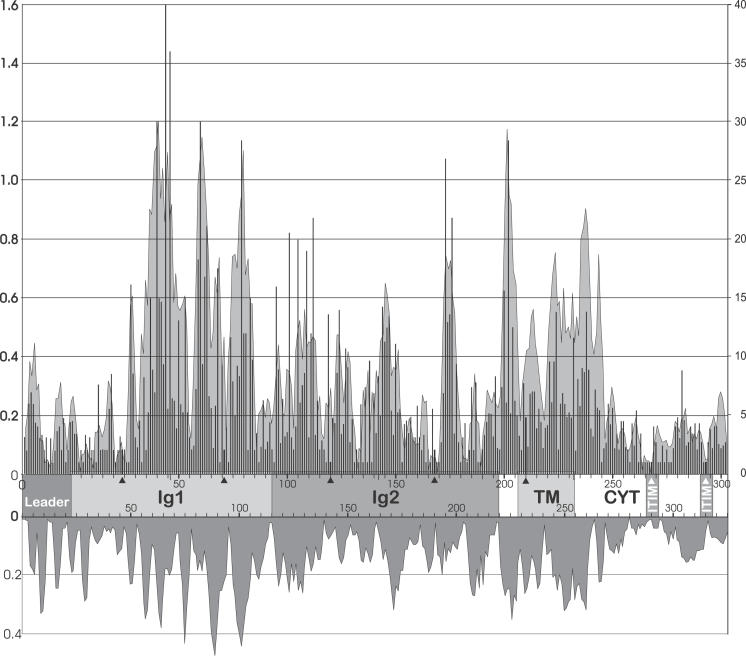
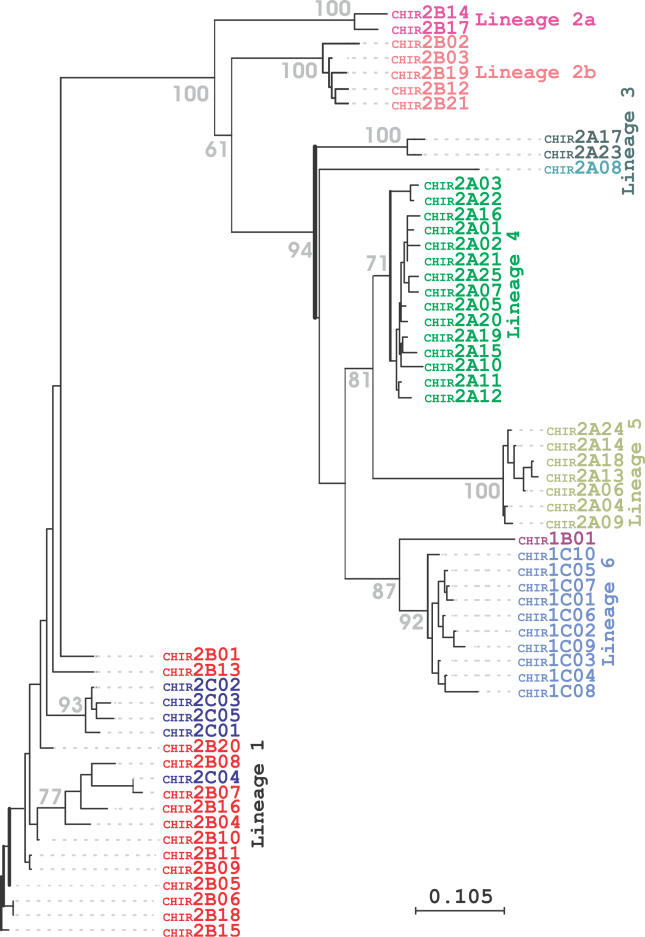
The innate and adaptive immune systems of vertebrates possess complementary, but intertwined functions within immune responses. Receptors of the mammalian innate immune system play an essential role in the detection of infected or transformed cells and are vital for the initiation and regulation of a full adaptive immune response. The genes for several of these receptors are clustered within the leukocyte receptor complex (LRC). The purpose of this study was to carry out a detailed analysis of the chicken (Gallus gallus domesticus) LRC. Bacterial artificial chromosomes containing genes related to mammalian leukocyte immunoglobulin-like receptors were identified in a chicken genomic library and shown to map to a single microchromosome. Sequencing revealed 103 chicken immunoglobulin-like receptor (CHIR) loci (22 inhibitory, 25 activating, 15 bifunctional, and 41 pseudogenes). A very complex splicing pattern was found using transcript analyses and seven hypervariable regions were detected in the external CHIR domains. Phylogenetic and genomic analysis showed that CHIR genes evolved mainly by block duplications from an ancestral inhibitory receptor locus, with transformation into activating receptors occurring more than once. Evolutionary selection pressure has led not only to an exceptional expansion of the CHIR cluster but also to a dramatic diversification of CHIR loci and haplotypes. This indicates that CHIRs have the potential to complement the adaptive immune system in fighting pathogens.
脊椎动物的先天性和适应性免疫系统在免疫反应中具有互补但相互交织的功能。哺乳动物先天性免疫系统的受体在检测受感染或转化的细胞中起着至关重要的作用,对于全面适应性免疫反应的启动和调节至关重要。其中一些受体的基因聚集在白细胞受体复合体(LRC)中。本研究的目的是对鸡(家鸡)的LRC进行详细分析。在鸡基因组文库中鉴定出含有与哺乳动物白细胞免疫球蛋白样受体相关基因的细菌人工染色体,并显示其定位于一条微小染色体上。测序揭示了103个鸡免疫球蛋白样受体(CHIR)基因座(22个抑制性、25个激活性、15个双功能和41个假基因)。通过转录本分析发现了一种非常复杂的剪接模式,并且在CHIR外部结构域中检测到七个高变区。系统发育和基因组分析表明,CHIR基因主要通过来自祖先抑制性受体基因座的模块重复进化而来,向激活性受体的转变发生了不止一次。进化选择压力不仅导致了CHIR基因簇的异常扩张,还导致了CHIR基因座和单倍型的显著多样化。这表明CHIRs在对抗病原体方面有潜力补充适应性免疫系统。