Cen H, Breinig M C, Atchison R W, Ho M, McKnight J L
Department of Infectious Diseases and Microbiology, Graduate School of Public Health, University of Pittsburgh, Pennsylvania 15261.
J Virol. 1991 Feb;65(2):976-80. doi: 10.1128/JVI.65.2.976-980.1991.
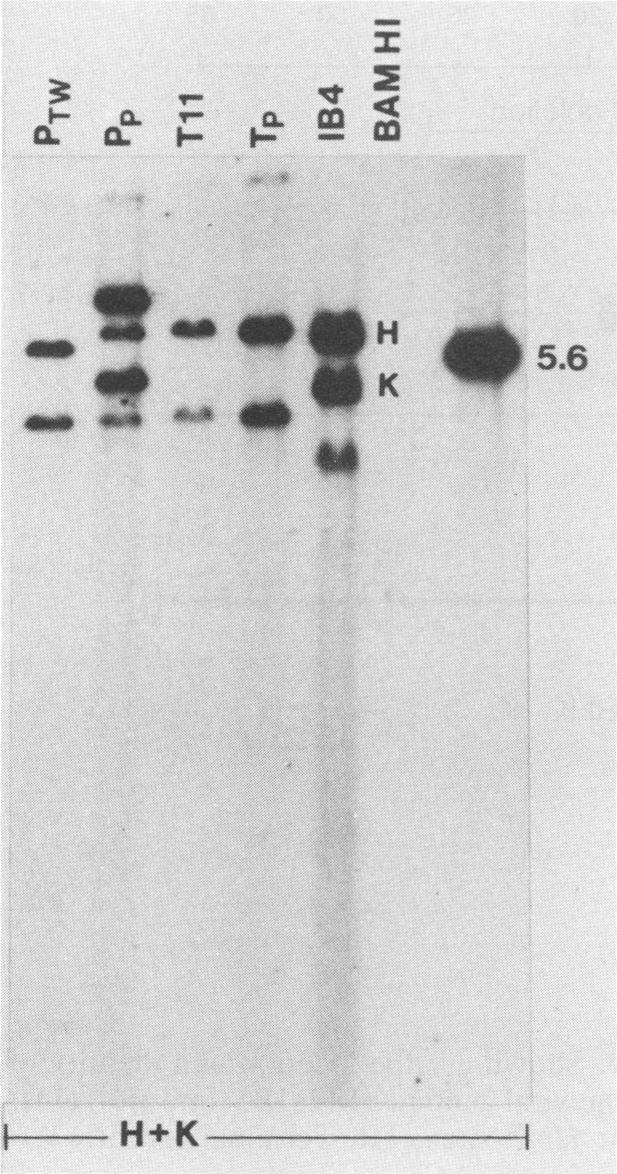
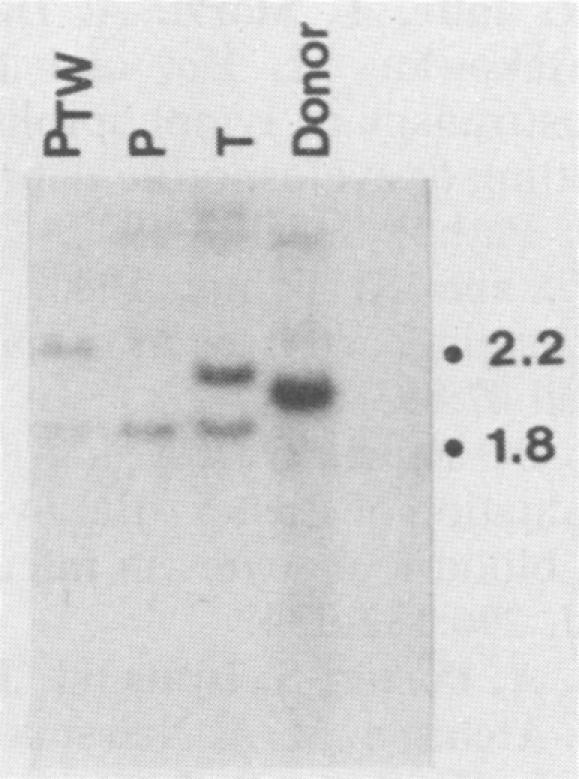
Two organ transplant recipients who received organs from a common donor and were diagnosed as having an Epstein-Barr virus (EBV)-associated posttransplant lymphoproliferative disorder were studied to determine the mode of EBV transmission. The results of restriction fragment length polymorphism, polymerase chain reaction, and minisatellite DNA analyses demonstrate that both patients had a common strain of EBV and that this strain was transmitted from the donor's organs to both recipients. Posttransplant lymphoproliferative disorder resulted from the proliferation of EBV-immortalized B lymphocytes of the recipient, not those of the donor.
对两名接受来自同一供体器官移植且被诊断患有与爱泼斯坦-巴尔病毒(EBV)相关的移植后淋巴细胞增生性疾病的器官移植受者进行了研究,以确定EBV的传播方式。限制性片段长度多态性分析、聚合酶链反应和小卫星DNA分析结果表明,两名患者感染的是同一种EBV毒株,且该毒株是从供体器官传播给两名受者的。移植后淋巴细胞增生性疾病是由受者而非供者的EBV永生化B淋巴细胞增殖所致。