Ekman Diana, Light Sara, Björklund Asa K, Elofsson Arne
Stockholm Bioinformatics Center, Stockholm University, Stockholm, Sweden.
Genome Biol. 2006;7(6):R45. doi: 10.1186/gb-2006-7-6-r45.
Most proteins interact with only a few other proteins while a small number of proteins (hubs) have many interaction partners. Hub proteins and non-hub proteins differ in several respects; however, understanding is not complete about what properties characterize the hubs and set them apart from proteins of low connectivity. Therefore, we have investigated what differentiates hubs from non-hubs and static hubs (party hubs) from dynamic hubs (date hubs) in the protein-protein interaction network of Saccharomyces cerevisiae.
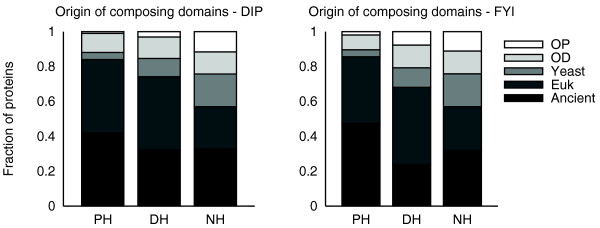
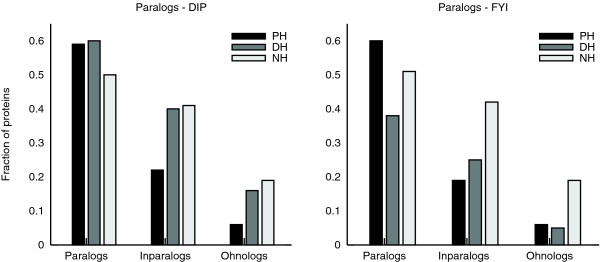
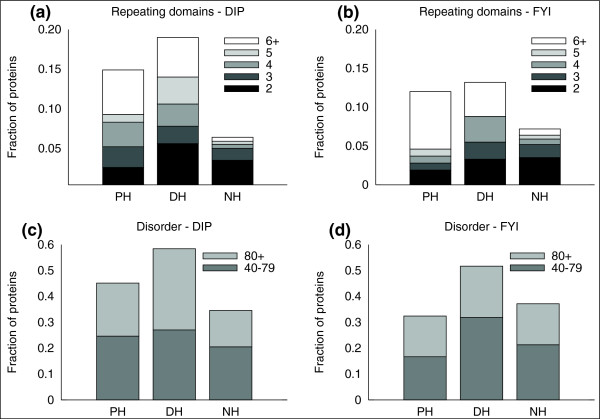
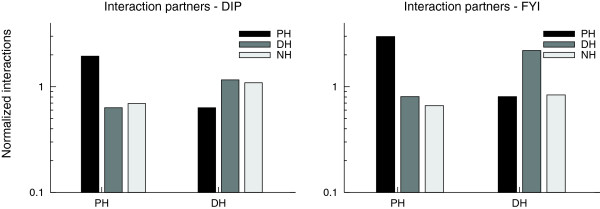
The many interactions of hub proteins can only partly be explained by bindings to similar proteins or domains. It is evident that domain repeats, which are associated with binding, are enriched in hubs. Moreover, there is an over representation of multi-domain proteins and long proteins among the hubs. In addition, there are clear differences between party hubs and date hubs. Fewer of the party hubs contain long disordered regions compared to date hubs, indicating that these regions are important for flexible binding but less so for static interactions. Furthermore, party hubs interact to a large extent with each other, supporting the idea of party hubs as the cores of highly clustered functional modules. In addition, hub proteins, and in particular party hubs, are more often ancient. Finally, the more recent paralogs of party hubs are underrepresented.
Our results indicate that multiple and repeated domains are enriched in hub proteins and, further, that long disordered regions, which are common in date hubs, are particularly important for flexible binding.
大多数蛋白质仅与少数其他蛋白质相互作用,而少数蛋白质(枢纽蛋白)有许多相互作用伙伴。枢纽蛋白和非枢纽蛋白在几个方面存在差异;然而,对于枢纽蛋白的特征以及它们与低连接性蛋白质的区别,我们的了解并不完整。因此,我们研究了在酿酒酵母的蛋白质 - 蛋白质相互作用网络中,枢纽蛋白与非枢纽蛋白以及静态枢纽蛋白(聚会枢纽蛋白)与动态枢纽蛋白(约会枢纽蛋白)之间的差异。
枢纽蛋白的众多相互作用只能部分地通过与相似蛋白质或结构域的结合来解释。显然,与结合相关的结构域重复在枢纽蛋白中富集。此外,枢纽蛋白中多结构域蛋白和长蛋白的比例过高。此外,聚会枢纽蛋白和约会枢纽蛋白之间存在明显差异。与约会枢纽蛋白相比,聚会枢纽蛋白中包含长无序区域的较少,这表明这些区域对于灵活结合很重要,但对于静态相互作用则不太重要。此外,聚会枢纽蛋白在很大程度上相互作用,这支持了聚会枢纽蛋白作为高度聚集的功能模块核心的观点。此外,枢纽蛋白,特别是聚会枢纽蛋白,更常是古老的。最后,聚会枢纽蛋白的近期旁系同源物数量不足。
我们的结果表明,枢纽蛋白中富含多个和重复的结构域,此外,约会枢纽蛋白中常见的长无序区域对于灵活结合尤为重要。