Laule Oliver, Hirsch-Hoffmann Matthias, Hruz Tomas, Gruissem Wilhelm, Zimmermann Philip
Institute of Plant Sciences, ETH Zurich, 8092 Zurich, Switzerland.
BMC Bioinformatics. 2006 Jun 21;7:311. doi: 10.1186/1471-2105-7-311.
Gene function analysis often requires a complex and laborious sequence of laboratory and computer-based experiments. Choosing an effective experimental design generally results from hypotheses derived from prior knowledge or experimentation. Knowledge obtained from meta-analyzing compendia of expression data with annotation libraries can provide significant clues in understanding gene and network function, resulting in better hypotheses that can be tested in the laboratory.
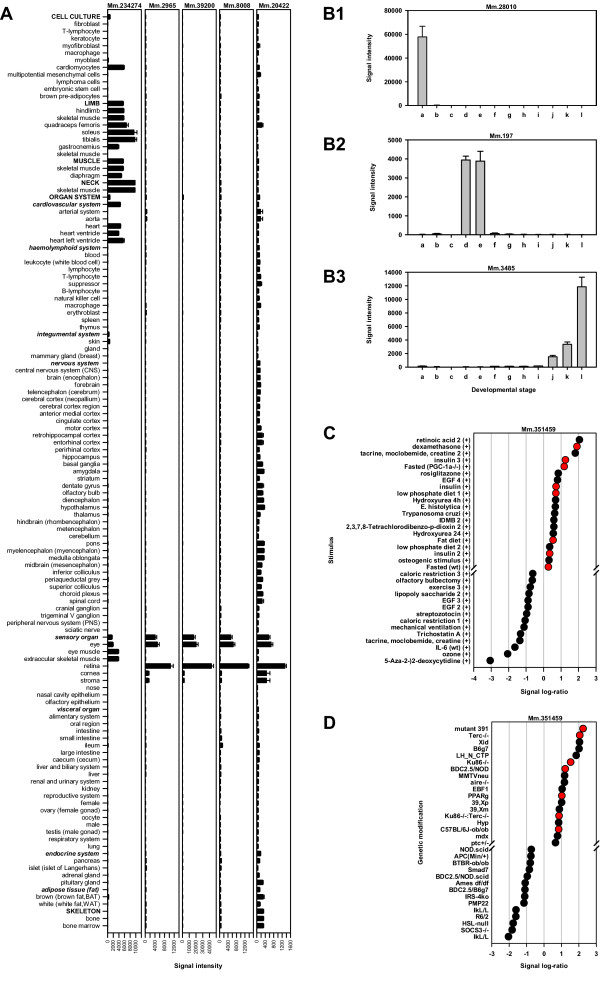
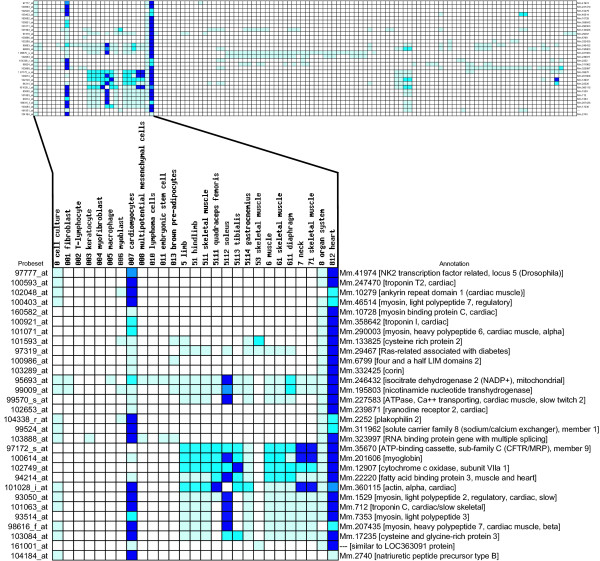
Genevestigator is a microarray database and analysis system allowing context-driven queries. Simple but powerful tools allow biologists with little computational background to retrieve information about when, where and how genes are expressed. We manually curated and quality-controlled 3110 mouse Affymetrix arrays from public repositories. Data queries can be run against an annotation library comprising 160 anatomy categories, 12 developmental stage groups, 80 stimuli, and 182 genetic backgrounds or modifications. The quality of results obtained through Genevestigator is illustrated by a number of biological scenarios that are substantiated by other types of experimentation in the literature.
The Genevestigator-Mouse database effectively provides biologically meaningful results and can be accessed at https://www.genevestigator.ethz.ch.
基因功能分析通常需要一系列复杂且费力的实验室实验和基于计算机的实验。选择有效的实验设计通常源于先前知识或实验得出的假设。通过将表达数据汇编与注释库进行元分析获得的知识,可为理解基因和网络功能提供重要线索,从而得出可在实验室中进行检验的更好假设。
Genevestigator是一个微阵列数据库和分析系统,支持上下文驱动的查询。简单但功能强大的工具使几乎没有计算背景的生物学家能够检索有关基因何时、何地以及如何表达的信息。我们从公共存储库中手动挑选并进行了质量控制的3110个小鼠Affymetrix阵列。数据查询可针对一个包含160个解剖学类别、12个发育阶段组、80种刺激以及182种遗传背景或修饰的注释库运行。文献中其他类型的实验证实了一些生物学场景,这些场景说明了通过Genevestigator获得的结果的质量。
Genevestigator - 小鼠数据库有效地提供了具有生物学意义的结果,可通过https://www.genevestigator.ethz.ch访问。